
Orggu
From Small Farmers
Oodalu (ಊದಲು) in English is barnyard millet. Its Telugu, Tamil and Hindi names, how oodalu differs from saame, and how it is cooked in Karnataka.
Barnyard millet in Telugu is ఊదలు (udalu), also bontha samalu. How it differs from samalu (little millet), its other names and Telugu dishes.
Navane (ನವಣೆ) in English is foxtail millet. Its Telugu, Tamil and Hindi names, how navane differs from saame, and how it is cooked in Karnataka.
Thinai (தினை) in English is foxtail millet. Its names in Hindi, Kannada and Telugu, how it differs from samai, and how thinai is cooked in Tamil homes.
Harka (ಹಾರಕ) in English is kodo millet. How harka differs from baragu (proso), why Tamil varagu is harka, its other names and Karnataka dishes.
Varagu (வரகு) in English is kodo millet. How varagu differs from kezhvaragu (ragi) and panivaragu (proso), its other names, and Tamil dishes.
Samalu (సామలు) in English is little millet. How samalu differs from bontha samalu (barnyard), its Kannada, Tamil and Hindi names, and Telugu dishes.
Kambu (கம்பு) in English is pearl millet, the same grain as bajra. How kambu differs from cholam (sorghum), its other names, and Tamil kambu dishes.
Sajjalu (సజ్జలు) in English is pearl millet, the same grain as bajra. How sajjalu differs from jonnalu (sorghum), its other names and Telugu dishes.
Proso millet in Tamil is பனிவரகு (pani varagu). How panivaragu differs from varagu (kodo), its Hindi, Kannada and Telugu names, and how it is cooked.
Proso millet in Telugu is వరిగలు (varigalu). How varigalu differs from arikelu (kodo), its Kannada, Tamil and Hindi names, and how it is cooked.
Barnyard millet in Hindi is सांवा (sanwa), also called झंगोरा (jhangora) and samak or vrat ke chawal. Regional names, vrat use and how to cook it.
Foxtail millet in Hindi is कंगनी (kangni) or काकुन (kakun). Its names in Telugu, Tamil, Kannada and Marathi, how it differs from bajra, and how to cook it.
Korralu (కొర్రలు) in English is foxtail millet, kangni in Hindi. How korralu differs from andu korralu, other Telugu millet names, and how to cook it.
Little millet in Hindi is कुटकी (kutki). Its names in Tamil, Kannada, Telugu and Malayalam, how kutki differs from sanwa, and how to cook it.

The eat-local, eat-seasonal food approach shared by nutritionist Rujuta Diwekar, explained simply: the traditional Indian foods it favours and a sample day of meals.
What is a sattvic (satvik) diet? A simple sattvic food list, the foods it avoids, and a 7-day vegetarian meal plan with millets, rice, dal, ghee and jaggery.
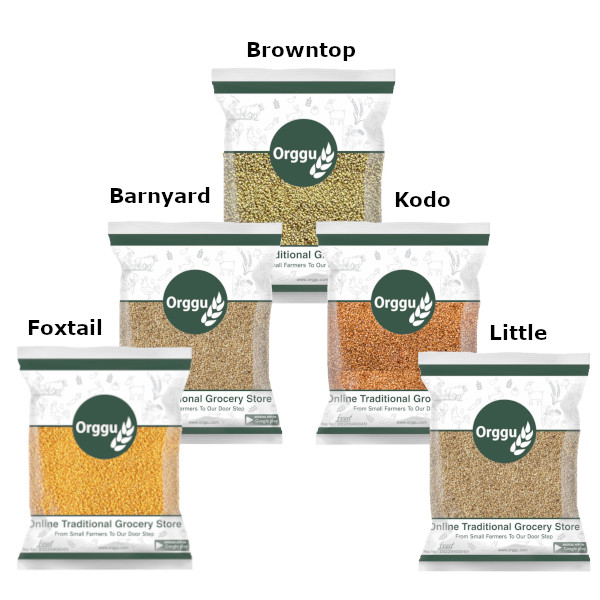
A quick reference to millet names in Kannada — navane, saame, harka, oodalu, korale and more, with Kannada script and English, verified against the Orggu glossary.
A quick reference to millet names in Telugu — korralu, samalu, jonnalu, sajjalu and more, with Telugu script and English, verified against the Orggu glossary.
A quick reference to millet names in Gujarati — bajri, juvar, moriyo / samo, kang, gajro and more, with Gujarati script and English, verified against the Orggu glossary.
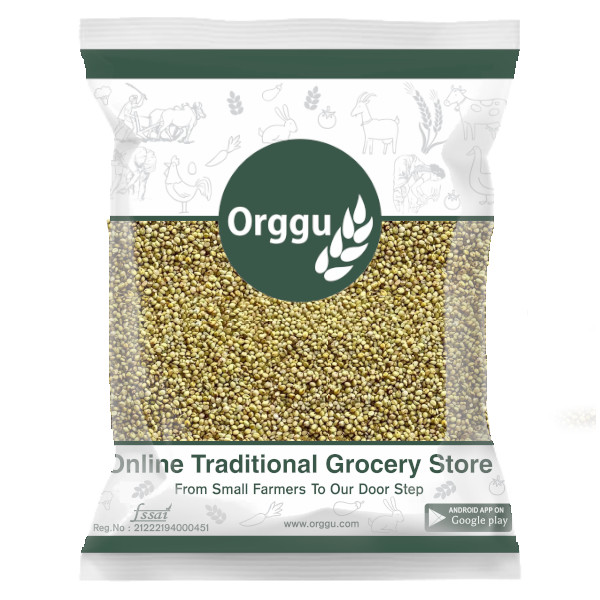
Browntop millet in Hindi has no standard name — colloquially hari kangni. Its real regional names, why it is not the same as kangni (foxtail), nutrition and how to cook.
A quick reference to millet names in Tamil — thinai, samai, varagu, kambu, cholam and more, with Tamil script and English, verified against the Orggu glossary.
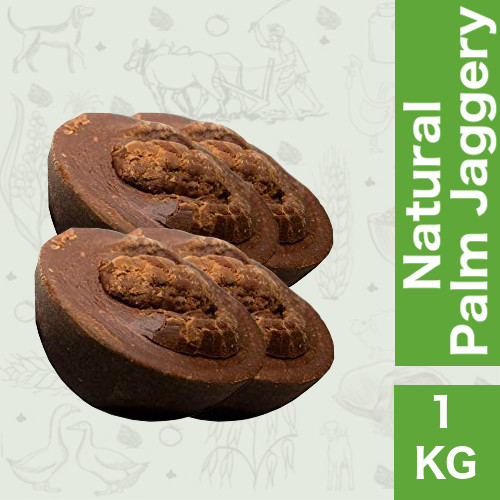
Palm jaggery (karupatti) vs cane jaggery (gud/vellam) — source, flavour, regional names and minerals compared. Both are still sugar; which to choose, honestly.
Millets are low-GI, gut-friendly whole grains that fit a skin-supportive diet (a food, not a cure or a glow) — while sun, sleep and overall diet matter most. The honest guide.
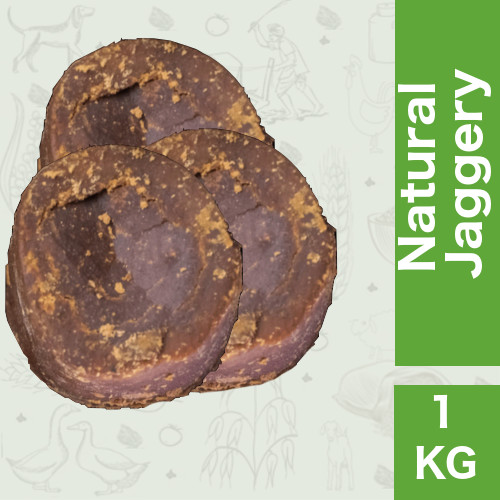
Jaggery is less-refined sugar with trace minerals and flavour — a reasonable swap in moderation, but still high-GI sugar, not a health food. The honest comparison.
Millets are high-fibre whole grains that support healthy digestion (a food, not a cure) — if you add fibre gradually with enough water. Which millets to choose and how, carefully.
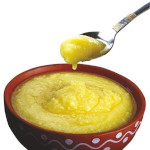
10 everyday uses for cow ghee — from tadka and frying to sweets, rotis and Diwali diyas — plus how to store it so it stays fresh for months.
Millets are low-sodium whole grains that fit a blood-pressure-friendly diet (a food, not a cure) — but cutting salt matters most. Which millets to choose and how, carefully.
What desi cow ghee is, how to choose a good jar, how to store it, and how to use it in everyday cooking and Diwali sweets.
Millets are high-fibre whole grains that fit a heart-healthy, cholesterol-friendly diet (a food, not a medicine). Which millets to choose and how to use them, carefully.
Millets are low-GI, high-fibre whole grains that fit a PCOS-friendly eating pattern (they are a food, not a cure). Which millets to choose and how to use them, carefully.
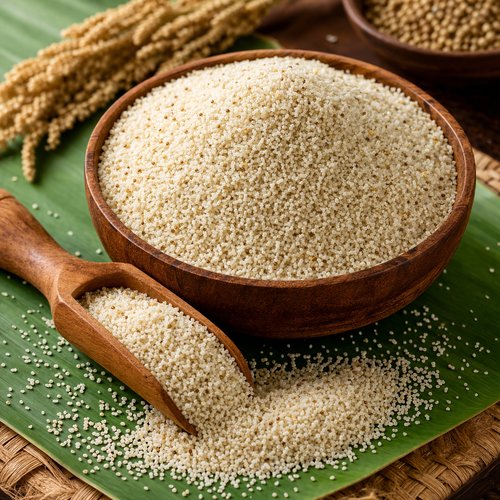
Rava is semolina: grain broken into granules. Here is what rava means, the types sold in India, how it is made, and the eight millet ravas with easy recipes.
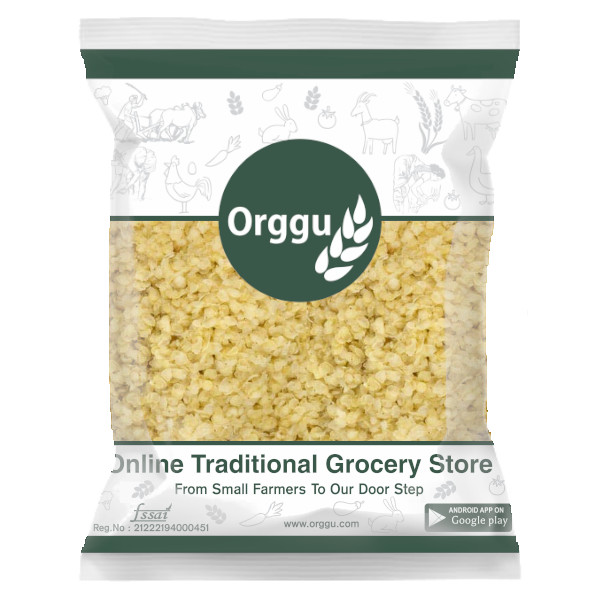
Millet flakes are millet poha: flakes of millet you cook like rice poha. The types, what poha is called across India, how to cook them and six recipes.
Samak (barnyard millet / vrat ke chawal) is the millet you can eat during Navratri fasting. Here is what is vrat-friendly, what is not, and simple samak recipes.
A quick reference to millet names in Hindi — bajra, jowar, ragi, kangni, kutki, sanwa, kodo and more, in Devanagari and English, verified against Orggu’s glossary.
A practical 7-day plan that rotates the five Siridhanya (positive) millets across the week, with meal ideas, soaking tips, and clear guidance on who should talk to a doctor first.
Browntop millet — known as Korale (ಕొరಲె) in Kannada — is the rarest of the five Siridhanya (positive) millets. Here is what it is called in Kannada, how it is used in Karnataka, and how to cook it.
Browntop millet — known as Andu Korralu (అండు కొర్రలు) in Telugu — is the rarest of the five Siridhanya (positive) millets. Here is what it is called in Telugu, how it is traditionally used, and how to cook it.
The glycemic index (GI) tells you how quickly a food raises blood sugar. This is a sourced guide to where millets sit on the GI scale compared with white rice and wheat, and what changes a millet’s GI.
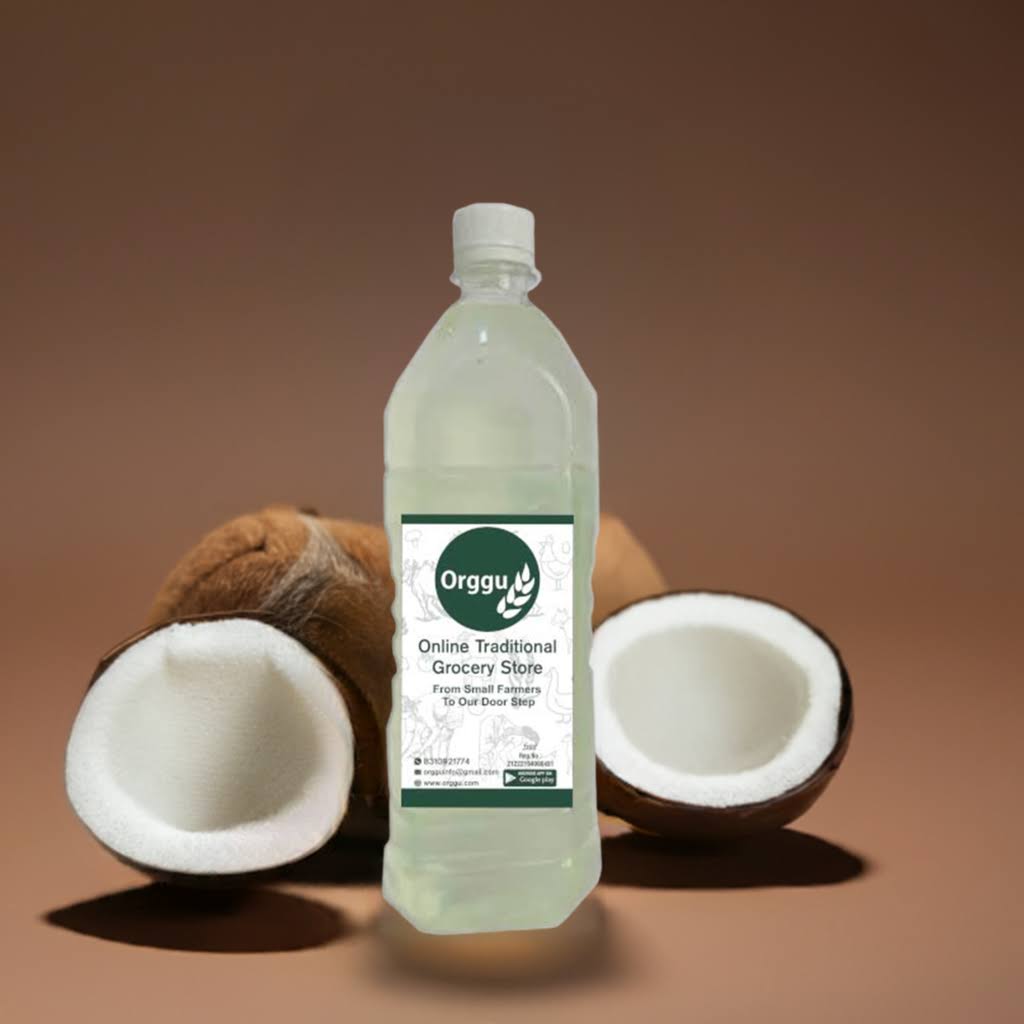
Velichenna, kobbari nune, thengai ennai — same oil, different names. A buyer's guide to cold-pressed coconut oil: how it's pressed, why it solidifies in winter, smoke-point limits, and a 60-second purity test.

Nallennai, gingelly, til — same oil, different names. The complete Indian guide to cold-pressed sesame oil: extraction, health benefits, cooking uses, smoke point limits, and a 60-second purity test.

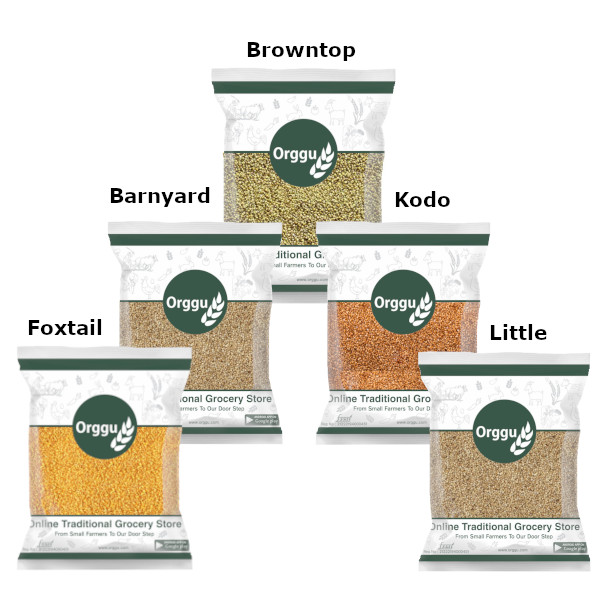
A cross-checked glossary of every common Indian millet — foxtail, finger (ragi), pearl (bajra), sorghum (jowar), kodo, little, barnyard, browntop and proso — with names in 8 Indian languages and direct product links.
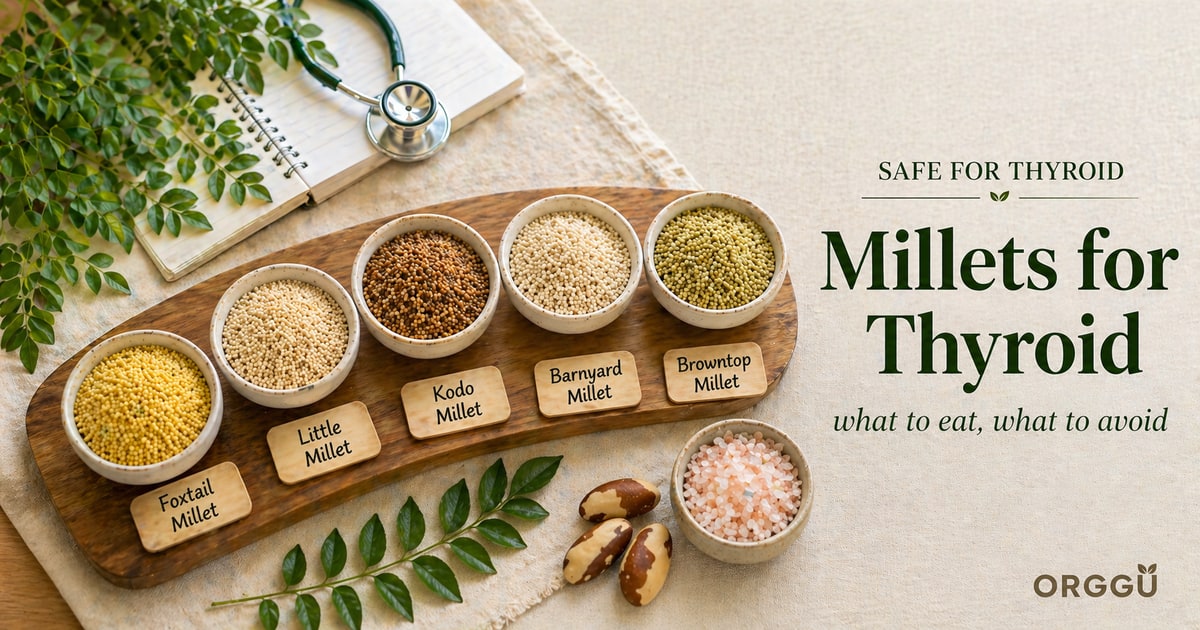
A complete, doctor-reviewed guide to millets for thyroid patients — which 5 siridhanya millets are safe, which to limit (bajra, ragi, jowar), how to cook to neutralise goitrogens, daily portions for hypo & hyperthyroidism, and a 7-day meal plan tailored for Indian families.

How much seeds to eat a day, from the ICMR-NIN Dietary Guidelines for Indians 2024: pumpkin, sunflower, chia, flax, sabja, watermelon and cucumber seeds one by one.
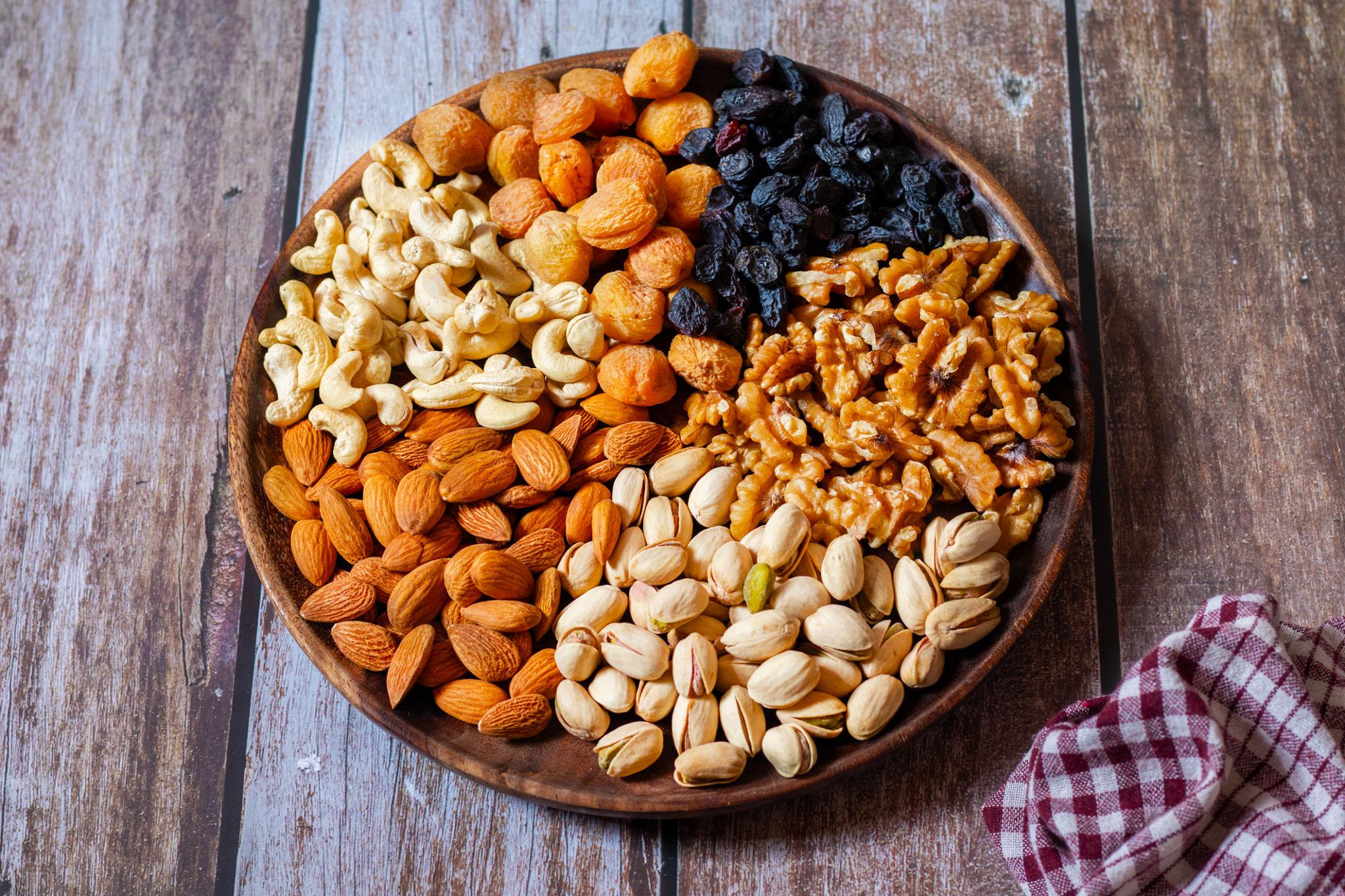
The seven most eaten dry fruits — almonds, walnuts, cashews, dates, figs, black raisins and pista — with a USDA nutrition chart and how much to eat a day, from ICMR-NIN.
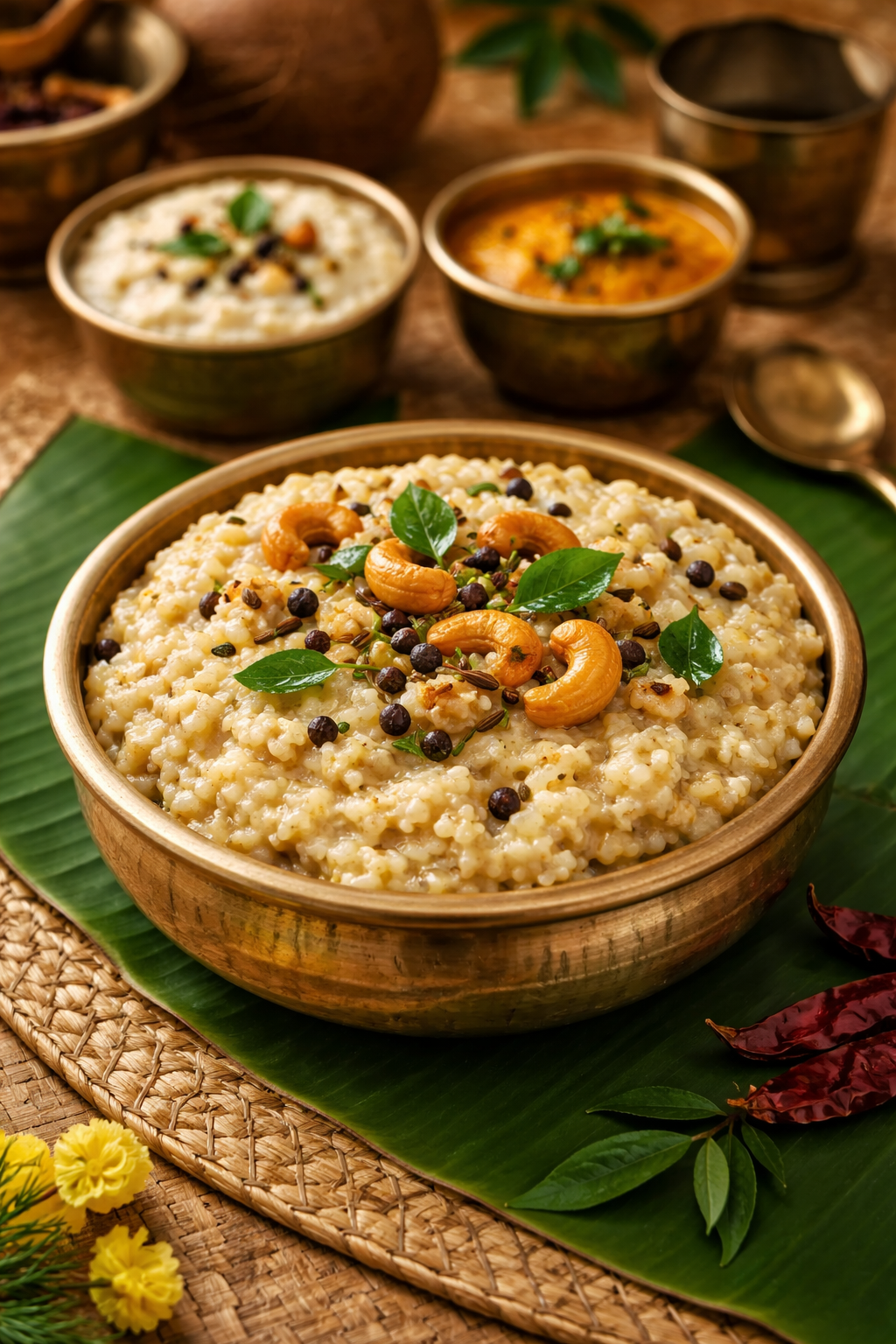
Healthy ven pongal made with millet rava instead of rice — same comfort, half the glycemic index. Step-by-step recipe with foxtail and kodo millet variations.
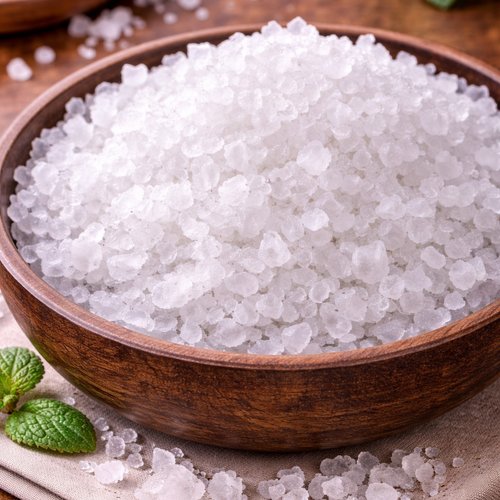
Non-iodized salt is salt with no iodine added. What it is, how it differs from iodized salt, why India iodizes its salt, and the few jobs plain salt is right for.

Western Ghats wild forest honey is one of India's rarest and most nutrient-dense honeys. Learn its proven health benefits, how to identify pure vs fake honey, traditional harvesting methods, and why raw unprocessed honey is fundamentally different from commercial brands.
Looking to buy millets online? This guide covers what to check before ordering, the difference between polished and unpolished millets, a comparison of all 5 Siridhanya millets, and where to find farm-fresh millets at honest prices.
Activated millet flour is 3x more nutritious than regular millet flour. Learn the simple soak-sprout-dry method to make it at home using unpolished millets. Complete guide with tips for all 5 Siridhanya millets.
Looking for the cheapest millets online? Compare prices of unpolished Siridhanya millets across Orggu, Amazon, Flipkart & Naatigrains. Orggu offers free delivery in Bangalore.
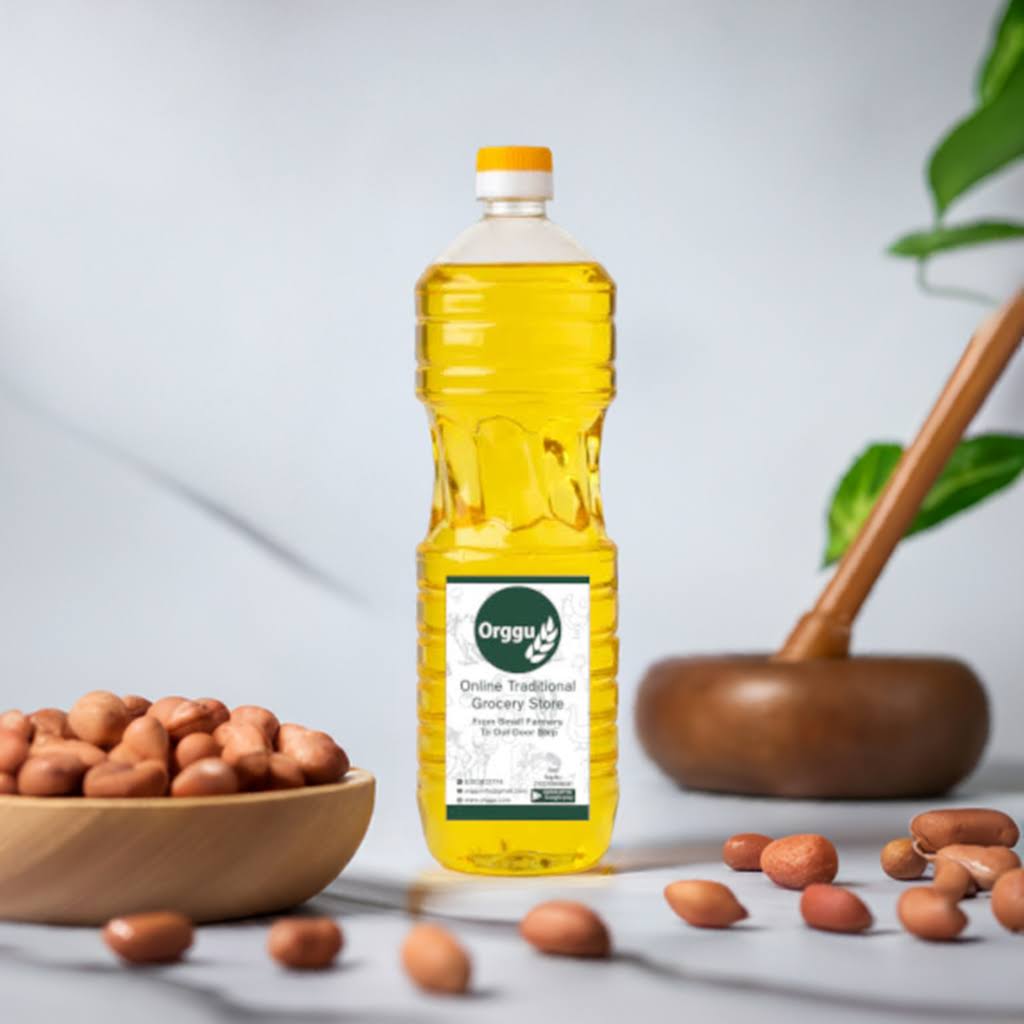
The definitive guide to choosing the best cooking oil for Indian cooking. Smoke point comparison of 10 oils, nutrition facts from USDA, and expert recommendations for every cooking method.
Discover the complete benefits of coconut oil for cooking, skin care, and hair care. MCT content, lauric acid science, cold pressed vs refined comparison, and expert tips.
What cold pressed groundnut oil offers, what the USDA nutrition data says, how it differs from refined oil, and how to cook with it.
Head-to-head comparison of groundnut oil vs sunflower oil — MUFA, omega-6, smoke points, and which is truly healthier for Indian cooking. Real data from USDA and NIN Hyderabad.
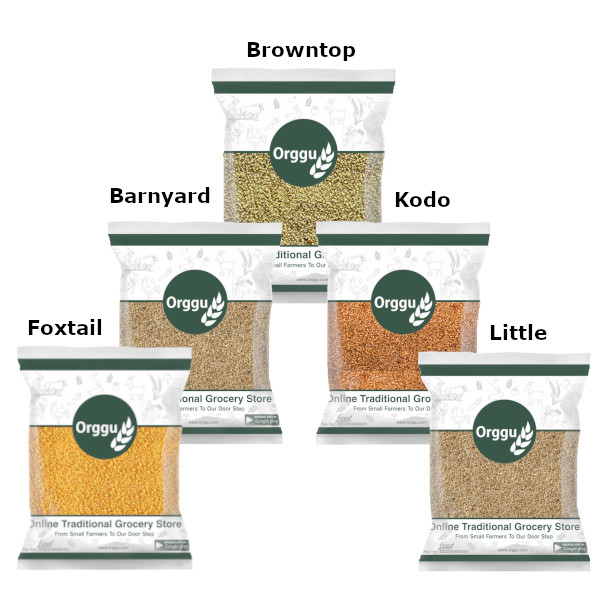
Complete beginner's guide to cooking millets perfectly. Water ratios, soaking times, and step-by-step methods for foxtail, barnyard, kodo, little, and browntop millet. Plus easy millet recipes.
Complete comparison of Indian millets vs quinoa — nutrition facts, fibre, calcium, price, and why millets are the better superfood. With data from NIN Hyderabad and USDA.
Complete comparison of refined vs cold pressed oil — nutrition facts, chemical processing, smoke points, and real health effects. With data from USDA and NIN Hyderabad.
Everything about Barnyard Millet (Oodalu/Kuthiraivali/Sanwa) — the lowest calorie, highest fibre Siridhanya millet. Nutrition facts, health benefits for diabetes and weight loss, easy recipes, and where to buy in Bangalore.
Everything about Browntop Millet (Korle/Andu Korralu) — the rarest and most therapeutic Siridhanya millet. Nutrition facts, gut health benefits, easy recipes, and where to buy genuine unpolished browntop millet in Bangalore.
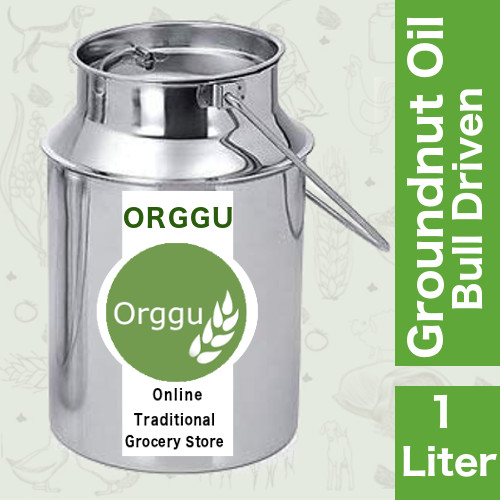
Bull-driven oil (marachekku / ghani oil) is one of the oldest ways of pressing oil in India. How it works, what marachekku means in English, and how it compares with other cold pressed oil and refined oil.
What cold pressed oil means (chekku / marachekku in Tamil, ganuga in Telugu), how it differs from refined oil, and the groundnut, coconut and sesame oils it is made from.
A complete guide to Dr Khadar Vali's Siridhanya millet diet plan. Learn which 5 positive millets to eat, the weekly rotation plan, health benefits, and why millions are switching from rice to millets.
Everything about Foxtail Millet (Navane/Thinai/Kangni) — nutrition facts, health benefits, easy recipes, and where to buy unpolished foxtail millet online in Bangalore.
Discover why homemade masala powders taste so much better than store-bought brands. Made from sun-dried whole spices with zero fillers or additives. Buy sambar powder, rasam powder, biryani masala & more in Bangalore from Orggu.
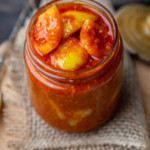
Discover the art of traditional South Indian homemade pickles. Made with cold pressed oil, natural ingredients, and zero preservatives. Buy authentic lemon, mango, citron & amla pickles online in Bangalore.
Everything about Kodo Millet (Harka/Varagu/Kodra) — the antioxidant powerhouse among Siridhanya millets. Nutrition facts, health benefits for heart and diabetes, easy recipes, and where to buy in Bangalore.
Everything about Little Millet (Saame/Samai/Kutki) — the best rice substitute among Siridhanya millets. Nutrition facts, health benefits for weight loss and diabetes, easy recipes, and where to buy in Bangalore.
A complete guide to choosing the best millets for diabetes management. Compare glycemic index, fibre content, and nutritional benefits of all 5 Siridhanya millets — and learn how to include them in your daily diet to lower blood sugar naturally.
Discover how millets can help you lose weight naturally. High in fiber, low in calories, and keeps you full longer — millets are the sustainable, affordable alternative to crash diets. Learn which millets are best for weight loss and how to include them in your daily meals.
A detailed comparison of millets vs rice — nutrition facts, health benefits, glycemic index, and which is better for diabetes, weight loss and heart health. Find out why millions are switching from rice to millets.
Understand the crucial difference between polished and unpolished millets. Learn why unpolished millets are far healthier, how polishing removes vital nutrients, and where to buy genuine unpolished Siridhanya millets in Bangalore.
Discover the 5 Siridhanya millets recommended by Dr. Khadar Vali — Foxtail, Barnyard, Kodo, Little & Browntop millet. Learn their health benefits, how to cook them, and where to buy unpolished millets in Bangalore.
