Cold-Pressed Coconut Oil (Velichenna): The Buyer's Guide

Certified organic food specialists · Sources: NIN Hyderabad, ICMR, USDA FoodData Central
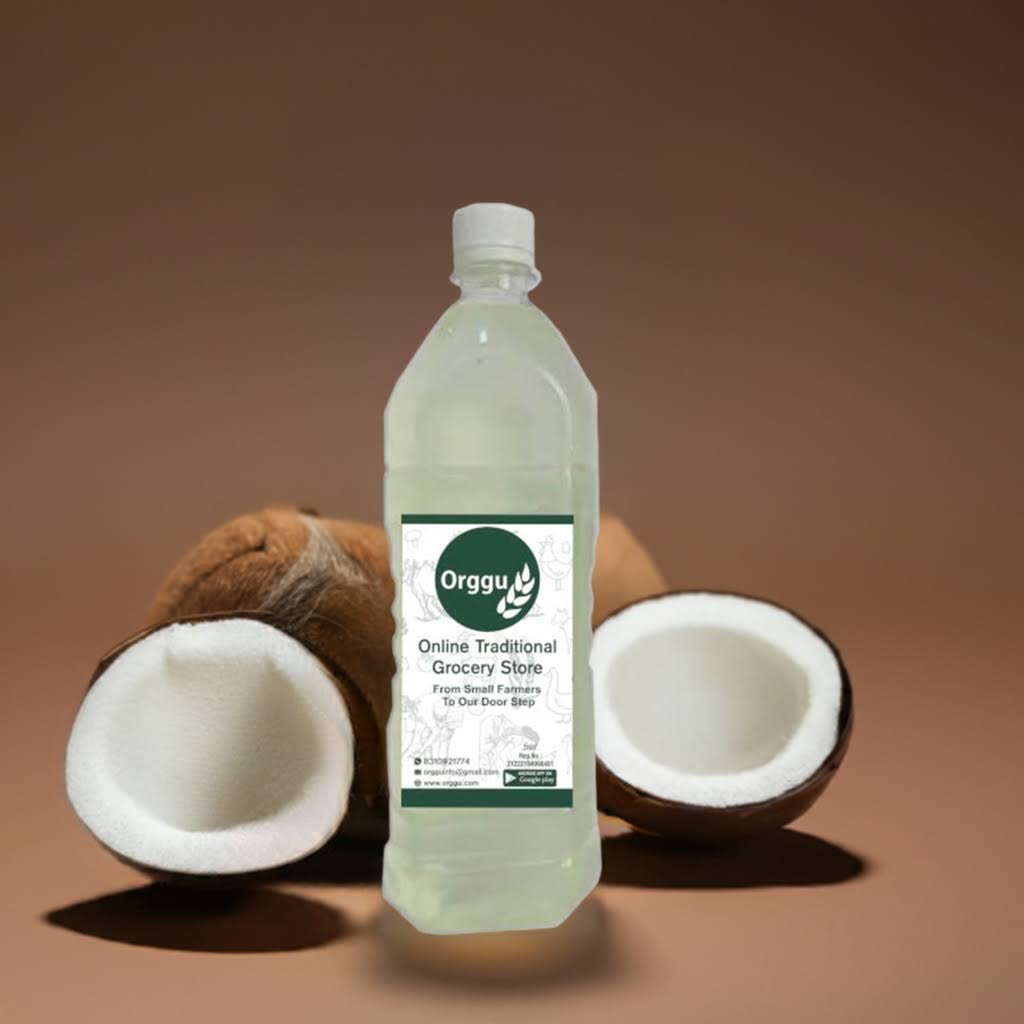
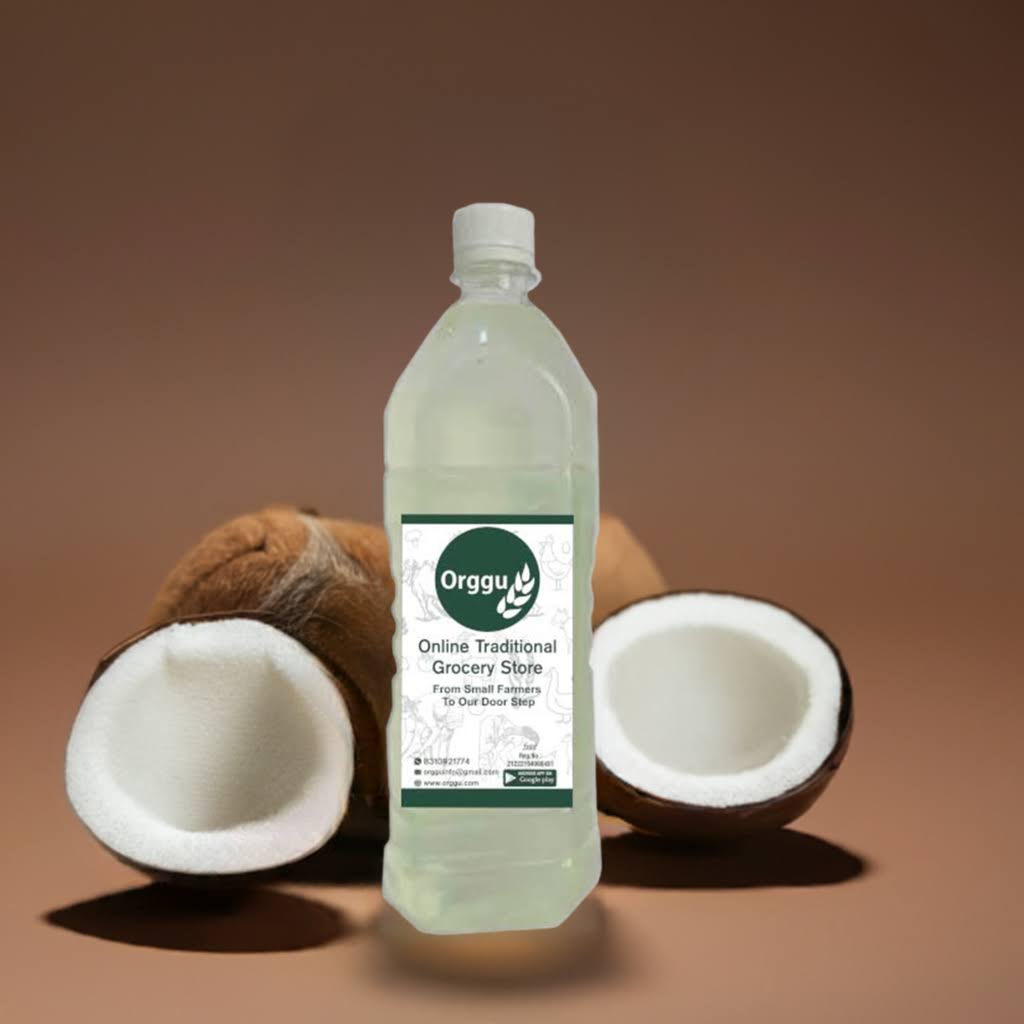
Velichenna in a Kerala kitchen. Kobbari nune in Andhra. Tenginenne on a Bengaluru shelf. Different names, the same nut. This guide is for buyers — what to look at on the label, why a real bottle solidifies in winter, what cold-pressed actually means once you compare it side-by-side with virgin and refined and the bull-driven (marachekku) press, and a thirty-second test you can run before opening the next bottle.
In this guide
- Coconut oil in five Indian languages
- How a cold-pressed bottle is actually pressed
- Where the copra comes from
- Refined vs cold-pressed vs virgin vs bull-driven
- Which oil for which cuisine — a pairing guide
- Why your bottle goes solid below 24°C
- Smoke point — what to fry, what to finish
- Decoding the FSSAI label
- Common buyer mistakes — six anti-patterns
- Quick-reference shopping checklist
- Bottle care after opening
- Sixty-second purity check at home
- Common questions
Coconut oil in five Indian languages
The same oil sits under five different names depending on which kitchen you walk into. If a label only carries the regional word, this is what each one means.
| Language | Native script | Romanised | Where you will hear it |
|---|---|---|---|
| Tamil | தேங்காய் ஒண்ணெய் | Thengai Ennai | Tamil Nadu, parts of Sri Lanka |
| Telugu | కొర్రరి నైనె | Kobbari Nune | Andhra Pradesh, Telangana |
| Kannada | ತೇನಿನೆತ್ತೆ | Tenginenne | Karnataka coastal & Old Mysuru |
| Hindi | नारियल का तेल | Nariyal Ka Tel | North & central India |
| Malayalam | വെളിേെുു | Velichenna | Kerala — daily-use oil |
Velichenna in Malayalam literally means “light oil” — light as in colour, not as in low-fat. In Kerala, it is the default oil for fish curry, beef ularthiyathu, banana fritters, and warm scalp massage. Hindi-speaking households outside the South often mean refined supermarket oil when they say nariyal ka tel; cold-pressed is a recent addition to that vocabulary.
Shop this article
How a cold-pressed bottle is actually pressed
The phrase “cold-pressed” gets stretched on labels. Here is what should be happening behind it. Sun-dried copra (the dried inner flesh of the coconut) is fed into an expeller press. The press squeezes the copra at temperatures that stay below roughly 50°C. Nothing is heated, nothing is solvent-extracted, nothing is bleached afterwards. What comes out is a cloudy, fragrant oil that retains coconut aroma, vitamin E, and some of the natural antioxidants that get destroyed in refining.
If a bottle is colourless, completely odourless, and never solidifies in winter, it has almost certainly been refined — heated to high temperatures, deodorised, and stripped of the polyphenols that make cold-pressed oil cold-pressed. That is a different product. It is not necessarily a bad cooking oil; it is just not what the label is suggesting.
Where the copra comes from
The bottle on the shelf is the downstream result of two upstream choices: which coconuts went into the press, and how they were dried. Most cold-pressed coconut oil sold in India is pressed from copra grown along three coastal belts — Pollachi and the Coimbatore plains in Tamil Nadu, Kasaragod and Kannur in Kerala, and the coastal Karnataka districts of Udupi and Mangalore (Tiptur in the Old Mysuru region is the main inland exception). The variety differs (West Coast Tall, Tiptur Tall, hybrid dwarfs), but for everyday cooking the bigger lever is drying.
Two drying methods produce two different inputs. Sun-drying — copra split open and laid out for 5–7 days on raised platforms — is the slower method and the one a serious cold-press brand will specify. The slow drying preserves more of the volatile aroma and avoids the slightly burnt edge that high-heat kiln drying introduces. Kiln-drying is faster and cheaper, dominant in industrial supply chains; the resulting copra goes mostly to refined oil where the deodorising step erases any heat-burnt notes anyway.
Indian copra is graded by FSSAI as Edible or Milling. Edible-grade copra has lower moisture (under 6%), is intended for direct human consumption, and is the only grade a cold-pressed brand should be using. Milling-grade copra has higher moisture and goes mostly into industrial extraction for refined oil. A brand worth buying from will say where its copra comes from and confirm sun-drying — silence on either point is a soft warning.
Refined vs cold-pressed vs virgin vs bull-driven
Four labels, four different things. The order below is roughly from most processed to least processed.
| Type | How it is made | Aroma | Best for |
|---|---|---|---|
| Refined | Copra → high-heat press → bleach → deodorise. Sometimes solvent-extracted. | None — stripped during deodorising | Deep frying, baking when neutral flavour is wanted |
| Cold-pressed (expeller) | Dry copra pressed at < 50°C in a steel expeller. No bleaching. | Mild coconut | South Indian tempering, sauteing, finishing rice |
| Virgin | Pressed from fresh coconut milk (not dried copra), centrifuge-separated. Highest lauric acid retention. | Strong, sweet, fresh coconut | Raw use — drizzling, salads, oil pulling, skin and hair |
| Bull-driven (marachekku / chekku / ghani) | Wooden mortar driven by a bullock at 8–15 RPM. Slowest extraction, lowest temperature, smallest yield. | Dense, rounded coconut | The traditionalist’s daily-use oil; pairs especially well with curry leaves and mustard seeds |
If you have only ever cooked with refined oil, the easiest first switch is cold-pressed expeller. If you want the strongest aroma in raw applications, look for virgin. The bull-driven press is the slowest and most expensive of the four, and the difference is noticeable mainly in tempering, where the oil is lightly warmed but never crossed past its smoke point. We sell both cold-pressed coconut oil and the bull-driven variant if you want to taste them side by side.
Which oil for which cuisine — a pairing guide
Traditional Indian kitchens settled on specific oils for specific cuisines, and the reasons are usually a mix of agronomy (what grew locally), smoke point, and flavour pairing. Here is the rough map. None of these is a rule — only a starting point if you are deciding which oil to pull off the shelf for tonight’s cooking.
| Cuisine / dish family | Default oil | Where coconut oil fits |
|---|---|---|
| Kerala — fish moilee, beef ularthiyathu, avial, banana fritters, puttu | Coconut (cold-pressed) | The default, daily — the cuisine assumes it |
| Tamil Nadu — Chettinad gravies, kuzhambu, thengai chutney | Sesame / gingelly | Coconut used in sweets, banana fries, and finishing |
| Karnataka coastal — kori gassi, neer dosa, kadubu | Coconut (cold-pressed) | Default for tempering and finishing |
| Andhra / Telangana — pulusu, gongura mamsam, spicy curries | Groundnut / sesame | Rare in traditional Andhra cooking |
| Goan / Konkan — xacuti, vindaloo, sorpotel | Coconut (in dish) + coconut oil (tempering) | Coconut milk in the curry, oil in the tadka |
| North Indian — sabzi, dal tadka, parathas | Mustard / ghee / refined | Coconut oil rare in cooking; common for hair |
| South Indian breakfast — dosa, idli, upma | Sesame for tempering, coconut for chutneys | Coconut oil in the tempering elevates aroma |
| Deep frying (any cuisine) — bondas, vadas, pakoras | Refined groundnut or refined coconut | Cold-pressed coconut: not for deep frying |
Cuisine-pairing rule of thumb: cold-pressed coconut oil shines where the aroma is meant to come through — tempering, tossing, finishing, eating raw on idiyappam. It is wasted (and crosses its smoke point) in long, high-heat applications. For those, switch to refined.
Why your bottle goes solid below 24°C
This is the question the helpline gets in November every year. The answer is short: nothing is wrong with the oil. Coconut oil is heavy in saturated fats, and saturated fats solidify at room temperature in cooler regions. The solidification point sits at roughly 24°C. Below that, the oil clouds; below about 22°C it is fully solid.
This is, in fact, a feature. Refined oils have had their natural fat structure altered enough that they sometimes stay liquid even in winter. Solidification is one of the easiest ways to confirm a bottle is genuinely cold-pressed.
Smoke point — what to fry, what to finish
The smoke point is the temperature at which the oil starts breaking down and producing acrolein and free radicals. Cooking past the smoke point is bad for both flavour and health. Coconut oil splits sharply by type.
| Type | Smoke point | Heat band it suits |
|---|---|---|
| Cold-pressed coconut oil | ~ 175°C | Tempering, sauteing, rice finishing — not deep frying |
| Virgin coconut oil | ~ 175°C | Raw use, low-heat applications |
| Refined coconut oil | ~ 232°C | Deep frying, high-heat baking |
If you are deep-frying daily and want to use coconut oil specifically, refined is the safer call. For a Kerala-style fish fry where the oil is hot but not screaming, cold-pressed is fine. For an avial or a raw banana stir-fry where you finish with a spoonful of oil at the end, the bull-driven or virgin oil delivers far more aroma than refined ever will.
Decoding the FSSAI label — what is actually regulated
India’s coconut oil shelf has a labelling problem. The phrase “cold pressed” is barely regulated, “100% pure” is meaningless under FSSAI rules, and “filtered” can quietly mean “refined.” Here is how to read past the marketing.
- FSSAI license number. Mandatory on every food label. It is a 14-digit number printed near the manufacturer details. The first digit is the license type (1 = central, 2 = state, 3 = registration). The next two digits are the state code (29 = Karnataka, 33 = Tamil Nadu, 32 = Kerala). If the number is missing, the product is not legally compliant — put the bottle back.
- “Cold pressed” claim. Currently no FSSAI standard defines a temperature ceiling for the term in coconut oil. Any brand can use it. Use the secondary signals — bottle solidifies below 24°C, has aroma, single-ingredient label — instead of trusting the phrase alone.
- “100% pure” / “premium grade” / “extra virgin extract.” No FSSAI definition exists for any of these for coconut oil. Pure marketing.
- “Filtered” or “Triple filtered.” Refined oil that has been filtered post-bleaching is sometimes labelled this way to obscure the refining step. If a bottle is colourless and odourless, “filtered” almost certainly means refined.
- AGMARK grade. Voluntary but stricter than FSSAI. AGMARK Special or Standard for coconut oil specifies free fatty acid limits, moisture, and unsaponifiable matter. The mark is a small triangular logo. Worth looking for.
- Press date AND best-before, both visible. Best-before alone is not enough — a 12-month shelf life with no press date hides whether the bottle has been sitting in the warehouse for 9 months already.
- Net weight in grams or millilitres. Any “approx 500 ml” wording is a soft warning. Real packers weigh.
Common buyer mistakes — six anti-patterns
Six recurring missteps the helpline hears most often. Each one is easy to avoid once you have seen it once.
- Buying the largest bottle to “save.” Cold-pressed coconut oil oxidises within 6–9 months. A 5-litre tin saves money on the per-litre price but loses aroma and develops rancidity before you finish it. Buy what you can use in three months. For most households that is 500 ml – 1 litre.
- Trusting “100% pure” labels. The phrase is not defined by FSSAI for coconut oil. It tells you nothing. Trust the press date, the bottle material, the smell, and whether the oil solidifies in winter.
- Paying a cold-pressed price for refined oil. A bottle that is colourless, odourless, stays liquid at 22°C, and uses the word “filtered” prominently is almost certainly refined. Some brands price refined oil at cold-pressed margins. Run the smell test in the shop if possible.
- Buying clear PET bottles displayed in a shop window. Light + heat + a thin PET wall = oxidation in weeks. The bottle that looks prettiest on the shelf is the most damaged. Prefer brands stored in a dark cupboard or in glass.
- Refrigerating cold-pressed coconut oil unnecessarily. Coconut oil is shelf-stable in any normal Indian climate kept away from sunlight. The fridge does no harm but solidifies the oil rock-hard, making daily use annoying. Save the fridge for the purity test, not for storage.
- Buying separate “cooking” and “beauty” bottles. A real single-ingredient cold-pressed coconut oil is multi-purpose. Brands that market a “premium beauty grade” at 2x the price of their own “cooking grade” are usually selling you the same oil with different labelling. Check the ingredient lists side by side.
Quick-reference shopping checklist
Screenshot this for the next time you are at the shelf. Nine things to check, in order. If a bottle fails on three or more, walk away.
- Press date OR batch date visible — within the last 6 months
- Best-before date ALSO visible (separate from press date)
- Bottle is glass or food-grade HDPE — not clear PET
- Single ingredient on the back: “coconut” only
- FSSAI 14-digit license number printed near manufacturer details
- Net weight given in grams or millilitres — not “approx”
- Brand mentions copra source or region (Pollachi, Kasaragod, Tiptur, Udupi, etc.)
- No “100% pure” or “premium grade” puff as the only quality claim
- Either solidifies below 24°C in winter, or the brand says it does
None of these alone is decisive. A bottle that ticks 8 out of 9 is almost certainly worth buying. A bottle that ticks 5 or fewer is not cold-pressed in any meaningful sense, regardless of what the front label says.
Bottle care after opening — protecting what you bought
Cold-pressed coconut oil is alive in a way refined oil is not. The same compounds that give it aroma and antioxidant value are the ones that oxidise on contact with air, light, and heat. A few habits double the useful life of every bottle.
- Store cool, dark, lidded. A cupboard away from the stove and out of direct sunlight is ideal. Above the stove is the worst spot — the cabinet warms every time you cook, and accelerated oxidation follows.
- Glass first, food-grade HDPE second, PET last. If your bottle is PET (clear plastic), decant into a glass bottle on opening. PET is permeable to oxygen at the molecular level over months.
- Decant a small bathroom portion separately. If you use coconut oil for hair, skin, or oil-pulling, do not keep opening the kitchen bottle in a humid bathroom. Decant 100–150 ml into a small dark-glass bottle and keep that in the bathroom. The main bottle stays cool, dry, and rarely opened.
- Wipe the rim and lid before closing. Oil residue around the threads catches dust and traps air. A 5-second wipe with a clean kitchen towel after each use makes a real difference over months.
- Use a clean, dry spoon every time. Wet spoons introduce moisture, which accelerates rancidity and feeds mould in solidified oil during winter.
- Why traditional brass and ceramic crocks worked. Minimum air contact, no light, mild antimicrobial property of brass. A brass uruli with a tight wooden lid is still an excellent storage vessel if you have one.
Sixty-second purity check at home
Before opening a bottle that has been sitting on a shelf for months, run two cheap tests.
- The fridge test. Pour two tablespoons into a clear glass and put it in the fridge for fifteen minutes. Pure coconut oil sets into a uniform white solid. If you see a layered separation — a clear oily layer floating above a cloudy one — the bottle has been cut with another vegetable oil (typically refined palm or soya).
- The smell test. Warm a teaspoon of oil between your palms and bring it close to your nose. Real cold-pressed oil smells faintly sweet, like fresh-cut copra. Refined oil smells of almost nothing. If you get a sharp, paint-like, or rancid edge, the oil has oxidised — common in old bottles or oil stored in clear PET.
Cold-pressed coconut oil — pressed from sun-dried copra, bottled in glass
Cold-Pressed Coconut Oil · Bull-Driven (Marachekku) Coconut Oil
Single-ingredient, press date on every bottle. Browse the full bull-driven oil collection — sesame, groundnut, and coconut.
Read alongside
Three companion guides cover the surrounding ground without overlapping with this buyer-focused walk-through:
- Coconut oil benefits — cooking, skin, hair — the long-form benefits read; covers MCTs, lauric acid, cooking-oil comparison.
- Refined vs cold-pressed oil — the broader comparison across all oils.
- Cold-pressed sesame oil (nallennai) buyer’s guide — the cluster sibling for sesame.
- Bull-driven (marachekku) oil explainer — how the wooden ghani actually works.
Common questions
Ten questions that come up regularly on the Orggu helpline. Five further questions are answered in the coconut oil benefits guide.
Shop this article

Cold-pressed coconut oil — pressed from sun-dried copra, bottled in glass
Cold-Pressed Coconut Oil · Bull-Driven (Marachekku) Coconut Oil
Single-ingredient label, press-date on every bottle. Solidifies below 24°C — the way real cold-pressed oil should.
Browse the full Bull-Driven Oil collection — or compare with sesame and groundnut.
