How to Cook Millets Perfectly: Beginner's Complete Guide

Certified organic food specialists · Sources: NIN Hyderabad, ICMR, USDA FoodData Central
Here is the truth about millets: most people try them once, cook them wrong, and never try again. They end up with a mushy, flavourless mess and conclude that millets are not for them. Sound familiar?
Short on time? Millet flakes (millet poha) cook in minutes — a quick way to eat millets on busy mornings.
The number one reason millets taste bad is the wrong water ratio. Too much water turns them into porridge. Too little water leaves them gritty and undercooked. And without soaking, they take forever and taste like cardboard. This guide fixes all of that.
The good news? Millets are actually easier to cook than rice once you know the method. Most millets cook in just 12-15 minutes. You do not need special equipment or complicated recipes. Just the right ratio, the right technique, and 15 minutes of your time. Let us get started.
3 Golden Rules of Cooking Millets
Before we get into specific millets, memorize these three rules. They apply to every millet variety and will guarantee good results every single time.
Rule 1: Always Soak for 6-8 Hours
Soaking is the single most important step. It softens the grain, reduces cooking time by 40%, improves texture dramatically, and removes antinutrients like phytic acid that block mineral absorption. Soak millets in plain water before you go to bed, and they are ready to cook in the morning.
Rule 2: Use the Right Water Ratio
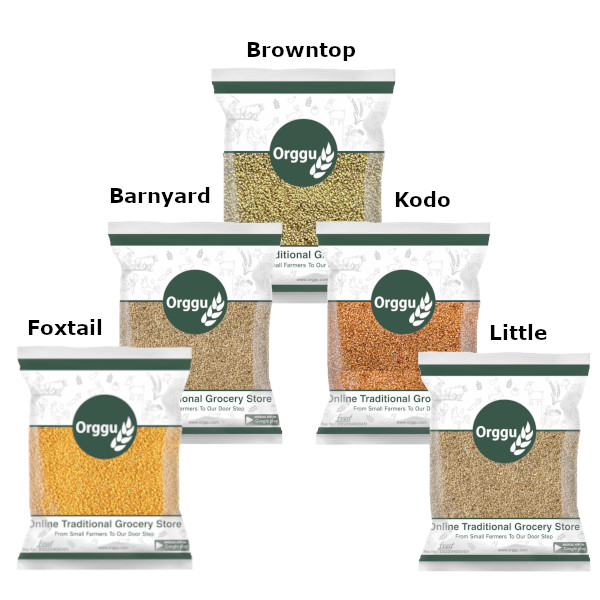
Every millet has a specific water ratio. Using the wrong amount is the most common reason for bad results. Foxtail, kodo, little, and browntop millets need 1:2.5 (one cup millet to two and a half cups water). Barnyard millet needs only 1:2. Refer to our chart below for every variety.
Rule 3: Do Not Over-Stir
This is the mistake that catches most beginners. Unlike rice or dal, millets should not be stirred while cooking. Stirring breaks the grains and releases excess starch, turning your perfectly fluffy millet into a sticky, mushy mess. Just set it, cover it, and leave it alone.
Shop the millets in this article


Water Ratio Master Chart
This is the chart you will keep coming back to. Bookmark this page or screenshot this table. These ratios assume soaked and drained millets.
| Millet | Soak Time | Water Ratio (Millet:Water) | Cooking Time | Texture |
|---|---|---|---|---|
| Foxtail Millet | 6-8 hours | 1 : 2.5 | 15 min | Fluffy like rice |
| Barnyard Millet | 6-8 hours | 1 : 2 | 12 min | Light, fluffy |
| Kodo Millet | 6-8 hours | 1 : 2.5 | 15 min | Rice-like |
| Little Millet | 6-8 hours | 1 : 2.5 | 15 min | Fluffy, grainy |
| Browntop Millet | 6-8 hours | 1 : 2.5 | 15 min | Rice-like, light |
| Finger Millet (Ragi) | No soak needed | 1 : 3 (for porridge) | 10 min | Smooth porridge |
Step-by-Step: How to Cook Each Millet
This universal method works for foxtail, barnyard, kodo, little, and browntop millet. Once you master this, you can cook any millet.
Stovetop Method (Recommended)
Step 1: Soak the millet. Wash 1 cup of millet in water 2-3 times until the water runs clear. Soak in 3 cups of plain water for 6-8 hours (or overnight). This is the most important step.
Step 2: Drain and rinse. After soaking, drain all the water completely. Give the millet one final rinse with fresh water and drain again.
Step 3: Boil water separately. In a heavy-bottomed pot, bring the correct amount of water to a rolling boil. For foxtail millet, that is 2.5 cups of water for 1 cup of soaked millet.
Step 4: Add millet and cook. Add the drained millet to the boiling water. Stir once gently, then reduce the heat to the lowest setting. Cover the pot with a tight-fitting lid. Cook for 12-15 minutes without opening the lid or stirring.
Step 5: Rest and fluff. Turn off the heat. Keep the lid on and let the millet rest for 5 minutes. This allows the steam to finish cooking the grains evenly. Then fluff gently with a fork, not a spoon. Your perfectly cooked millet is ready.
Pressure Cooker Method
Add soaked and drained millet with the correct water ratio to your pressure cooker. Close the lid and cook on medium heat for 2 whistles. Turn off the heat and allow natural pressure release (do not force open). Open, fluff with a fork, and serve. This method is faster but the stovetop method gives slightly better texture.
Rice Cooker Method
The easiest method of all. Add soaked millet and water in the correct ratio to your rice cooker. Press the cook button. That is it. When the cooker switches to warm mode, let it sit for 5 minutes, then fluff and serve. Use the same water ratios as the stovetop method.
Ease of Cooking: Millet Comparison
Myths vs Facts About Cooking Millets
There is a lot of misinformation about cooking millets. Let us clear up the three biggest myths. Tap each card to reveal the truth.
5 Common Mistakes When Cooking Millets
If your millets are not turning out right, you are probably making one of these five mistakes. The fix for each one is simple.
Mistake 1: Not soaking the millet. This is the biggest mistake. Unsoaked millets are harder to digest, take longer to cook, and have a gritty texture. Always soak for at least 6 hours. Set it in the morning, cook for dinner. Or set it before bed, cook for breakfast.
Mistake 2: Using too much water. Excess water turns millet into porridge instead of fluffy grains. Follow the exact ratios in our chart above. If you are used to cooking rice with excess water and draining it, do not do that with millets. Use the absorption method only.
Mistake 3: Using too little water. The opposite problem. Not enough water leaves millets undercooked, hard, and gritty. This is especially common when people use rice ratios (1:1.5) for millets that need 1:2.5.
Mistake 4: Over-stirring while cooking. Every time you stir millets during cooking, you break the grains and release starch. This turns them mushy and sticky. Stir once when you add the millet to water, then cover and do not touch until done.
Mistake 5: Cooking on high heat. High heat burns the bottom layer while leaving the top undercooked. Always bring water to a boil first, add the millet, then immediately reduce to the lowest heat setting. Low and slow is the way.
5 Easy Millet Recipes for Beginners
Once you have mastered basic millet cooking, try these simple recipes. Each one takes less than 20 minutes and uses ingredients you already have in your kitchen.
1. Millet Rice (The Simplest Swap)
Replace rice with any millet using the ratios from our chart. Cook foxtail or kodo millet exactly as described in the steps above and serve it alongside your regular dal, sambar, rasam, or curry. Your family might not even notice the switch. This is the easiest way to start eating millets daily.
2. Millet Upma
Dry roast 1 cup of soaked and drained foxtail millet for 2 minutes. In a separate pan, make a tempering with mustard seeds, urad dal, curry leaves, green chillies, and chopped onions. Add 2.5 cups of water, bring to a boil, add the millet, and cook covered on low heat for 12 minutes. A wholesome, protein-rich breakfast ready in 15 minutes.
3. Millet Dosa
Soak 1 cup of any millet with half a cup of urad dal for 6-8 hours. Grind together into a smooth batter, add salt, and ferment overnight. Make dosas on a hot tawa just like regular dosa. Millet dosas are crispier and more nutritious than rice dosas. Foxtail and little millet work best for this.
4. Millet Khichdi
Cook 1 cup of soaked millet with half a cup of moong dal, a pinch of turmeric, salt, and 3.5 cups of water. Pressure cook for 2 whistles or simmer covered for 20 minutes. Finish with a generous spoonful of ghee. This is comfort food at its finest and the easiest way to get both protein and complex carbs in one dish.
5. Millet Pongal
A creamy, peppery South Indian breakfast that uses millet rava instead of rice. Cook with moong dal, ghee, black pepper and cumin — ready in 20 minutes with a GI of just 48–50. Get the full step-by-step recipe: Millet Pongal Recipe.
Storage Tips
Dry millets: Store in a clean, airtight container in a cool, dry place. Unpolished millets stay fresh for 6 months or longer. Keep them away from moisture and direct sunlight. A glass jar or food-grade plastic container works perfectly.
Cooked millets: Store in an airtight container in the refrigerator for up to 3 days. To reheat, sprinkle a tablespoon of water over the millet and microwave for 1-2 minutes, or heat in a covered pan on low flame. Cooked millets also freeze well for up to 1 month.
Pro tip: Soak millets in bulk. You can soak a large batch, drain it, and store the soaked-and-drained millet in the fridge for up to 2 days. This way you always have pre-soaked millet ready to cook on short notice.
Share cooking tips on WhatsAppTest Your Millet Cooking Knowledge
Think you have got it? Take this quick quiz to test what you have learned.
The Orggu Difference
Why Cook with Orggu Millets?
The quality of your millet matters just as much as the cooking method. Orggu sources unpolished, whole-grain millets directly from organic farmers. Our millets are hand-cleaned, sun-dried, and packed without any chemical processing. Unpolished millets retain their natural bran layer, which means more fibre, more minerals, and a richer nutty flavour when cooked.
Every batch is tested for purity and freshness. When you start with clean, high-quality millets, cooking becomes easier and the results taste noticeably better.
Shop Orggu Millets


Start Your Millet Journey
Try 100% unpolished, chemical-free millets from Orggu
Shop Unpolished MilletsShop the millets in this article
Frequently Asked Questions
Related Reading
- What Are Siridhanya Millets? The Complete Guide
- Foxtail Millet Benefits: Nutrition, Uses & Side Effects
- Millets vs Rice: Which Is Healthier?
- Millets vs Quinoa: The Ultimate Comparison
- Polished vs Unpolished Millets: Why It Matters
- Dr Khadar Vali Millet Diet Plan
Ready to try Siridhanya millets?
Start with our 5-millet combo pack — one of each Siridhanya grain, 100% unpolished.
Buy Positive Millets ComboWant millet flour for rotis? See our Millet Atta for Roti collection — 6 types compared.
Know the method, need a dish? Browse our millet recipe collection — dosa, upma, pongal, khichdi and more.
