Kodo Millet (Harka/Varagu): Benefits, GI & Recipes

Certified organic food specialists · Sources: NIN Hyderabad, ICMR, USDA FoodData Central
📖 ~6 min read · In this article:
Kodo millet is the antioxidant powerhouse of the Siridhanya family. While other millets are celebrated for their fibre or low glycemic index, kodo millet stands out for its exceptionally high polyphenol content — natural antioxidants that protect your cells from damage and reduce the risk of chronic diseases. It's one of the 5 positive millets recommended by Dr. Khadar Vali.
Known as Harka in Kannada, Varagu in Tamil, and Kodra in Hindi, kodo millet has been cultivated in India for over 3,000 years. It grows in poor soil conditions where other crops fail, making it an environmentally sustainable grain. With 8.3g of protein, 9g of fibre, and a moderate glycemic index of ~55, it's a well-rounded grain that benefits everyone — especially those managing heart conditions or diabetes.
What is Kodo Millet?
Kodo millet (Paspalum scrobiculatum) is an ancient grain native to tropical and subtropical regions of India and Africa. It has been a staple food in parts of Tamil Nadu, Karnataka, and Madhya Pradesh for centuries. The grains are small, round, and light brown — slightly larger than barnyard millet.
Kodo millet is a remarkably hardy crop that grows in poor, marginal soils and requires very little water. It can survive drought conditions that would kill rice and wheat — making it one of the most climate-resilient grains available. It's naturally gluten-free and easy to digest.
What truly sets kodo millet apart is its phenolic compound content. Research has shown that kodo millet has higher polyphenol and antioxidant activity than most other millets, making it particularly beneficial for heart health and cancer prevention.
| Language | Name |
|---|---|
| Kannada | Harka (ಹರಕ) |
| Tamil | Varagu (வரகு) |
| Hindi | Kodra / Kodon |
| Telugu | Arikelu (అరికెలు) |
| Malayalam | Koovaragu (കൂവരഗ്) |
| Marathi | Kodra |
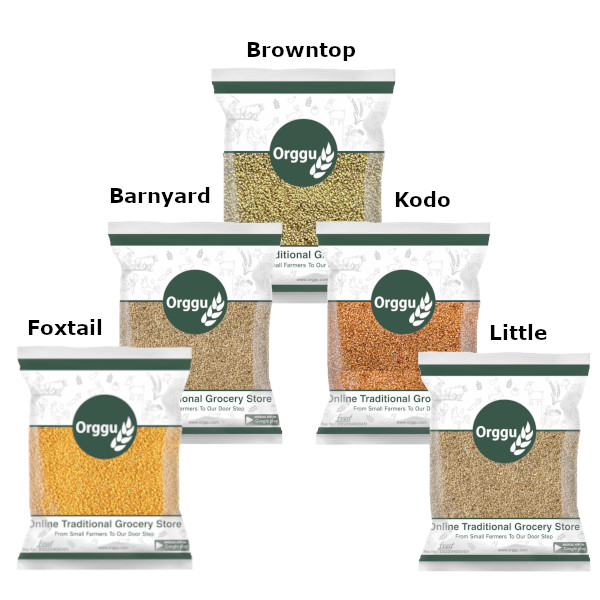
Shop the millets in this article
Nutritional Value of Kodo Millet
Here's the nutrition profile of kodo millet per 100g (unpolished):
| Nutrient | Kodo Millet | White Rice (comparison) |
|---|---|---|
| Calories | ~309 kcal | ~365 kcal |
| Protein | 8.3g | 6.8g |
| Fat | 1.4g | 0.6g |
| Fibre | 9g | 0.4g |
| Carbohydrates | 65.9g | 79g |
| Calcium | 27mg | 10mg |
| Iron | 0.5mg | 0.8mg |
| Glycemic Index | ~55 (Low-Moderate) | ~73 (High) |
Key takeaways: kodo millet delivers 22x more fibre, nearly 3x the calcium, and fewer calories than white rice. While its iron content is modest, it compensates with the highest antioxidant content among Siridhanya millets — something no nutrition table fully captures.
Health Benefits of Kodo Millet
- Rich in antioxidants and polyphenols: Kodo millet contains significantly higher levels of phenolic acids and flavonoids compared to other millets. These powerful antioxidants neutralize free radicals — unstable molecules that damage cells and contribute to ageing, heart disease, and cancer. Regular consumption provides ongoing cellular protection.
- Supports heart health: The combination of high fibre, antioxidants, and magnesium makes kodo millet particularly beneficial for cardiovascular health. Fibre helps reduce LDL (bad cholesterol), while polyphenols prevent the oxidation of cholesterol — a key factor in arterial plaque buildup.
- Easy to digest: Kodo millet is one of the lightest millets, making it gentle on the stomach. People with digestive issues, IBS, or sensitive stomachs often find kodo millet easier to tolerate than heavier grains. It's an excellent choice for elderly people and children.
- Good source of B vitamins: Rich in niacin (B3), thiamine (B1), and riboflavin (B2), kodo millet supports energy metabolism, nervous system function, and skin health. B vitamins are essential for converting food into energy and are often deficient in rice-heavy diets.
- Helps manage blood sugar: With a glycemic index of ~55 and 9g of fibre per 100g, kodo millet causes a much slower rise in blood glucose than white rice. It's a solid choice for diabetics and anyone looking to maintain stable energy levels throughout the day.
- Aids in weight management: At ~309 calories per 100g with 9g of fibre, kodo millet keeps you satisfied for longer while providing fewer calories than rice. The high fibre content reduces cravings and prevents overeating.
- Naturally gluten-free: 100% safe for celiac disease and gluten sensitivity. A complete, nutritious whole grain alternative to wheat-based products.
Easy Kodo Millet Recipes
Kodo millet's mild flavour and light texture make it one of the most versatile millets in the kitchen:
1. Kodo Millet Rice (Harka Anna)
The simplest way to start — cook kodo millet exactly like rice and serve with sambar, rasam, dal, or any curry. It has a slightly lighter texture than foxtail millet, making it feel very close to white rice. Many people find kodo millet the easiest transition from rice.
2. Kodo Millet Pulao
A fragrant one-pot meal — sauté whole spices (cinnamon, cardamom, cloves, bay leaf) with onions, mixed vegetables, and mint in ghee. Add soaked kodo millet with water and cook until fluffy. The millet absorbs the spice flavours beautifully, creating a light yet aromatic pulao.
3. Kodo Millet Pongal
A traditional South Indian comfort food. Cook kodo millet with moong dal, black pepper, cumin, ginger, curry leaves, and generous ghee. The creamy, peppery texture makes it a perfect breakfast or light dinner. Healthier than rice pongal with significantly more fibre and antioxidants.
4. Kodo Millet Khichdi (Varagu Khichdi)
Kodo holds its shape better than the finer millets, which is what makes it the pick for a one-pot khichdi with moong dal, tomato and a cumin tempering. See the full kodo millet khichdi recipe.
5. Kodo Millet Idli
Soak kodo millet and urad dal separately, grind to a smooth batter, and ferment overnight. Steam in idli moulds for soft, fluffy idlis that are loaded with fibre and antioxidants. Serve with coconut chutney and sambar for a complete, healthy South Indian breakfast.
How to Cook Kodo Millet
- Soak: Wash kodo millet and soak for 6-8 hours (overnight is ideal). Minimum 30 minutes if short on time.
- Rinse: Drain the soaking water and rinse 2-3 times with fresh water.
- Cook: Use a 1:2.5 millet-to-water ratio. Bring water to boil, add soaked millet, cover and cook on low flame for 15-20 minutes. Or pressure cook for 3 whistles.
- Rest: Turn off heat, keep covered for 5 minutes. Fluff with a fork.
- Serve: Use as a direct replacement for rice in any meal.
Why Buy Unpolished Kodo Millet?
The antioxidants and polyphenols that make kodo millet special are concentrated in its outer bran layer. Polishing removes this layer, stripping away the very compounds that give kodo millet its unique health advantages. Polished kodo millet is essentially just another starchy grain — you lose 60-70% of the fibre, vitamins, and antioxidants.
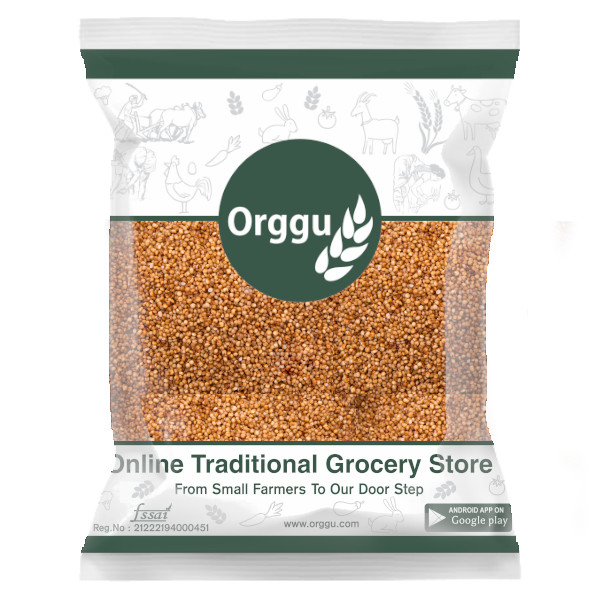
At Orggu, we sell 100% unpolished kodo millet sourced from small farmers. Chemical-free, hand-cleaned, and sun-dried to preserve every nutrient.
Also available in other forms:
- Kodo Millet Flakes — ₹59/250g — quick-cook poha and porridge
- Kodo Millet Rava — ₹99/400g — for upma and kesari bath
- Kodo Millet Puff — ₹80/100g — healthy ready-to-eat snack
Want all 5 Siridhanya millets? Try our combo pack:
🌱 Why Choose Orggu Kodo Millet?
🌾 Small Farmers (50+ across Karnataka) → 🧹 Hand-Cleaned → ☀️ Sun-Dried (zero chemicals) → 📦 Fresh Packed → 🚚 Free Delivery (to your door)
Kodo Millet, Glycemic Index & Blood Sugar
Kodo millet is a whole, unpolished, high-fibre grain, and like most millets it has a low-to-moderate glycemic index — lower than white rice. That is why it is often chosen as a rice replacement within a low-GI way of eating. Exact GI values vary with the variety and how it is cooked, so treat any single number as indicative; our millet glycemic index guide has the comparison.
A careful note: kodo millet is a food, not a treatment. It does not cure or treat diabetes on its own. What it can do is replace a refined grain (white rice) with a whole one that is higher in fibre — a swap that fits a blood-sugar-friendly, gut-friendly pattern built with your doctor. For how millets fit blood-sugar management overall, see millets for diabetes, and for a simple way to rotate kodo through the week, the 7-day millet diet plan.
What is the glycemic index of kodo millet?
Kodo millet, like most millets, is a low-to-moderate GI whole grain — lower than white rice. Exact values vary with the variety and cooking, so treat any single figure as indicative rather than exact. See our millet glycemic index guide for the comparison.
Is kodo millet good for diabetes?
Kodo millet is a low-GI, high-fibre whole grain, so it fits a diabetes-friendly diet as a swap for white rice. But it is a food, not a treatment — it does not cure or control diabetes on its own, so use it as one part of a plan agreed with your doctor.
Shop the millets in this article
Frequently Asked Questions
Also read: Foxtail Millet (Navane): Benefits, Nutrition & Recipes | Barnyard Millet (Oodalu): Complete Guide | What Are Siridhanya Millets?
Sources & References
- Indian Food Composition Tables (2017) — National Institute of Nutrition, Hyderabad
- USDA FoodData Central — U.S. Department of Agriculture
- Indian Journal of Medical Research — Glycemic Index Studies
Try kodo millet today
The lightest Siridhanya grain — just 309 calories per 100g. 100% unpolished.
Buy Unpolished Kodo Millet