What is Bull-Driven Oil (Marachekku)? The Ancient Way of Extracting Pure Oil

Certified organic food specialists · Sources: NIN Hyderabad, ICMR, USDA FoodData Central
📖 7 min read · In this article:
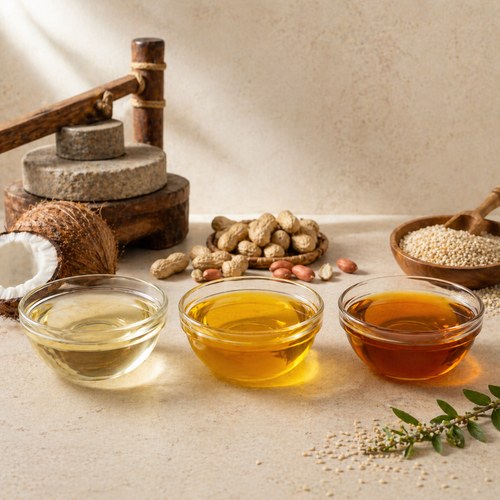
Long before electric motors and chemical solvents, Indian villages had a simple, brilliant way of extracting oil — a bull walking in circles, slowly turning a heavy wooden pestle inside a stone or wooden mortar. This is bull-driven oil extraction, known as marachekku in Tamil, ghani in Hindi, and ghaani in Kannada.
This method has been the backbone of Indian cooking for centuries. No electricity. No heat. No chemicals. Just raw oilseeds, a sturdy wooden press, and the patient, steady power of a bull. The oil that drips out is unprocessed, unrefined, and packed with every nutrient the seed originally held.
In a world where most cooking oils are stripped of their goodness through industrial processing, bull-driven oil stands as a reminder of what real, pure oil tastes like. If your grandparents grew up in a village, chances are this is the oil they ate — and the reason they stayed healthy.
But how much of what you hear about bull-driven oil is true? Tap each card to separate myth from fact:
How Bull-Driven Oil Extraction Works
The process is beautifully simple and has remained unchanged for hundreds of years:
- Selecting the seeds: High-quality oilseeds — typically groundnuts, sesame, or coconut — are cleaned and sun-dried naturally. No artificial drying or pre-treatment is needed.
- Loading the ghani: The dried seeds are placed into a large wooden mortar (the ghani). A thick wooden pestle sits inside, connected to a long wooden beam.
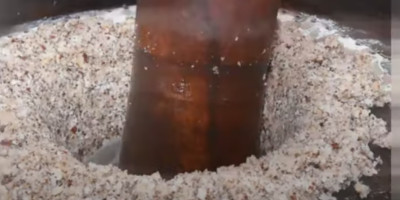
- The bull begins walking: A bull (or pair of bulls) is yoked to the beam. As the bull walks in a slow, steady circle, the beam rotates the heavy pestle inside the mortar. The seeds are crushed gradually under immense pressure.
- Oil flows out: As the seeds are crushed, oil seeps out from a small opening at the base of the ghani. It drips slowly into a collection vessel — pure, golden, and fragrant.
- Natural filtering: The oil is filtered through clean cloth to remove any seed particles. No chemical refining, no bleaching, no deodorizing.
- Leftover oil cake: The crushed seed residue (oil cake) is not wasted — it's used as nutritious cattle feed, making the entire process zero-waste.
The entire extraction happens at room temperature. The bull moves slowly — there is no friction heat. The wooden mortar naturally absorbs excess moisture. This is why bull-driven oil retains 100% of its natural nutrients, flavour, and aroma.
Shop this article
Bull-Driven vs Machine Cold Pressed vs Refined Oil
Not all oils are created equal. Here's how the three main extraction methods compare:
| Feature | Bull-Driven (Ghani) | Machine Cold Pressed | Refined |
|---|---|---|---|
| Speed | Very slow (5-6 litres/day) | Moderate | Fast (mass production) |
| Heat Generated | None (true room temperature) | Minimal (below 50°C) | High (200°C+) |
| Nutrient Retention | Highest — all vitamins, antioxidants intact | High — most nutrients preserved | Low — most nutrients destroyed |
| Taste & Aroma | Strongest natural flavour | Good natural flavour | No flavour (deodorized) |
| Production Scale | Small batch, artisanal | Medium scale | Mass produced |
| Chemical Use | Absolutely none | None | Yes (hexane, bleach, deodorizers) |
| Environmental Impact | Zero — no electricity needed | Low — uses electric motors | High — industrial processing |
Bull-driven oil is the gold standard of oil extraction — the slowest, gentlest, and purest method that exists. Machine cold pressed oil is the next best option and a good everyday alternative. Refined oil, despite being the cheapest and most widely available, is the least nutritious — it's essentially a chemically processed product with little resemblance to real oil.
📲 Share this on WhatsAppWhy Bull-Driven Oil is Special
What makes bull-driven oil fundamentally different from every other oil on the market?
- Slowest extraction = lowest temperature = maximum nutrition. Because the bull walks slowly, the pestle rotates gently. There is virtually zero heat generated during crushing. Even machine cold pressing generates some friction heat (up to 50°C). In a bull-driven ghani, the temperature never rises above ambient — every vitamin, every antioxidant, every essential fatty acid survives intact.
- Wood absorbs moisture naturally. The wooden mortar and pestle absorb excess moisture from the seeds during pressing. This natural dehumidification improves the oil's quality and shelf life without any chemical intervention.
- Authentic taste you can immediately notice. Take one spoonful of bull-driven groundnut oil and compare it to any store-bought oil. The difference is unmistakable — a deep, rich, nutty aroma and a full-bodied flavour that transforms your cooking.
- Supports traditional livelihoods. Every bottle of bull-driven oil supports traditional oil pressers (ghaaniwallas), bull keepers, and small farmers who have preserved this craft for generations.
- Environmentally friendly. No electricity, no factory emissions, no chemical waste. Bull-driven extraction is perhaps the most sustainable food processing method that exists.
- Small-batch quality. A ghani produces only 5-6 litres per day. This isn't a limitation — it's a feature. Each small batch is carefully monitored, ensuring consistent quality that mass production can never match.
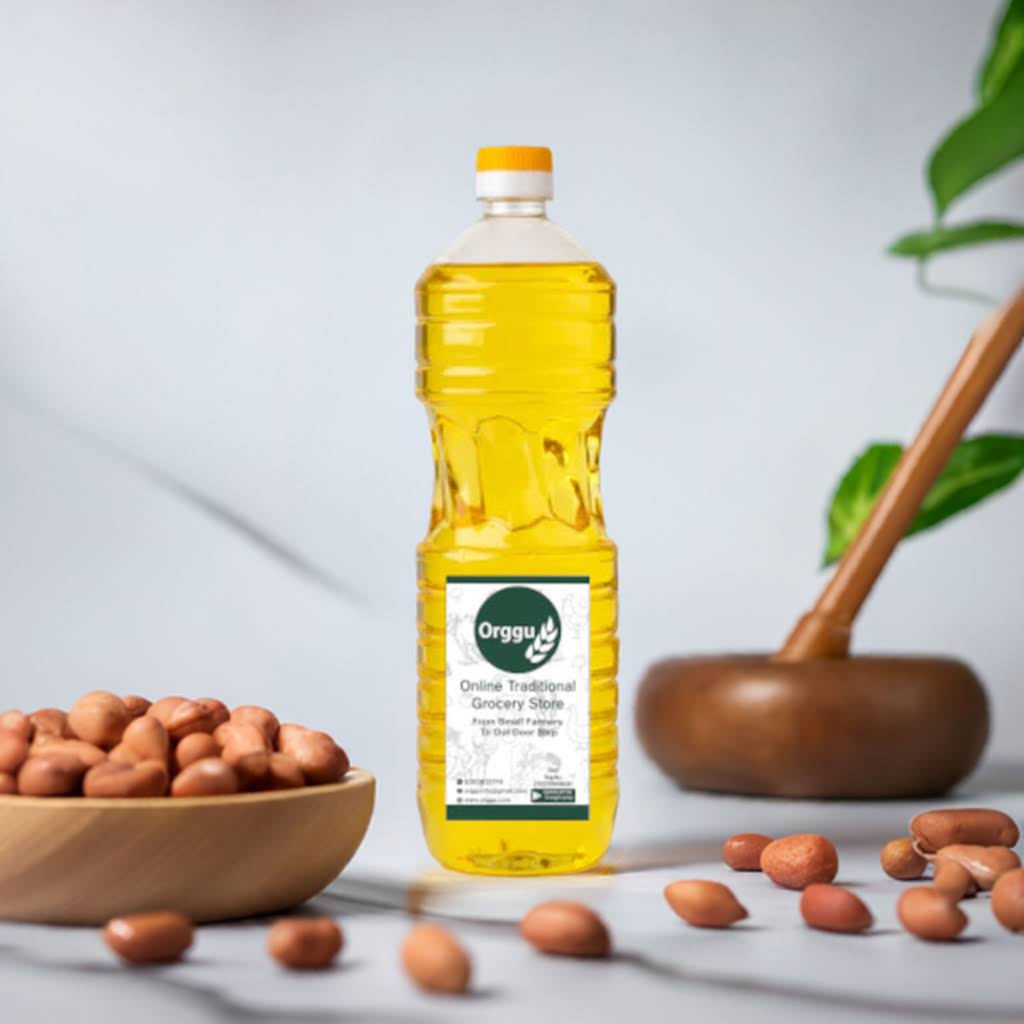
Orggu's Bull-Driven Groundnut Oil
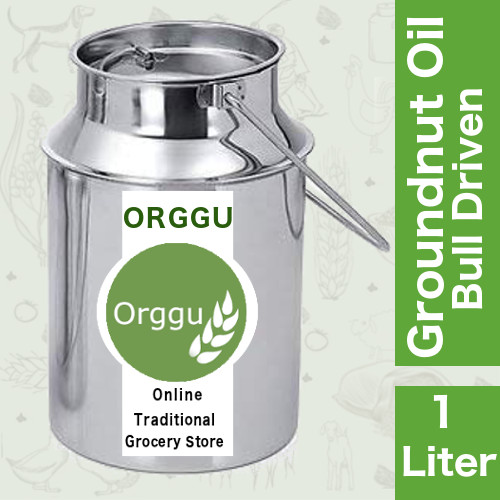
At Orggu, we source our bull-driven groundnut oil from traditional ghani oil pressers in rural Karnataka who have been practising this craft for generations. Here's what makes our oil special:
- Locally grown groundnuts — sourced from small farmers in Karnataka
- Traditional wooden ghani — extracted using a bull-powered wooden press, exactly as it's been done for centuries
- Zero chemicals, zero preservatives, zero mixing — what you get is 100% pure groundnut oil, nothing else
- Perfect for Indian cooking — high smoke point makes it ideal for deep frying, tempering (tadka), and everyday seasoning
We also offer bull-driven versions of other oils:

How to Use Bull-Driven Oil in Your Kitchen
Bull-driven oil is not a specialty ingredient — it's meant to be your everyday cooking oil. Use it exactly as you would any other oil:
- Everyday cooking: Use for sautéing vegetables, making curries, gravies, and rice dishes. The natural flavour elevates every dish.
- Deep frying: Groundnut oil has a high smoke point (~230°C), making it safe and ideal for deep frying pakoras, vadas, chips, and snacks.
- Tempering (tadka): The rich aroma of bull-driven oil makes your tadka incredibly fragrant — a noticeable upgrade from refined oil.
- Traditional recipes: If you're cooking traditional South Indian or North Indian recipes, bull-driven oil brings the authentic flavour that our grandmothers' cooking was known for.
Storage tip: Keep the oil in a cool, dark place — away from direct sunlight and heat. Use a glass or stainless steel container. You may notice a small amount of natural sediment settling at the bottom of the bottle. This is perfectly normal and is actually a sign of purity — it means the oil hasn't been chemically filtered or processed.
🌱 Why Choose Orggu Bull-Driven Oils?
🌾 Small Farmers (50+ across Karnataka) → 🧹 Hand-Cleaned → ⚙️ Bull-Driven Press (wooden ghani, zero heat) → 📦 Fresh Packed → 🚚 Free Delivery
Shop this article
Frequently Asked Questions
Want to understand the difference between cold pressed and refined oils? Read our detailed guide: What is Cold Pressed Oil? Benefits, Types & Why It's Better Than Refined Oil