Browntop Millet in Telugu: Andu Korralu — Benefits & Uses

Sources: NIN Hyderabad, ICMR, USDA FoodData Central
If you are searching for browntop millet in Telugu, the name you are looking for is అండు కొర్రలు (Andu Korralu). Browntop millet (botanical name Brachiaria ramosa) is the rarest of the five Siridhanya, or "positive", millets, and in Telugu-speaking Andhra Pradesh and Telangana it is most commonly called Andu Korralu.
Looking for the other grains? See all millets in Telugu in one chart.
These Telugu and other Indian-language names are taken from our own millet names in Indian languages glossary, so the spelling here matches the rest of the site.
What is Andu Korralu (browntop millet)?
Browntop millet is a small, quick-growing grain traditionally cultivated in the drier parts of South India, including the Telugu regions. It is one of the five Siridhanya millets grouped together in the framework popularised by Dr. Khadar Vali, the Telangana-born scientist whose work has renewed interest in these grains across the Telugu states. The five positive millets are foxtail (కొర్రలు, Korralu), browntop (అండు కొర్రలు, Andu Korralu), little (సామలు, Samalu), kodo (అరికెలు, Arikelu) and barnyard (ఊదలు, Udalu).
Shop the millets in this article
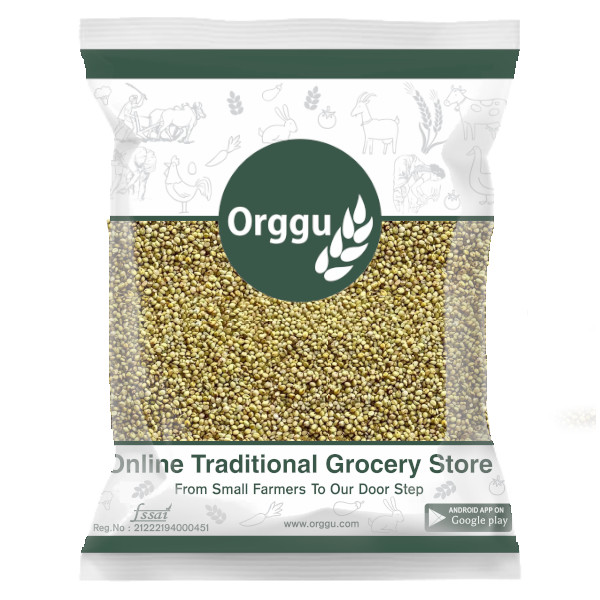
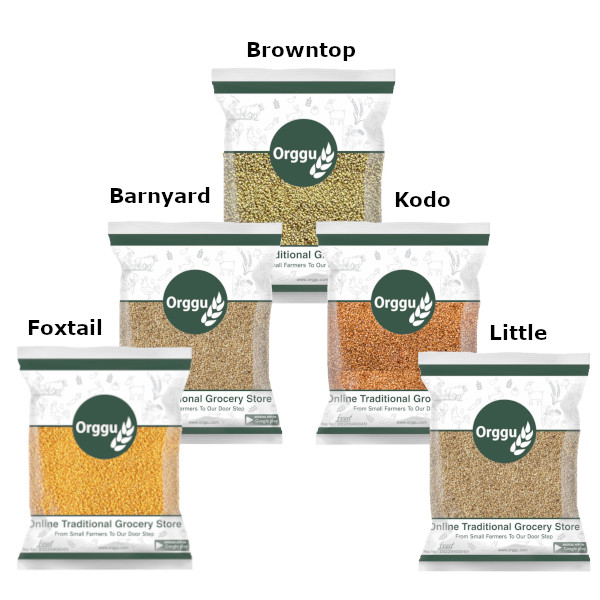
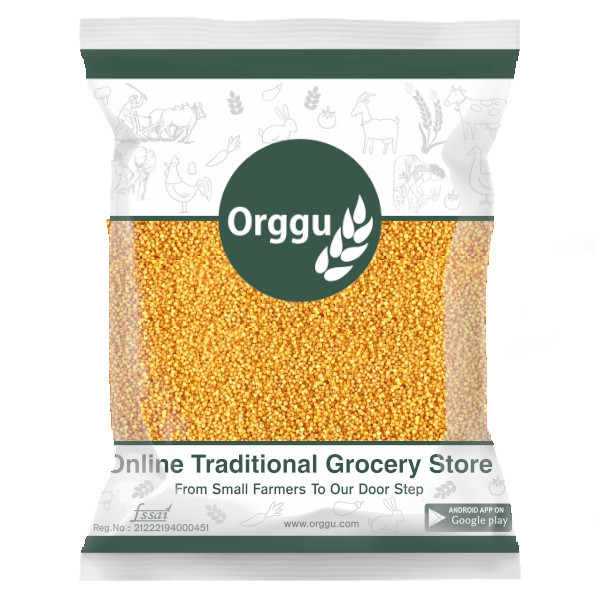
Andu Korralu & related Telugu names
| Language | Name |
|---|---|
| Telugu (primary) | అండు కొర్రలు — Andu Korralu |
| English | Browntop millet |
| Kannada | ಕొరಲె — Korale |
| Tamil | பாலப் பயறு / குலசாமை — Pala Payaru / Kula Samai |
| Botanical | Brachiaria ramosa |
Because Andu Korralu is a regional grain, spelling and transliteration vary between villages; the forms above follow the Orggu glossary.
Traditional use in Andhra & Telangana
In Telugu households, millets like Andu Korralu have traditionally been cooked much like rice — as annam (plain cooked grain), in pongal/pulagam, upma, and as a base for curd rice. As one of the Siridhanya millets, it is usually eaten unpolished so that the fibre-rich bran layer is retained.
Nutrition snapshot
Like the other Siridhanya millets, browntop millet is valued mainly for being rich in dietary fibre and for supplying minerals such as iron and calcium as part of a balanced diet (NIN, Indian Food Composition Tables 2017). It is naturally gluten-free. Exact values vary by sample and processing, so we have kept this description qualitative rather than quoting a single figure.
How to cook Andu Korralu
Browntop millet is best soaked for 4–6 hours (or overnight), rinsed, and cooked with about 2 to 2.5 parts water to 1 part millet until soft. For step-by-step water ratios and soaking times for every Siridhanya millet, see our guide on how to cook millets perfectly.
Buy unpolished Andu Korralu (browntop millet)
100% unpolished, sourced from small farmers.
Buy Browntop Millet · Positive Millets combo · Dr Khadar Vali millets
అండు కొర్రలు అనేది సిరిధాన్య (పాజిటివ్) మిల్లెట్లలో ఒకటి. దీన్ని ఇంగ్లీషులో browntop millet అంటారు. ఇది పీచు (fibre) పదార్థం ఎక్కువగా ఉండే, గ్లూటెన్ లేని చిరుధాన్యం. అన్నం, పొంగలి, ఉప్మా లాగా వండుకోవచ్చు. వండే ముందు 4–6 గంటలు నానబెట్టడం మంచిది. ఆరోగ్య సమస్యలు ఉంటే డాక్టర్ను సంప్రదించండి.
Shop the millets in this article
Frequently asked questions
What is browntop millet called in Telugu?
Browntop millet is called Andu Korralu (అండు కొర్రలు) in Telugu. It is the rarest of the five Siridhanya (positive) millets.
Is Andu Korralu the same as browntop millet?
Yes. Andu Korralu is the Telugu name for browntop millet (botanical name Brachiaria ramosa).
Is browntop millet the same as foxtail millet (Korralu)?
No. Foxtail millet is Korralu; browntop millet is Andu Korralu. They are two different Siridhanya millets, though the Telugu names are similar.
How do you cook Andu Korralu?
Soak for 4–6 hours, rinse, and cook with about 2 to 2.5 parts water to 1 part millet until soft. It can be used anywhere you would use rice.
What is Andu Korralu in English?
Andu Korralu (అండు కొర్రలు) is browntop millet in English. It is a different grain from foxtail millet, which is Korralu in Telugu, and it is called Korale in Kannada.
Sources & References
- Indian Food Composition Tables (2017) — National Institute of Nutrition (NIN), Hyderabad / ICMR
- USDA FoodData Central — U.S. Department of Agriculture
