Little Millet (Saame / Kutki): Benefits & Uses

Certified organic food specialists · Sources: NIN Hyderabad, ICMR, USDA FoodData Central
📖 6.5 min read · In this article:
See where little millet sits on our millet glycemic index chart, fit it into a 7-day millet diet plan, and shop it in our unpolished millets range.
Little millet is the smallest of the 5 Siridhanya millets but packs remarkably big nutrition. Despite its tiny grain size, it delivers the highest iron content (9.3mg per 100g) among all Siridhanya millets — that’s 11x more iron than white rice. It’s one of the 5 positive millets recommended by Dr. Khadar Vali and arguably the easiest millet to transition to if you’re a lifelong rice eater.
Known as Saame in Kannada, Samai in Tamil, Kutki in Hindi, Samalu in Telugu, and Chama in Malayalam, little millet has the mildest flavour and a texture closest to white rice of any millet. It cooks the fastest, absorbs flavours beautifully, and works in virtually every dish — from plain rice to upma to payasam. If you’ve been looking for a healthier replacement for rice that your family will actually eat, little millet is where you start.
What is Little Millet?
Little millet (Panicum sumatrense) is an ancient grain that has been cultivated in India for thousands of years. The grains are tiny — the smallest among all millets — round, and pale yellow to light brown in colour. It has been a staple food across Karnataka, Tamil Nadu, and Madhya Pradesh for generations, long before polished white rice became widely available.
Little millet is an incredibly drought-resistant crop that thrives in poor soil with minimal water. It matures in just 60-90 days and can grow in rain-fed conditions where rice would fail entirely. This makes it one of the most environmentally sustainable grains you can eat. It’s naturally gluten-free, easy to digest, and gentle on the stomach.
What makes little millet the ideal rice substitute is its neutral, mild taste. Unlike foxtail millet (which has a nutty flavour) or barnyard millet (which has an earthy taste), little millet is almost flavourless on its own — exactly like white rice. This means your sambar, rasam, dal, and curries taste exactly the same, but you get dramatically better nutrition.
| Language | Name |
|---|---|
| Kannada | Saame (ಠಾಮೆ) |
| Tamil | Samai (சாமை) |
| Hindi | Kutki / Moraiyo |
| Telugu | Samalu (సామలు) |
| Malayalam | Chama (ചാമ) |
| Marathi | Halvi / Vari |
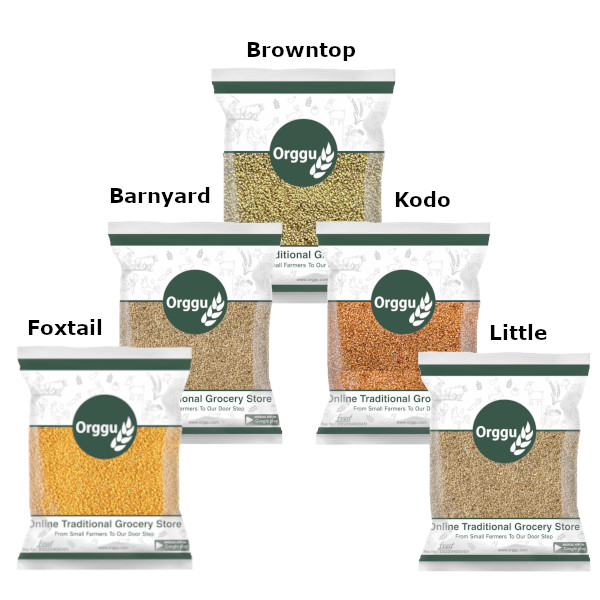
Shop the millets in this article
Nutritional Value of Little Millet
Here’s the nutrition profile of little millet per 100g (unpolished) compared to white rice:
| Nutrient | Little Millet | White Rice (comparison) |
|---|---|---|
| Calories | ~329 kcal | ~365 kcal |
| Protein | 7.7g | 6.8g |
| Fat | 4.7g | 0.6g |
| Fibre | 7.6g | 0.4g |
| Carbohydrates | 67g | 79g |
| Iron | 9.3mg (11x more!) | 0.8mg |
| Calcium | 17mg | 10mg |
| Glycemic Index | ~52 (Low) | ~73 (High) |
Key takeaways: little millet delivers 19x more fibre, 11x more iron, fewer calories, and a significantly lower glycemic index than white rice. The iron content alone makes it exceptional — at 9.3mg per 100g, it’s the highest among all Siridhanya millets and an excellent natural remedy for iron deficiency and anemia.
Health Benefits of Little Millet
- Highest iron content (9.3mg per 100g): Little millet is a powerhouse for iron — delivering 11 times more iron than white rice. This makes it exceptionally beneficial for people with anemia, women during menstruation, and pregnant women who need higher iron intake. Regular consumption can significantly improve haemoglobin levels naturally.
- Low calorie for weight management: At ~329 calories per 100g (compared to rice’s ~365), little millet helps you cut calories without reducing portion size. Combined with 7.6g of fibre that keeps you full longer, it’s one of the most effective natural tools for sustainable weight loss.
- High fibre aids digestion: With 7.6g of dietary fibre per 100g — that’s 19 times more than white rice — little millet promotes healthy bowel movements, prevents constipation, and supports a thriving gut microbiome. Good digestion is the foundation of overall health.
- Low glycemic index (~52) for diabetics: Little millet releases glucose slowly into the bloodstream, preventing the sharp spikes and crashes that white rice (GI ~73) causes. This helps maintain stable blood sugar levels throughout the day, making it an excellent daily staple for diabetics and pre-diabetics.
- Most versatile — works for any dish: Because of its mild, neutral flavour and rice-like texture, little millet can replace rice in literally any recipe without anyone noticing the difference. It works for plain rice, biryani, upma, payasam, dosa, idli — everything.
- Naturally gluten-free: 100% safe for people with celiac disease and gluten sensitivity. A complete, nutritious whole grain alternative to wheat-based products.
- Rich in B vitamins: Little millet is a good source of niacin (B3), thiamine (B1), and riboflavin (B2), which support energy metabolism, nervous system function, and healthy skin. These B vitamins are often lacking in rice-heavy diets.
Easy Little Millet Recipes
Little millet’s mild taste and rice-like texture make it the most beginner-friendly millet in the kitchen:
1. Little Millet Rice (Saame Anna)
The simplest and best way to start — cook little millet exactly like rice and serve with sambar, rasam, dal, or any curry. The texture is so close to white rice that most people can’t tell the difference. This is the easiest transition you can make for your family’s health — same taste, dramatically better nutrition.
2. Little Millet Upma
Replace rava (semolina) with little millet rava for a high-fibre, protein-rich breakfast. Temper mustard seeds, urad dal, chana dal, curry leaves, and green chillies in oil. Add vegetables, water, and the millet rava. Cook until fluffy. Tastes just like regular upma but keeps you full until lunch.
3. Little Millet Kheer / Payasam
A guilt-free dessert that’s perfect for festivals and special occasions. Cook little millet in milk until soft and creamy, sweeten with jaggery instead of sugar, and flavour with cardamom, saffron, and roasted cashews. All the sweetness and richness of traditional payasam with a fraction of the glycemic impact.
4. Little Millet Pongal (Samai Pongal)
The savoury ven pongal, made with whole samai rather than rava — soaked grain, moong dal roasted first so it holds its shape, and a pepper-and-cumin tempering in ghee at the end. See the full little millet pongal recipe.
5. Little Millet Lemon Rice
A tangy, quick lunch that comes together in minutes. Cook little millet rice, then temper mustard seeds, peanuts, curry leaves, dried red chillies, and turmeric in oil. Toss with the cooked millet and squeeze fresh lemon juice. Bright, flavourful, and packed with fibre — perfect for lunchboxes.
How to Cook Little Millet
- Soak: Wash little millet and soak for 6-8 hours (overnight is ideal). Minimum 30 minutes if short on time.
- Rinse: Drain the soaking water and rinse 2-3 times with fresh water.
- Cook: Use a 1:2.5 millet-to-water ratio. Bring water to boil, add soaked millet, cover and cook on low flame for 15 minutes. Or pressure cook for 3 whistles.
- Rest: Turn off heat, keep covered for 5 minutes. Fluff with a fork.
- Serve: Use as a direct replacement for rice in any meal.
Why Buy Unpolished Little Millet?
The iron, fibre, and B vitamins that make little millet a superfood are concentrated in its outer bran layer. Polishing strips this layer away, removing 60-70% of the fibre, vitamins, minerals, and antioxidants. Polished little millet loses most of its iron content — the very nutrient that makes it special. You’re essentially left with empty starch, no better than white rice.
At Orggu, we sell 100% unpolished little millet sourced from small farmers. Chemical-free, hand-cleaned, and sun-dried to preserve every nutrient.
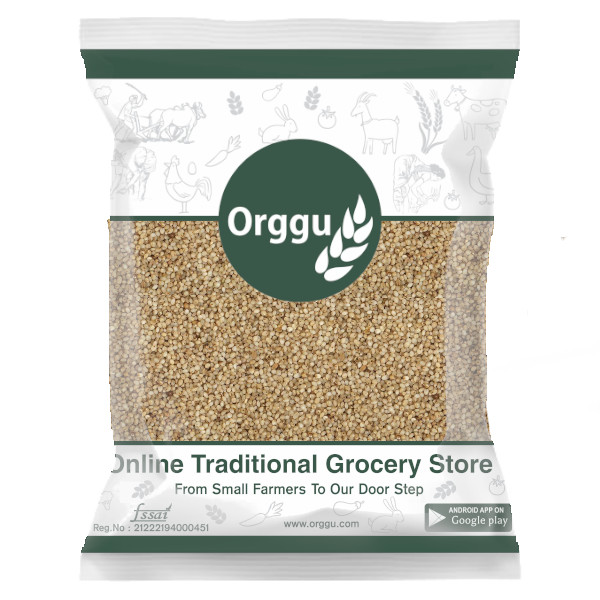
Also available in other forms:
- Little Millet Flour — ₹80/500g — for dosa, roti, and baking
- Little Millet Flakes — ₹69/250g — quick-cook poha and porridge
- Little Millet Rava — ₹109/400g — for upma and kesari bath
- Little Millet Puff — ₹80/100g — healthy ready-to-eat snack
Want all 5 Siridhanya millets? Try our combo pack:
🌱 Farm to Doorstep: How Your Little Millet Reaches You
🌾 Small Farmers (50+ across Karnataka) → 🧹 Hand-Cleaned (no machine polishing) → ⚙️ Sun-Dried (natural drying, zero chemicals) → 📦 Fresh Packed (airtight, food-grade) → 🚚 Free Delivery (same week, to your door)
Shop the millets in this article
Frequently Asked Questions
Also read: Foxtail Millet (Navane): Benefits, Nutrition & Recipes | Barnyard Millet (Oodalu): Complete Guide | Kodo Millet (Harka): Nutrition & Benefits | What Are Siridhanya Millets?
Sources & References
- Indian Food Composition Tables (2017) — National Institute of Nutrition, Hyderabad
- USDA FoodData Central — U.S. Department of Agriculture
- Indian Journal of Medical Research — Glycemic Index Studies
Try little millet today
Cooks in 12 minutes. Perfect rice replacement. 100% unpolished.
Buy Unpolished Little Millet