Cold Pressed Groundnut Oil Benefits: Why South India Swears By This Oil

Certified organic food specialists · Sources: NIN Hyderabad, ICMR, USDA FoodData Central
📖 10 min read · In this article:
India produces over 9 million tonnes of groundnuts every year — second only to China. And for over 80% of South Indian households, groundnut oil isn't just another cooking oil. It's the cooking oil.
Your grandmother called it shenga enne in Kannada, verkadalai ennai in Tamil, or verusenaga nune in Telugu. She deep-fried vadas in it, tempered sambar with it, and even applied it on dry skin during winters. No fancy branding. Just pure, fresh, cold pressed groundnut oil from the local mill.
But today, most of us cook with refined groundnut oil — stripped of its colour, aroma, and nearly all its nutrients. This guide covers what makes cold pressed groundnut oil different, its real nutrition facts from USDA and NIN Hyderabad, and why switching back might be the healthiest kitchen decision you make.
What is Groundnut Oil?
Groundnut oil (also called peanut oil) is extracted from the seeds of Arachis hypogaea. India has been growing groundnuts for centuries, primarily in Gujarat, Rajasthan, Andhra Pradesh, Tamil Nadu, and Karnataka.
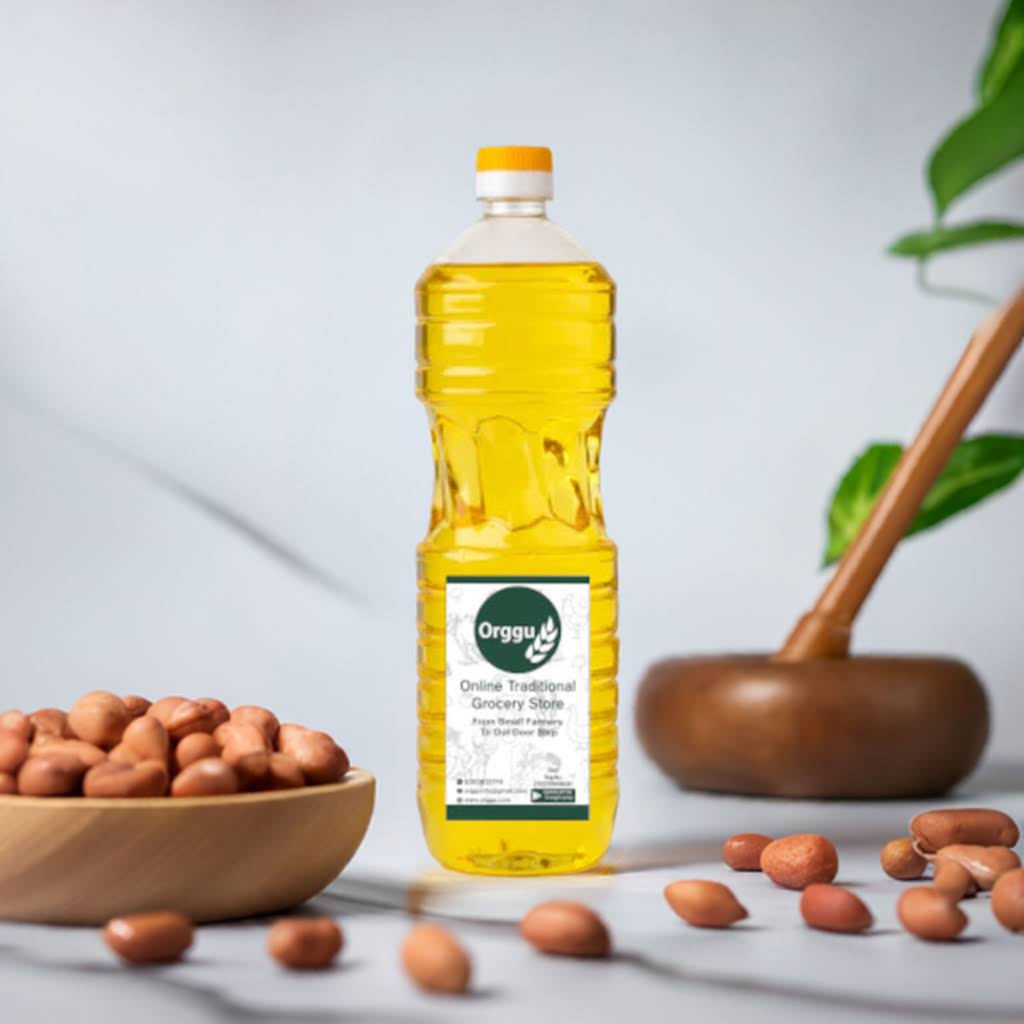
When extracted using the cold press method — crushed mechanically without heat or chemicals — the oil retains its natural golden-amber colour, rich peanut aroma, and full nutrient profile including Vitamin E, polyphenols, and healthy fats.
| Language | Name for Groundnut Oil |
|---|---|
| Kannada | Shenga Enne (ಶೆಂಗ ಮಿ) |
| Tamil | Verkadalai Ennai (வேருக்கடலை எண்ணெய்) |
| Telugu | Verusenaga Nune (వెరుసెనగ నూనె) |
| Hindi | Mungfali ka Tel |
| Malayalam | Nilakkadala Enna |
Shop this article
Myths vs Facts About Groundnut Oil
Before we dive into the science, let's clear up some common misconceptions. Tap each card to reveal whether it's a myth or fact:
Nutrition Comparison: Groundnut Oil vs Other Cooking Oils
Here's how cold pressed groundnut oil stacks up against other popular cooking oils in India. All values are per 100g, sourced from USDA FoodData Central and NIN Hyderabad.
| Nutrient | Groundnut Oil | Sunflower Oil | Coconut Oil | Mustard Oil |
|---|---|---|---|---|
| Calories | 884 kcal | 884 kcal | 862 kcal | 884 kcal |
| MUFA | 46.2g ✅ | 19.5g | 6.3g | 59.2g |
| PUFA | 32g | 65.7g | 1.7g | 21.2g |
| Saturated Fat | 16.9g | 10.3g | 82.5g ⚠ | 11.6g |
| Vitamin E | 15.7mg | 41.1mg | 0.09mg | 23mg |
| Smoke Point | 230°C ✅ | 227°C | 177°C | 250°C |
| Best For | All-purpose Indian cooking | Light sautéing | South Indian, baking | North Indian, pickles |
Visual Score Card: Groundnut Oil vs Sunflower Oil
via orggu.com · Data from USDA FoodData Central
7 Science-Backed Benefits of Cold Pressed Groundnut Oil
1. Heart Health: Lowers Bad Cholesterol
Groundnut oil's 46.2g MUFA per 100g actively helps reduce LDL (bad) cholesterol while preserving HDL (good) cholesterol. A study published in the Journal of Nutrition found that diets rich in groundnut oil reduced cardiovascular risk markers by 14%.
2. Rich in Vitamin E: A Natural Antioxidant
Cold pressed groundnut oil contains 15.7mg of Vitamin E per 100g — that's 104% of your daily requirement in just 2 tablespoons. Vitamin E protects cells from oxidative damage, supports skin health, and boosts immunity.
3. High Smoke Point: Safe for Indian Cooking
At ~230°C, groundnut oil has one of the highest smoke points among cooking oils. This means it doesn't break down into toxic aldehydes when you deep fry pooris, vadas, or pakoras. Most other oils start smoking and releasing harmful compounds at lower temperatures.
4. Contains Resveratrol
Cold pressed groundnut oil contains resveratrol — the same powerful antioxidant found in red grapes and wine. Resveratrol is linked to anti-aging benefits, improved blood flow, and reduced inflammation.
5. Supports Joint Health
The anti-inflammatory compounds in groundnut oil — including Vitamin E and polyphenols — may help reduce joint pain and stiffness. In South India, warm groundnut oil massage has been a traditional remedy for knee and back pain for generations.
6. Better Nutrient Absorption
Fat-soluble vitamins (A, D, E, K) need dietary fat to be absorbed. Cooking vegetables in cold pressed groundnut oil helps your body absorb up to 6x more beta-carotene from carrots, spinach, and other vegetables compared to eating them without oil.
7. Natural Skin Moisturizer
Beyond cooking, cold pressed groundnut oil is a traditional South Indian remedy for dry skin. Its Vitamin E and light texture make it an effective natural moisturizer — especially during dry winters. In Karnataka, it's common to apply shenga enne before a warm water bath.
Cold Pressed vs Refined Groundnut Oil
This is where it really matters. The same groundnut produces dramatically different oil depending on how it's extracted:
| Parameter | Cold Pressed ✅ | Refined ❌ |
|---|---|---|
| Extraction | Mechanical press, no heat | Hexane chemical solvent + 200°C heat |
| Colour | Deep golden amber | Pale, almost transparent |
| Aroma | Strong natural peanut smell | Odourless (deodorized) |
| Vitamin E | 15.7mg per 100g (retained) | ~2mg per 100g (90% destroyed) |
| Antioxidants | Resveratrol, polyphenols intact | Almost all destroyed |
| Trans Fats | Zero | May form during high-heat processing |
| Chemical Residues | None | Trace hexane possible |
| Shelf Life | 4-6 months | 12-18 months |
| Taste | Rich, nutty, enhances dishes | Bland, neutral |
How Groundnut Oil is Made: 3 Methods
🐂 Bull-Driven (Marachekku) — Purest
Wooden ghani → Slowest crush → Zero heat → Purest oil
⚙️ Cold Pressed (Machine) — Pure
Steel expeller → Mechanical crush → Below 50°C → Pure oil
🏭 Refined (Industrial) — Stripped
Chemical solvent → 200°C heat → Bleach → Deodorize → Dead oil
Best Uses: Which Dish Needs Which Oil?
Cold pressed groundnut oil is the most versatile cooking oil for Indian kitchens. Here's a quick guide:
| Cooking Method | Best Oil | Why |
|---|---|---|
| Deep frying (vada, pakora, poori) | Groundnut oil ✅ | High smoke point (230°C), stable, clean taste |
| Tadka / Tempering | Groundnut oil ✅ | Nutty aroma enhances dal, sambar, rasam |
| Stir frying | Groundnut oil ✅ | Handles high heat, doesn't overpower vegetables |
| Biryani & Gravies | Groundnut oil ✅ | Rich flavour base, traditional South Indian choice |
| South Indian breakfast | Coconut oil | Appam, puttu, stew — coconut aroma is essential |
| Pickles & Chutneys | Sesame oil | Traditional preservative, distinctive taste |
Groundnut oil's mild, nutty flavour is its superpower — it enhances the taste of dishes without overpowering the spices. This is why it's been the default cooking oil in Tamil Nadu, Karnataka, and Andhra Pradesh kitchens for generations.
Test Your Groundnut Oil Knowledge
Q1: How much Vitamin E does cold pressed groundnut oil contain per 100g?
Q2: What is the smoke point of cold pressed groundnut oil?
Q3: How much more MUFA does groundnut oil have compared to sunflower oil?
Q4: Which antioxidant found in groundnut oil is also present in red grapes?
The Orggu Difference
🌱 Farm to Doorstep: How Your Groundnut Oil Reaches You
🌾 Small Farmers (50+ across Karnataka) → 🧹 Hand-Cleaned (no machine polishing) → ⚙️ Cold Pressed (below 50°C, zero chemicals) → 📦 Fresh Packed (airtight, food-grade) → 🚚 Free Delivery (same week, to your door)
Shop this article
Frequently Asked Questions
Looking for more healthy food options? Explore our guide on What Are Siridhanya Millets? The 5 Miracle Grains or learn about Bull-Driven Oil (Marachekku) — The Ancient Way of Extracting Pure Oil.