Browntop Millet in Hindi (Hari Kangni): Benefits & Uses

Certified organic food specialists · Sources: NIN Hyderabad, ICMR, USDA FoodData Central
If you are searching for browntop millet in Hindi, the honest answer is that it has no single standard Hindi name. Browntop (botanical name Brachiaria ramosa) is the rarest of the five Siridhanya, or "positive", millets and is grown mainly in South India. In Hindi it is usually referred to by the generic मोटा अनाज (mota anaj) or श्री अन्न (Shree Anna), and colloquially some sellers call it हरी कंगनी (hari kangni) because it resembles a wild, green foxtail.
Its established regional names are Korale (Kannada) and Andu Korralu (Telugu). These names come from our own millet names in Indian languages glossary.
What is browntop millet (hari kangni)?
Browntop is a small, hardy grain long grown in the dry belts of Karnataka, Andhra Pradesh and Tamil Nadu. It is one of the five Siridhanya millets in the framework popularised by Dr. Khadar Vali. In Hindi these five are kangni (foxtail, कंगनी), browntop, kutki (little, कुटकी), kodo (कोदो) and sanwa (barnyard, सांवा). Browntop is the hardest of the five to find because it is grown only in small quantities.
Shop the millets in this article
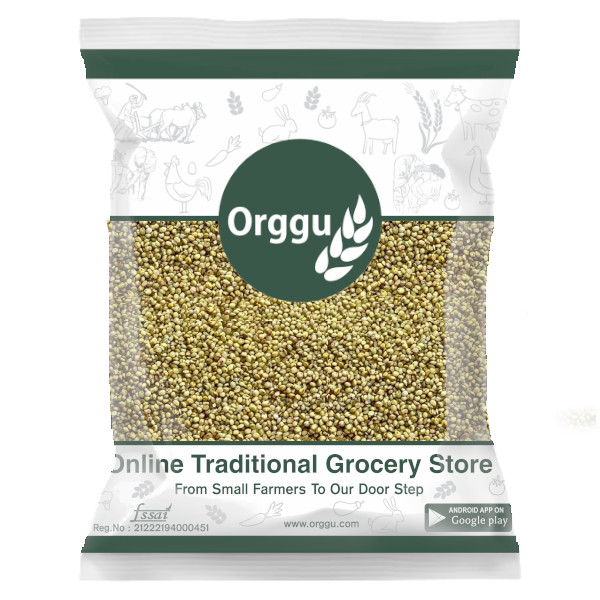
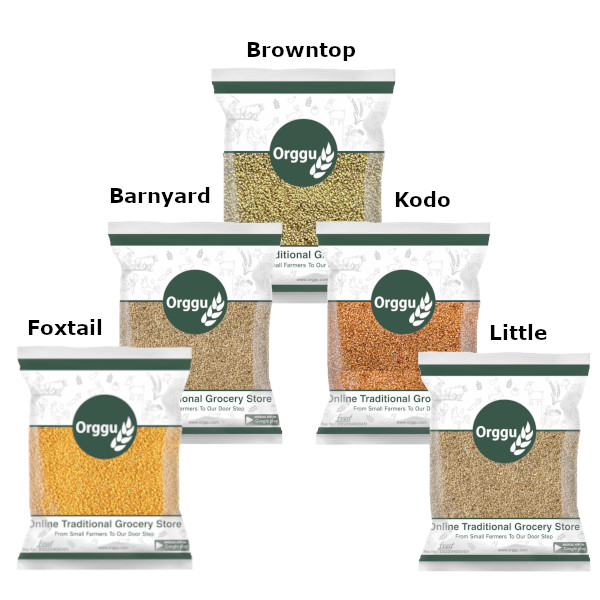
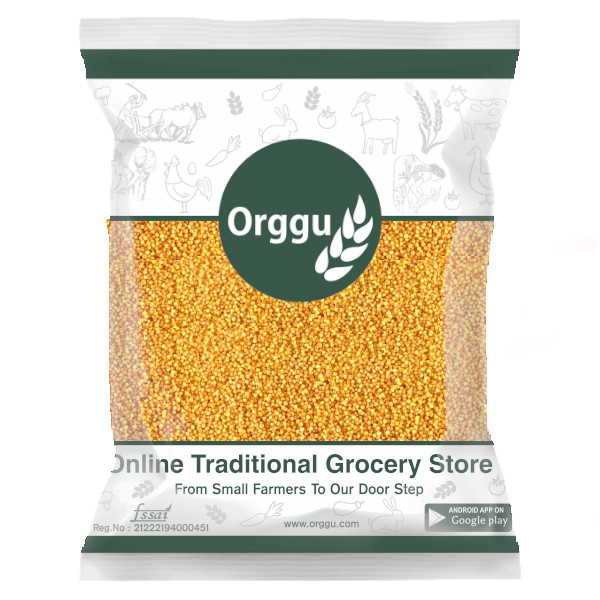
Browntop & its Hindi / regional names
| Language | Name |
|---|---|
| Hindi (colloquial / generic) | हरी कंगनी (Hari Kangni) / मोटा अनाज (Mota Anaj) |
| English | Browntop millet |
| Kannada | ಕొరಲె — Korale |
| Telugu | అండు కొర్రలు — Andu Korralu |
| Tamil | பாலப் பயறு / குலசாமை — Pala Payaru / Kula Samai |
| Botanical | Brachiaria ramosa |
Browntop has no widely standardised Hindi name; "hari kangni" is a colloquial term, and it should not be confused with कंगनी (kangni), which is foxtail millet — a different grain. Spellings follow the Orggu glossary.
Traditional use
Browntop is a South-Indian grain and is far less common in North-Indian, Hindi-speaking kitchens. Where it is used, like the other Siridhanya millets it replaces rice — cooked plain, as pongal/upma, or khichdi. As a Siridhanya millet it is usually eaten unpolished so the fibre-rich bran is kept.
Nutrition snapshot
Like the other Siridhanya millets, browntop is valued mainly for being rich in dietary fibre and for contributing minerals such as iron and calcium as part of a balanced diet (NIN, Indian Food Composition Tables 2017). It is naturally gluten-free. Exact figures vary by sample and processing, so this description is kept qualitative.
How to cook browntop millet
Soak browntop for 4–6 hours (or overnight), rinse, and cook with roughly 2 to 2.5 parts water to 1 part millet until soft. For exact water ratios and soaking times for every Siridhanya millet, see how to cook millets perfectly.
Buy unpolished browntop millet
100% unpolished, sourced from South-Indian farmers.
Buy Browntop Millet · Positive Millets combo · Dr Khadar Vali millets
ब्राउनटॉप मिलेट का कोई एक तय हिन्दी नाम नहीं है; इसे आम तौर पर मोटा अनाज या श्री अन्न, और बोलचाल में हरी कंगनी कहते हैं। इसके असली क्षेत्रीय नाम कोरले (कन्नड़) और अंडु कोर्रलु (तेलुगु) हैं। यह पाँच सिरिधान्य मिलेट्स में सबसे दुर्लभ है, नारी (fibre) से भरपूर और ग्लूटेन-मुक्त। इसे कंगनी (foxtail) समझने की गलती न करें। स्वास्थ्य समस्या होने पर डॉक्टर से सलाह लें।
Sources & References
- Orggu millet-names glossary (verified regional names across Indian languages)
- Indian Food Composition Tables (2017) — National Institute of Nutrition (NIN), Hyderabad / ICMR
