Millets for Gut Health: A Fibre & Digestion Guide

Certified organic food specialists · Sources: NIN Hyderabad, ICMR, USDA FoodData Central
If you are looking after your digestion and gut health and wondering where millets fit, here is the honest picture: millets are whole grains rich in dietary fibre, and fibre is the single nutrient most linked with healthy digestion, regularity and feeding the beneficial bacteria in your gut. They are also naturally gluten-free. But millets are a food, not a medicine — they do not cure any digestive condition — and there is a catch worth knowing up front: fibre helps only when you build it up gradually and drink enough water, or it can leave you gassy and bloated. This guide explains how millets fit, how to add them without the bloating, and when to see a doctor instead.
Curious about the gut–skin link? See millets for skin — the same low-GI, fibre-rich logic, honestly framed.
Why millets fit · What matters most: go slow with fibre · Best millets · How to include them · Myths vs facts · FAQs
Why millets fit a gut-friendly diet
Advice for good digestion tends to come back to the same things: enough fibre, enough water, plenty of vegetables and fruit, and variety in the diet. Millets line up well with the grain part of that:
- Rich in dietary fibre. Unpolished millets keep their fibre-rich bran (NIN IFCT 2017). Fibre adds bulk and softness to stool, which is what supports comfortable, regular bowel movements for most people.
- A substrate for gut bacteria. Some of the fibre in whole grains is fermented by the bacteria in your large intestine — in other words, fibre is "food" for a healthy gut microbiome. Feeding those bacteria a varied, fibre-rich diet is a widely recommended way to look after gut health.
- Whole grain, not refined. Swapping white rice or maida for an unpolished millet replaces a low-fibre refined carbohydrate with a whole one — more fibre per plate, without doing anything special.
- Naturally gluten-free. All millets are gluten-free, so they suit people who avoid gluten (for example with coeliac disease or gluten sensitivity, diagnosed by a doctor).
None of this makes millets a treatment for a gut problem. They help by being a wholesome, high-fibre grain within a varied diet with enough fluids and vegetables. For the wider framework, see what are siridhanya millets.
What matters most: go slow with fibre (and drink water)
It would be misleading to talk up millets for digestion without saying this plainly: more fibre helps only if you add it gradually and with enough water. Millets are high in fibre, and if you switch a lot of meals to millets overnight — especially if your usual diet is low in fibre — a common result is gas, bloating or cramping while your system adjusts. That is not a sign millets "don't suit you"; it usually just means too much, too fast.
The practical rules that make fibre comfortable:
- Build up over a couple of weeks rather than all at once — start with one millet meal a day.
- Drink more water. Fibre needs fluid to do its job; more fibre with too little water can make constipation worse, not better.
- Soak and cook well. Soaking millets before cooking and cooking them thoroughly makes them gentler on the stomach.
- Keep variety. Vegetables, fruit, dals and fermented foods (curd, idli, dosa batter) all support digestion alongside millets — no single food does it alone.
One honest caveat: high-fibre grains are not right for everyone at every time. If you have IBS, IBD or another diagnosed gut condition, a high-fibre change can backfire — some people are advised a lower-fibre or specialised (for example low-FODMAP) diet. In that case, follow your doctor or dietitian rather than general articles like this one.
Best millets to include
No single millet is magic for digestion — rotating a few unpolished whole millets is the practical approach. All of these are whole, high-fibre and a good rice replacement:
| Millet | Why it fits |
|---|---|
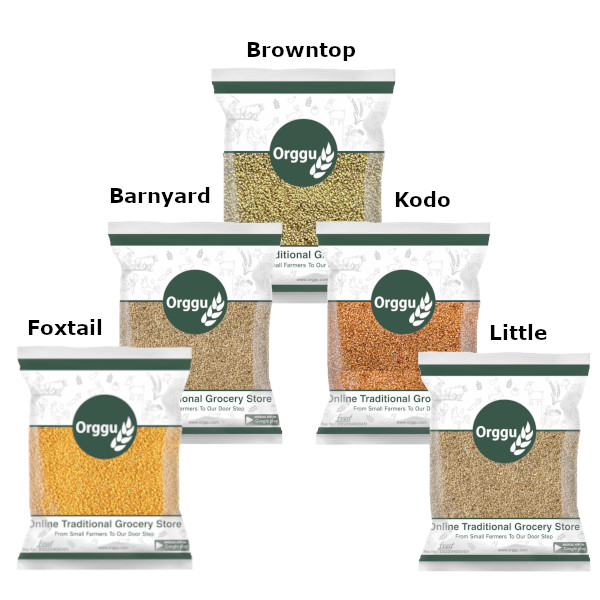
| Foxtail (guide) | Mild, rice-like and easy to eat — a comfortable first swap |
| Little millet | Light and often found easy to digest; fibre-rich |
| Barnyard | Light, high-fibre, quick to cook |
| Kodo millet | Nutty and filling, high in fibre |
| Finger millet (ragi) | Whole-grain flour option; high fibre and provides calcium too |
Choose unpolished millets so the fibre-rich bran stays intact — polishing strips exactly the part that helps digestion. The Positive Millets Combo bundles several so you can rotate easily.
How to include millets
- Swap one meal first. Replace white rice or refined wheat with an unpolished millet at one meal a day, then build up.
- Soak, then cook well. A few hours' soak and thorough cooking make millets softer and easier on the stomach.
- Pair with vegetables and dal. More fibre and variety in the same meal; go easy on heavy fried tempering.
- Drink water through the day. This is what turns extra fibre into comfortable digestion rather than bloating.
- Rotate. Different millets through the week — our 7-day millet diet plan shows one way.
Myths vs facts
| Myth | Fact |
|---|---|
| "Millets cure constipation / IBS / acidity." | No food does that on its own. Fibre-rich millets plus enough water can support regularity for many people, but that is support, not a cure — persistent symptoms need a doctor. |
| "More fibre is always better for the gut." | Only if added gradually and with water. Too much fibre too fast causes gas and bloating, and some gut conditions need a lower-fibre diet. |
| "Millets bloat me, so they are bad for my gut." | Usually it means too much, too soon. Build up slowly, soak and cook well, and drink more water — bloating typically settles as your system adjusts. |
| "Any millet product is good for digestion." | Polished or heavily processed millet products lose the fibre that helps. Choose unpolished whole millets. |
Where to start
Begin with unpolished millets online or the Positive Millets set to rotate several — as the high-fibre whole-grain part of a varied diet with plenty of vegetables and water.
Related reading: millets for blood pressure · millets for cholesterol · millets for diabetes · millet glycemic index.
Frequently Asked Questions
Sources & References
- Indian Food Composition Tables (2017) — National Institute of Nutrition (NIN), Hyderabad / ICMR (dietary-fibre content of millets).
- General dietary-guideline consensus that adequate dietary fibre, fluids and a varied plant-rich diet support digestive health and a healthy gut microbiome.
General dietary information only. No therapeutic or quantified claim is made. This article is not a substitute for medical care.