Browntop Millet in Kannada: Korale — Benefits & Uses

Sources: NIN Hyderabad, ICMR, USDA FoodData Central
If you are searching for browntop millet in Kannada, the name is ಕొరಲె (Korale). Browntop millet (botanical name Brachiaria ramosa) is the rarest of the five Siridhanya, or "positive", millets, and in Karnataka it is traditionally known as Korale.
Looking for the other grains? See all millets in Kannada in one chart.
These Kannada and other Indian-language names come from our own millet names in Indian languages glossary, so the spelling matches the rest of the site.
What is Korale (browntop millet)?
Korale is a small, hardy grain long grown in the dry belts of Karnataka. It is one of the five Siridhanya millets grouped together in the framework popularised by Dr. Khadar Vali. The five positive millets in Kannada are navane (foxtail, ನವಣೆ), korale (browntop, ಕొరಲె), saame (little, ಸಾಮೆ), harka (kodo, ಹಾರ್ಕ) and oodalu (barnyard, ಊದಲు).
As a Bangalore-based store working with Karnataka farmers, Orggu sources Korale in its traditional growing regions — it is one of the harder millets to find because it is grown in small quantities.
Shop the millets in this article
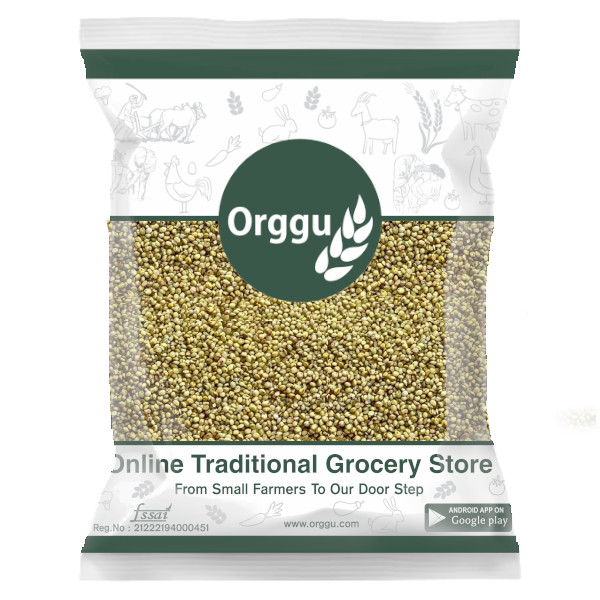
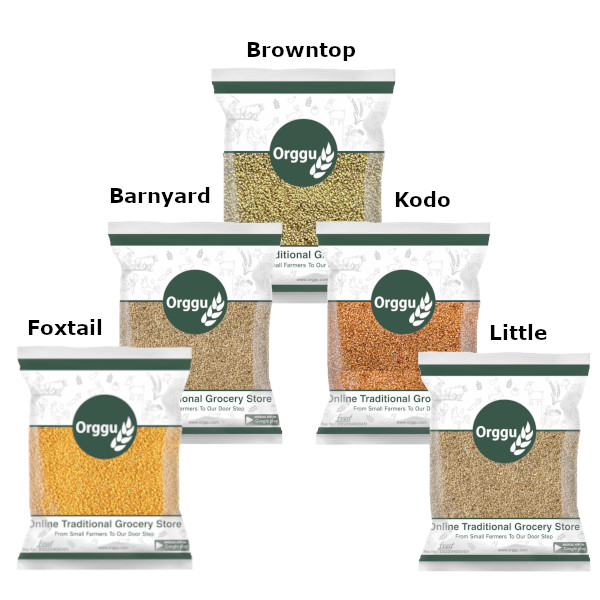

Korale & related Kannada names
| Language | Name |
|---|---|
| Kannada (primary) | ಕొరಲె — Korale |
| English | Browntop millet |
| Telugu | అండు కొర్రలు — Andu Korralu |
| Tamil | பாலப் பயறு / குலசாமை — Pala Payaru / Kula Samai |
| Botanical | Brachiaria ramosa |
Spelling and transliteration of Korale vary between regions; the forms above follow the Orggu glossary.
Traditional use in Karnataka
In Kannada kitchens, millets like Korale have traditionally replaced rice — cooked plain (anna), as pongal/huggi, upma, and bisi bele style dishes. As a Siridhanya millet it is usually eaten unpolished so the fibre-rich bran is kept.
Nutrition snapshot
Like the other Siridhanya millets, Korale is valued mainly for being rich in dietary fibre and for contributing minerals such as iron and calcium as part of a balanced diet (NIN, Indian Food Composition Tables 2017). It is naturally gluten-free. Exact figures vary by sample and processing, so this description is kept qualitative.
How to cook Korale
Soak Korale for 4–6 hours (or overnight), rinse, and cook with roughly 2 to 2.5 parts water to 1 part millet until soft. For exact water ratios and soaking times for every Siridhanya millet, see how to cook millets perfectly.
Buy unpolished Korale (browntop millet)
100% unpolished, sourced from Karnataka farmers.
Buy Browntop Millet · Positive Millets combo · Dr Khadar Vali millets
ಕొరಲె ಎಂಬುದು ಸಿರಿಧಾನ್ಯ (ಪಾಸಿಟಿವ್) ಮಿಲ್ಲೆಟ್ಗಳಲ್ಲಿ ಒಂದು. ಇದನ್ನು ಇಂಗ್ಲಿಷ್ನಲ್ಲಿ browntop millet ಎನ್ನುತ್ತಾರೆ. ಇದು ನಾರಿನಂಶ (fibre) ಹೆಚ್ಚಿರುವ, ಗ್ಲುಟನ್ ಇಲ್ಲದ ಸಿರಿಧಾನ್ಯ. ಅನ್ನ, ಹುಗ್ಗಿ, ಉಪ್ಪಿಟ್ಟು ಮಾಡಿಕೊಳ್ಳಬಹುದು. ಬೇಯಿಸುವ ಮೊದಲು 4–6 ಗಂಟೆ ನೆನೆಸಿಡಿ. ಆರೋಗ್ಯ ಸಮಸ್ಯೆ ಇದ್ದರೆ ವೈದ್ಯರನ್ನು ಸಂಪರ್ಕಿಸಿ.
Shop the millets in this article
Frequently asked questions
What is browntop millet called in Kannada?
Browntop millet is called Korale (ಕొరಲె) in Kannada. It is the rarest of the five Siridhanya (positive) millets.
Is Korale the same as browntop millet?
Yes. Korale is the Kannada name for browntop millet (botanical name Brachiaria ramosa).
Is Korale the same as Navane (foxtail millet)?
No. Navane is foxtail millet; Korale is browntop millet. They are two different Siridhanya millets.
How do you cook Korale?
Soak for 4–6 hours, rinse, and cook with about 2 to 2.5 parts water to 1 part millet until soft. Use it anywhere you would use rice.
Sources & References
- Indian Food Composition Tables (2017) — National Institute of Nutrition (NIN), Hyderabad / ICMR
- USDA FoodData Central — U.S. Department of Agriculture
Looking for the other millets in Kannada? Our millet names in Kannada chart covers ನವಣೆ (navane), ಸಾಮೆ (saame), ಹಾರಕ (harka), ಊದಲು (oodalu), ರಾಗಿ (ragi), ಜೋಳ (jola) and ಸಜ್ಜೆ (sajje).
