Best Cooking Oil for Indian Kitchen: Complete Smoke Point Guide

Certified organic food specialists · Sources: NIN Hyderabad, ICMR, USDA FoodData Central
📖 12 min read · In this article:
Here is a question every Indian kitchen needs to answer: are you using the right oil for the right cooking method? Most Indian households deep fry at 180–220°C, stir fry at 160–180°C, and temper spices at 200°C+. But surprisingly, very few people actually know their cooking oil’s smoke point — the temperature at which it starts to break down and release harmful compounds.
The result? Millions of Indians are unknowingly cooking with oils that break down at their cooking temperature. Extra virgin olive oil in a deep kadhai. Coconut oil for high-heat frying. Sunflower oil for everything. The wrong oil doesn’t just ruin the flavour — it can release toxic chemicals into your food.
This guide compares 10 popular cooking oils used in Indian kitchens, backed by real nutrition data from USDA and smoke point research. Whether you’re deep frying pooris, making tadka, or looking for the healthiest everyday oil, you’ll find your answer here.
Why Smoke Point Matters
Every cooking oil has a smoke point — the temperature at which the oil begins to break down, smoke, and produce harmful byproducts. When you push oil past this threshold, three dangerous things happen:
1. Acrolein release — A toxic compound that irritates your eyes and lungs. It’s the same chemical found in cigarette smoke. 2. Free radical formation — Unstable molecules that damage cells and accelerate aging. 3. Toxic aldehyde production — Compounds like 4-hydroxynonenal (4-HNE) that are linked to chronic inflammation, heart disease, and cancer risk.
For Indian cooking — where deep frying and high-heat tempering are daily activities — choosing an oil with the right smoke point isn’t optional. It’s essential. Let’s see how the most popular Indian cooking oils stack up. If you want to understand why groundnut oil is South India’s favourite, we have a dedicated deep-dive too.
Shop this article
Top 10 Oils: Smoke Point Comparison
This is the most comprehensive smoke point comparison table you’ll find for oils commonly used in Indian kitchens. All smoke point values are sourced from USDA FoodData Central and published food science research.
| Oil | Cold Pressed | Refined | Best For | Rating |
|---|---|---|---|---|
| Groundnut Oil | 230°C | 232°C | Deep frying, all-purpose | ★★★★★ |
| Mustard Oil | 250°C | 254°C | North Indian, pickles | ★★★★ |
| Coconut Oil | 177°C | 204°C | South Indian, baking | ★★★★ |
| Sesame Oil | 177°C | 210°C | Tempering, pickles | ★★★★ |
| Sunflower Oil | 227°C | 232°C | Light cooking | ★★★ |
| Safflower Oil | 225°C | 266°C | Deep frying | ★★★ |
| Rice Bran Oil | — | 232°C | Light frying | ★★★ |
| Soybean Oil | — | 234°C | Commercial frying | ★★ |
| Palm Oil | — | 235°C | Commercial frying | ★★ |
| Olive Oil (EV) | 160°C | 199°C | Salads, low-heat | ★★★ |
Key takeaway: Groundnut oil stands out because its cold pressed form (230°C) is already higher than most Indian cooking temperatures. Mustard oil tops the chart at 250°C but has a strong pungent flavour that limits versatility. Coconut and sesame oils are excellent — but better suited for medium-heat cooking rather than deep frying. Want to know more about why cold pressed matters? Read our full guide on cold pressed oil benefits.
Myths vs Facts
There’s a lot of confusion about cooking oils in India. Tap each card to reveal the truth:
Nutrition Comparison: Top 5 Indian Cooking Oils
Smoke point tells you if an oil is safe for cooking. But the nutrition profile tells you if it’s healthy. Here’s how the top 5 Indian cooking oils compare. All values are per 100g, sourced from USDA FoodData Central.
| Nutrient | Groundnut | Coconut | Sesame | Mustard | Sunflower |
|---|---|---|---|---|---|
| MUFA | 46.2g | 6.3g | 39.7g | 59.2g | 19.5g |
| PUFA | 32.0g | 1.8g | 41.7g | 21.2g | 65.7g |
| Sat. Fat | 16.9g | 82.5g | 14.2g | 11.6g | 10.3g |
| Vitamin E | 15.7mg | 0.1mg | 1.4mg | — | 41.1mg |
| Omega-6 | 32.0g | 1.7g | 41.3g | 15.3g | 65.7g |
What this means: Groundnut oil has the best balance — high MUFA (heart-healthy fats), moderate PUFA, and excellent Vitamin E. Coconut oil is 82.5% saturated fat, which is why doctors recommend using it in moderation. Sunflower oil is dangerously high in omega-6 (65.7g), which can promote chronic inflammation when consumed daily without enough omega-3 to balance it.
Best Oil by Cooking Method
Different cooking methods require different temperatures. Here’s the definitive guide to which oil works best for each Indian cooking technique:
| Cooking Method | Temperature Range | Best Oil | Why |
|---|---|---|---|
| Deep Frying (vada, poori, pakora) | 180–220°C | Groundnut Oil | Smoke point 230°C, neutral flavour, stable |
| Tadka / Tempering | 180–200°C | Groundnut / Sesame | Both handle high heat; sesame adds aroma |
| Stir Fry / Sabzi | 160–180°C | Groundnut Oil | All-purpose, mild flavour, high MUFA |
| South Indian Curry | 140–170°C | Coconut Oil | Traditional flavour, medium-heat safe |
| North Indian Curry | 160–200°C | Mustard Oil | Pungent flavour, highest smoke point 250°C |
| Pickles / Achar | Room temp / low | Sesame / Mustard | Natural preservative properties, strong flavour |
| Salads / Dressings | No heat | Olive Oil (EV) | Best flavour raw, rich polyphenols |
✅ Best Choice: Groundnut Oil for Deep Frying
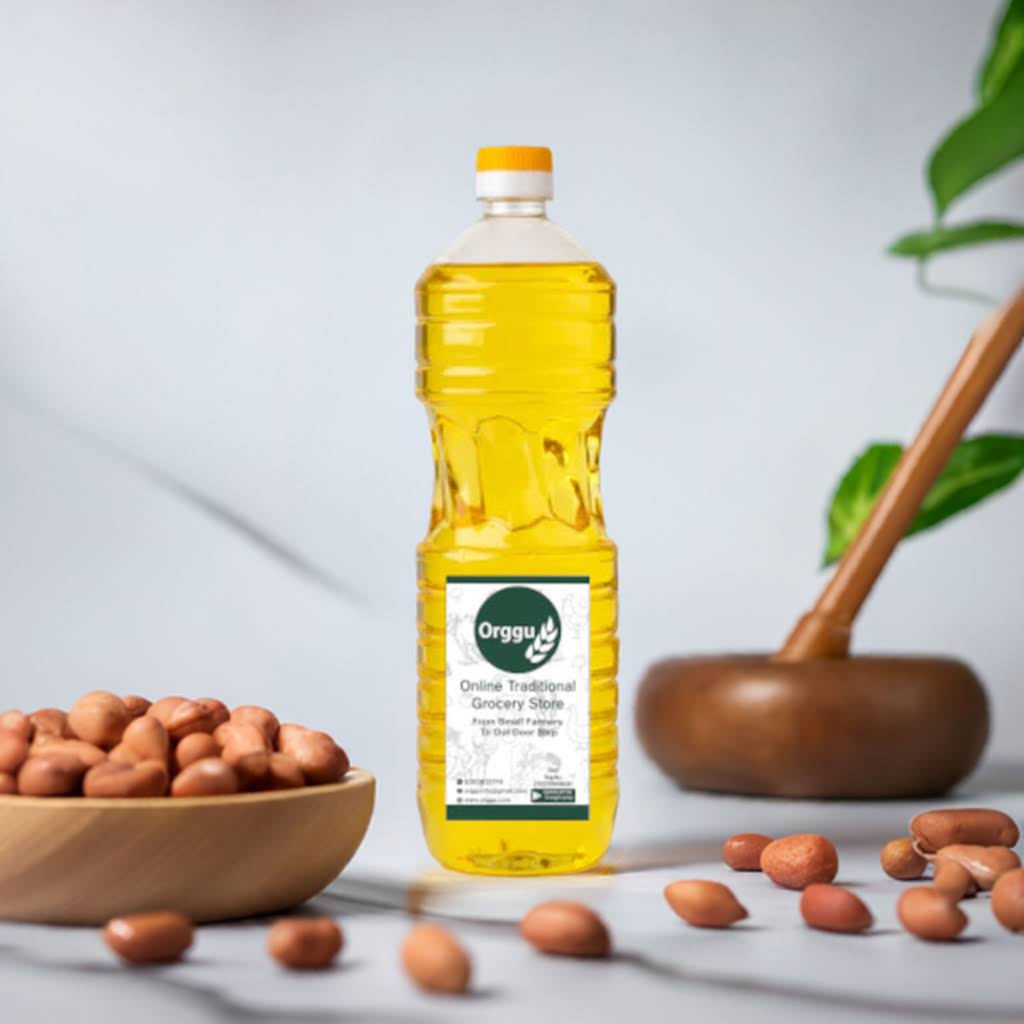
Cold pressed groundnut oil at 230°C smoke point handles all Indian frying comfortably. It has a mild flavour that doesn’t overpower food, and its high MUFA content means it’s more stable during heating than PUFA-heavy oils.
⚠️ Good Choice: Coconut Oil for South Indian Cooking
Perfect for appam, avial, and curry gravies where temperatures stay below 177°C. Adds authentic South Indian flavour. Not recommended for deep frying.
❌ Avoid: Olive Oil for Indian Frying
Extra virgin olive oil breaks down at just 160°C — well below the temperature of a typical Indian kadhai. Save it for salads, pasta, and bread dipping. Don’t waste it in a deep fryer.
Regional Oil Guide: What India Really Cooks With
India is not one kitchen — it’s hundreds. And the oil your family cooks with depends heavily on where you’re from. Here’s the regional breakdown:
| Region | States | Traditional Oils | Why These Oils |
|---|---|---|---|
| South India | Tamil Nadu, Karnataka, Andhra Pradesh | Groundnut oil, Coconut oil, Sesame oil | Locally grown oilseeds; tropical climate suits coconut; groundnut belt runs across TN-KA-AP |
| North India | Punjab, Uttar Pradesh, Rajasthan | Mustard oil, Ghee | Mustard grows abundantly in the Indo-Gangetic plains; ghee has centuries of Vedic tradition |
| West India | Maharashtra, Gujarat | Groundnut oil, Safflower oil | Gujarat is India’s largest groundnut producer; safflower (kardi) oil is a Maharashtrian staple |
| East India | West Bengal, Odisha | Mustard oil | Mustard is deeply embedded in Bengali and Odia cuisine — from fish fry to shorshe ilish |
Notice a pattern? Groundnut oil dominates across South and West India — the regions that produce the most groundnuts. This is no coincidence. For centuries, Indian families cooked with whatever oilseed grew locally. The traditional bull-driven oil press (marachekku) would extract oil fresh from local crops every week. No transport, no refining, no storage — just fresh, pure, cold pressed oil.
Cold Pressed vs Refined: A Quick Comparison
This is one of the most important decisions for your kitchen. Here’s the summary — for the complete deep-dive, read our dedicated guide on refined vs cold pressed oil.
| Factor | Cold Pressed | Refined |
|---|---|---|
| Extraction | Mechanical crushing, no heat/chemicals | Hexane solvent, bleaching, deodorizing |
| Vitamin E retained | 90–100% | 10–20% |
| Antioxidants | Fully preserved | Almost entirely destroyed |
| Colour | Natural golden/amber | Pale, transparent |
| Aroma | Rich, natural seed aroma | Odourless |
| Price (per litre) | ₹300–500 | ₹120–200 |
| Best for | Home cooking, health-conscious | Commercial kitchens, budget cooking |
The bottom line: if you cook at home and use 1–2 litres per month, the price difference works out to roughly ₹5–10 per meal. That’s a small price for retaining 90% of the oil’s vitamins and antioxidants. Read more about why cold pressed oils are making a comeback across Indian kitchens.
Test Your Cooking Oil Knowledge
Think you know your oils? Take this quick 4-question quiz to find out:
Q1: Which cooking oil has the highest smoke point?
Q2: What is the smoke point of cold pressed coconut oil?
Q3: Which oil is best for deep frying in South Indian kitchens?
Q4: What happens when oil exceeds its smoke point?
The Orggu Difference
🌱 From Farm to Your Kitchen: The Orggu Way
🌾 Trusted Farmers (50+ across Karnataka & Tamil Nadu) → 🧹 Hand-Sorted Seeds (no machine polishing) → ⚙️ Cold Pressed / Bull-Driven (below 50°C, zero chemicals) → 📦 Fresh Packed (airtight, food-grade bottles) → 🚚 Free Delivery (same week, to your door)
Every bottle of Orggu oil is traceable back to the farm. No blending, no refining, no chemicals. Just pure oil the way your grandmother knew it. Read about our traditional bull-driven extraction process.

Shop this article
Frequently Asked Questions
Related reads: What is Cold Pressed Oil? Benefits, Types & Why It’s Better · Cold Pressed Groundnut Oil Benefits · Refined vs Cold Pressed Oil: The Complete Comparison · Cold Pressed Coconut Oil Benefits · Bull-Driven Oil (Marachekku): The Ancient Way