Millets for Thyroid: Safe Choices, What to Avoid (2026)

Sources: NIN Hyderabad, ICMR, USDA FoodData Central
📖 11 min read · In this article:
- Are millets safe for thyroid patients?
- Best millets for thyroid (the safe list)
- Millets to limit or avoid for thyroid
- How to cook millets to neutralise goitrogens
- Hypothyroidism vs hyperthyroidism — rules differ
- 7-day millet meal plan for thyroid
- What to combine with millets
- Common mistakes thyroid patients make
- Where to buy thyroid-safe millets in India
- Frequently Asked Questions
If your doctor said “cut down on millets” but your nutritionist said “eat more millets”, you’re not alone. Thyroid patients across India get conflicting advice every single week — one camp warns about goitrogens, the other camp swears by the Dr. Khadar Vali siridhanya diet. Both are partly right, and both are missing context.
Here’s the truth in one paragraph: millets do contain mild goitrogens, but cooking, soaking, and rotation neutralise most of the risk for the majority of thyroid patients. The headlines are louder than the science. A 2014 NIN Hyderabad study and subsequent ICMR guidance support millet consumption alongside adequate iodine intake — with a few smart rules.
By the end of this guide you’ll know exactly which millets for thyroid are safe, which to limit, daily portions, how to prepare them, a printable 7-day meal plan, and what to combine them with for selenium and iodine. Reviewed against ICMR guidelines, peer-reviewed thyroid research, and the Dr. Khadar Vali siridhanya framework. Tip: rotating between 3–4 millets is safer than sticking to one — the Positive Millets Combo makes this easier.
Are millets safe for thyroid patients?
Yes — millets are safe for the vast majority of thyroid patients when cooked properly, rotated weekly, and paired with adequate iodine. The blanket “avoid millets” advice is outdated and ignores how Indians actually prepare and eat them.
Goitrogens are naturally occurring compounds found in many foods — cabbage, cauliflower, broccoli, soy, peanuts, and yes, some millets. They can mildly interfere with the thyroid’s ability to absorb iodine, but only at extreme intake levels and only when iodine is already deficient. The 2014 National Institute of Nutrition (NIN) Hyderabad study on millet goitrogens found that cooking destroys 60–90% of goitrogen activity, and soaking before cooking adds another 10–20% reduction. The WHO classifies goitrogenic foods as “mildly thyroid-active”, not “thyroid-damaging”.
Bottom line: millets are safe for thyroid patients if (a) iodine intake is adequate from natural sources, (b) millets are properly soaked and cooked, and (c) you rotate between varieties instead of eating only one. The next sections show you exactly how.
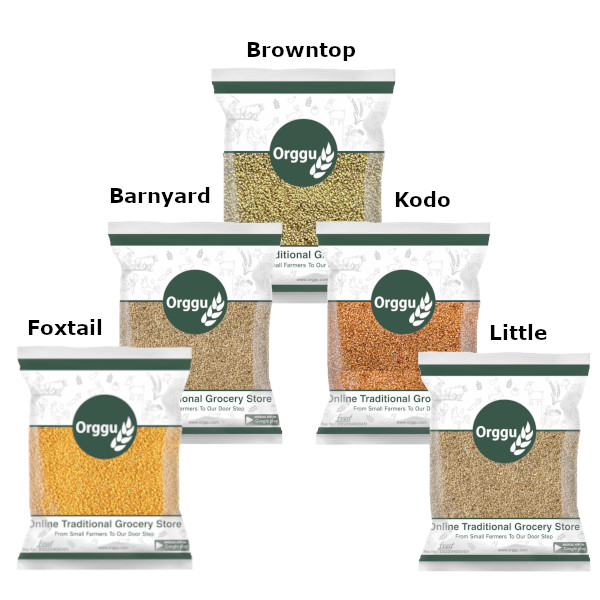
Shop the millets in this article
Delivered across India · Free delivery in Bangalore above ₹350 · 3-day returns
Shop all millets →Best millets for thyroid (the safe list)
Not all millets carry the same goitrogen load. The 5 siridhanya millets — the ones Dr. Khadar Vali recommends — have the lowest goitrogen content of any millet group, and several actually support thyroid function through selenium, magnesium, and B-vitamins. Daily portion for adults: 50–75g dry millet per meal, 1–2 meals a day, rotated.
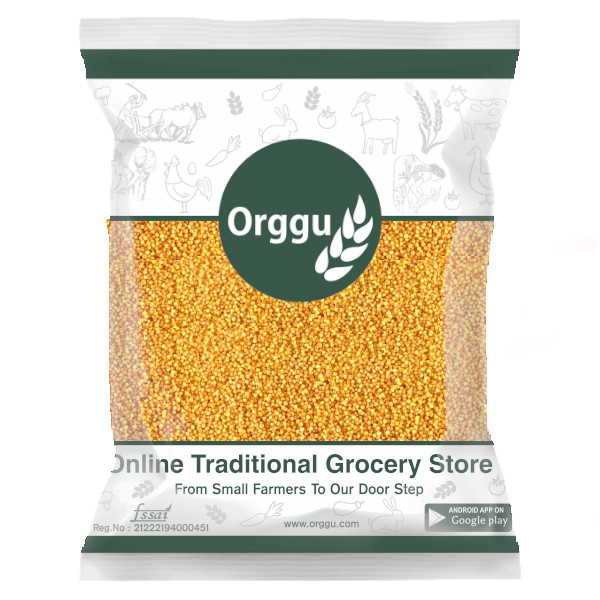
1. Foxtail Millet (Korralu / Thinai / Navane)
Foxtail millet has the lowest goitrogen profile of the siridhanya group and is the easiest entry point for thyroid patients new to millets. With 12.3g of protein and 8g of fibre per 100g, it’s nutrient-dense without being thyroid-aggressive. The mild flavour means you can swap it 1:1 for white rice in pulao, lemon rice, or curd rice. Daily portion: up to 75g dry, 4–5 times a week. Soak for 6 hours before cooking.
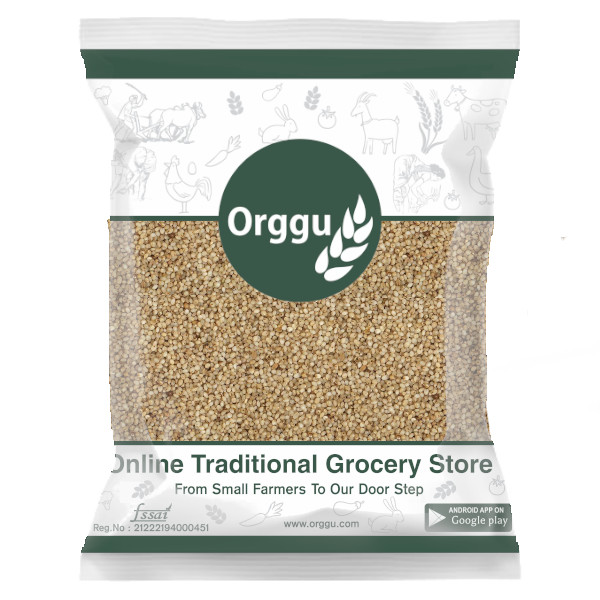
2. Little Millet (Samai / Kutki / Saame)
Little millet is selenium-rich — and selenium is the single most important micronutrient for converting inactive T4 hormone into the active T3 form. Hypothyroid patients with low selenium often see symptoms persist even after starting medication. With 9.3mg of iron per 100g (the highest among siridhanya millets), it also helps with the fatigue and anaemia common in hypothyroidism. Daily portion: up to 75g dry, 3–4 times a week.
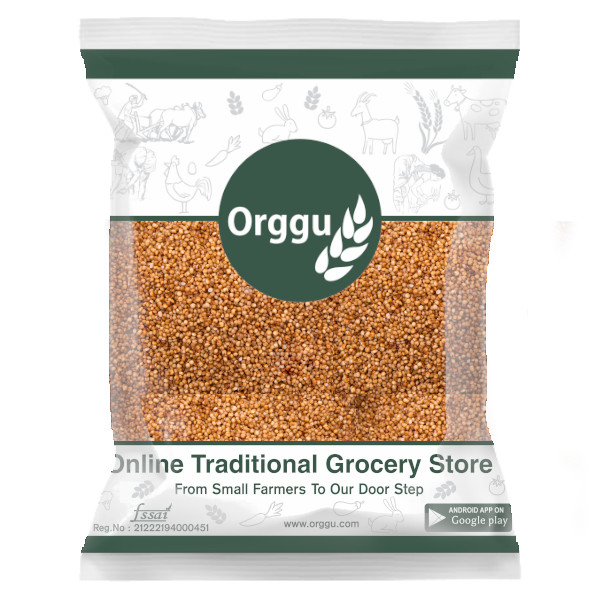
3. Kodo Millet (Arikelu / Varagu / Harka)
Kodo millet is the lightest siridhanya grain at just 309 calories per 100g, with high fibre and a low glycemic index of ~55. This matters because hypothyroid patients commonly struggle with weight gain and insulin resistance — and kodo helps both. The high antioxidant load also protects the thyroid gland from oxidative stress, which is a real driver of Hashimoto’s autoimmunity. Daily portion: up to 75g dry, 3–4 times a week.
4. Barnyard Millet (Udalu / Kuthiraivali / Oodalu)
Barnyard millet has the lowest glycemic index of all millets at GI ~41, making it the top pick for the insulin resistance that often accompanies hypothyroidism. Stable blood sugar = stable energy = less of the afternoon crash that thyroid patients know all too well. With 10g of fibre and 11g of protein per 100g, it’s also the most filling siridhanya millet. Daily portion: up to 75g dry, 3–4 times a week.
5. Browntop Millet (Korle)
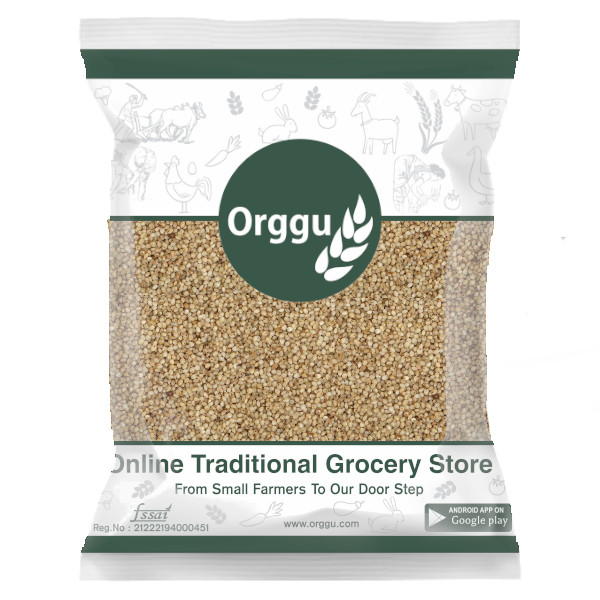
Browntop is the least researched siridhanya millet, but the Khadar Vali community has consistently reported it as well-tolerated by thyroid patients. It carries the highest fibre load of any millet at 12.5g per 100g, and 11.5g of protein. The high fibre supports gut health — and a healthy gut is increasingly understood as central to thyroid autoimmunity (the “gut-thyroid axis”). Daily portion: up to 75g dry, 2–3 times a week.
Millets to limit or avoid for thyroid
This is where most thyroid blogs go quiet — but you deserve the honest list. Three millets are commonly grouped with siridhanya but behave differently in the thyroid context:
⚠️ Pearl Millet (Bajra) — the highest goitrogen content of any common Indian millet. C-glycosyl flavones in bajra can interfere with thyroid peroxidase. Limit to 2 times a week maximum, only well-cooked (no raw bajra rotis), and always paired with an iodine source like sea salt or eggs.
⚠️ Finger Millet (Ragi) — moderate goitrogen content. Ragi is fine in moderation (2–3 times a week, well-cooked) but avoid raw ragi preparations like raw ragi malt, sprouted ragi smoothies, and raw ragi flour drinks. Cooking is non-negotiable.
⚠️ Sorghum (Jowar) — generally fine, but tolerance varies person to person. Some thyroid patients report bloating and energy dips with frequent jowar rotis. Test your own response: eat jowar 3 days in a row, watch how you feel, and decide.
This isn’t about banning millets — it’s about choosing the safer ones first. The 5 siridhanya millets above should make up 80% of your millet intake; bajra, ragi, and jowar can fill the remaining 20% if you tolerate them.
How to cook millets to neutralise goitrogens
The single biggest mistake thyroid patients make is eating millets the wrong way. Here’s the protocol that strips most of the goitrogen risk:
- Soak for 6–8 hours minimum. Overnight is ideal. Soaking pulls water-soluble goitrogens out of the grain. This step alone reduces goitrogens by up to 60%.
- Always discard the soaking water. Don’t cook in it. The discarded water carries the goitrogens, phytic acid, and anti-nutrients you just pulled out.
- Rinse twice before cooking. A simple 30-second rinse removes residue. Then cook in fresh water (1:2.5 millet-to-water ratio for most siridhanya).
- Cook with iodine-rich pairings. Sea salt, dairy, eggs, fish, or a curry leaves tadka all add iodine to the meal — offsetting any residual goitrogen activity.
- Avoid raw millet preparations. Raw dosa batters that don’t ferment fully, raw sprouted millet smoothies, raw ragi malt — all of these keep goitrogens active. Always cook.
- Pair with selenium foods. Brazil nuts, sunflower seeds, eggs, and chia seeds all supply selenium — the mineral your thyroid needs to convert T4 to T3.
For the full cooking protocol with water ratios for each millet, see our guide on how to cook millets perfectly.
Hypothyroidism vs hyperthyroidism — millet rules differ
Most online articles lump “thyroid” into one bucket. That’s wrong. Hypothyroidism and hyperthyroidism are opposite conditions and the millet rules differ.
Millets for hypothyroidism (Hashimoto’s, post-pregnancy, iodine deficiency)
If your TSH is high and T4/T3 are low, you have an underactive thyroid. The risk with millets here is mild — goitrogens could theoretically slow an already slow gland. Counter it with: (a) selenium-rich varieties (little millet, browntop), (b) adequate iodine from sea salt or eggs, (c) cook everything well, and (d) keep millet portions to 50–75g dry per meal, 1–2 meals a day. Avoid bajra and raw ragi preparations. Take your Eltroxin / Thyronorm at least 1 hour before any millet meal — high-fibre foods reduce levothyroxine absorption.
Millets for hyperthyroidism (Graves’, toxic nodules)
If your TSH is suppressed and T4/T3 are high, you have an overactive thyroid — and millets are more friendly here. The mild goitrogenic effect of pearl millet, ragi, and even raw foxtail can gently slow an overactive gland (with your endocrinologist’s approval, never as a substitute for Methimazole or Carbimazole). Hyperthyroid patients typically lose weight rapidly — the high-calorie, high-protein density of barnyard and browntop millets helps stabilise weight. Daily portion can go higher: 100g dry, 2–3 times a day.
7-day millet meal plan for thyroid
This is the section you’ll want to screenshot. One different millet per day, balanced across breakfast, lunch, and dinner. All recipes are India-friendly and pair the millet with iodine + selenium sources.
| Day | Breakfast | Lunch | Dinner |
|---|---|---|---|
| Mon | Foxtail upma + curry leaves | Little millet pulao + curd | Kodo khichdi + ghee |
| Tue | Barnyard idli + sambar | Browntop roti + dal | Foxtail pongal + sea salt |
| Wed | Little millet dosa + chutney | Kodo bisi bele bath | Barnyard curd rice + Brazil nuts |
| Thu | Browntop uttapam + egg | Foxtail lemon rice + dal | Little millet tomato bath |
| Fri | Kodo rava upma + sunflower seeds | Barnyard biryani + raita | Browntop khichdi + drumstick sambar |
| Sat | Foxtail idli + coconut chutney | Little millet sambar rice | Kodo vegetable pulao |
| Sun | Barnyard dosa + paneer | Browntop rice + fish curry | Foxtail kheer (jaggery, not sugar) |
Get all 5 thyroid-safe millets in one combo → Positive Millets Combo. One pack covers a full week of this meal plan.
What to combine with millets for thyroid health
Millets alone aren’t a thyroid plan — they’re the carb base. Pair them with these to complete the picture:
- Non-iodised sea salt or rock salt (sparingly, alongside iodine from other sources) — clean, additive-free salt without anti-caking agents. Read why we recommend it.
- Brazil nuts and sunflower seeds for selenium — just 2 Brazil nuts a day covers your selenium RDA. See our daily seeds guide.
- Curry leaves and drumstick (moringa) — traditional Indian thyroid supports, both rich in iron and antioxidants. Add curry leaves to every tadka.
- Cow ghee and cold-pressed coconut oil — healthy fats slow carb absorption and support hormone production. Avoid refined seed oils.
- Eggs and dairy (if tolerated) — natural sources of iodine and selenium. One egg a day is a simple thyroid hedge.
Common mistakes thyroid patients make with millets
- Eating only one millet daily. Variety isn’t optional — rotate at least 4 millets across the week. Eating only foxtail for a month is worse than eating 5 millets in rotation.
- Eating raw or undercooked millets. Raw ragi malt, half-fermented dosa batters, sprouted millet smoothies — all of these keep goitrogens active. Cook everything fully.
- Cutting iodine entirely. “Goitrogen-free” doesn’t mean “iodine-free”. Your thyroid still needs iodine. Don’t throw out the salt.
- Buying polished millets thinking they’re “lighter”. Polishing strips 60–70% of fibre and minerals. Always choose unpolished millets.
- Taking thyroid medication with a millet meal. High-fibre foods block levothyroxine absorption. Take Eltroxin or Thyronorm at least 60 minutes before any millet meal.
- Replacing medication with diet alone. Diet supports your treatment; it doesn’t replace it. Always work with your endocrinologist.
Where to buy thyroid-safe millets in India
The single biggest determinant of whether millets help your thyroid is quality. Polished millets, contaminated millets, or pesticide-laden millets do more harm than good. Look for: 100% unpolished, single-ingredient packaging, lab-tested, sourced from small farmers, and clear sourcing transparency.
At Orggu we source from small farmers across Karnataka, pack in airtight food-grade material, and ship pan-India. Cash on delivery in Bangalore; prepaid elsewhere in India. Free delivery within Bangalore. The easiest starting point is the Positive Millets Combo — all 5 thyroid-safe siridhanya millets in one pack.
🌱 Why Choose Orggu for Thyroid-Safe Millets?
🌾 Small Farmers (50+ across Karnataka) → 🧹 100% Unpolished (fibre and minerals intact) → ⚙️ Chemical-Free (no pesticides, no preservatives) → 📦 Fresh Packed (airtight, food-grade) → 🚚 Free Delivery (Bangalore, same week)
Where millets fit in a thyroid diet — the honest summary
Millets can be part of a thyroid-friendly diet, but it is worth being clear: they are a food, not a treatment, and they do not cure or fix a thyroid problem. Most millets are perfectly fine in normal amounts when they are well soaked and cooked (cooking lowers the natural goitrogens). The one to keep occasional rather than daily is pearl millet (bajra), which is more goitrogenic than the others. Whatever you eat, take your iodine and thyroid medication exactly as your doctor advises, and do not change your treatment because of a food.
Millets help simply by being wholesome, low-GI grains within a balanced diet — the same reason they suit gut health and blood-sugar management (glycemic index guide, millets for diabetes). For a simple weekly structure, see the 7-day millet diet plan.
Which millet is best for thyroid patients?
There is no single "best" millet for thyroid, and no millet treats a thyroid condition. Foxtail, little, kodo and finger millet (ragi) are generally well tolerated as whole grains when soaked and cooked well. Keep pearl millet (bajra) occasional, as it is more goitrogenic. Rotate a few, keep portions normal, and follow your doctor — millets are supportive food, not medicine.
Is ragi (finger millet) good for thyroid?
Ragi is a calcium-rich whole grain that is fine for most people in normal amounts, especially when cooked well. There is no evidence it treats or cures thyroid disease. If you have a thyroid condition, keep the amount moderate, cook it properly, and take your medication and iodine as your doctor advises.
Shop the millets in this article
Delivered across India · Free delivery in Bangalore above ₹350 · 3-day returns
Shop all millets →Frequently Asked Questions
Also read: Millets for Diabetes (sister condition) | Dr Khadar Vali Millet Diet: 7-Day Plan | What Are Siridhanya Millets? | Foxtail Millet Benefits | Little Millet Benefits
Start a thyroid-safe millet routine
All 5 thyroid-safe siridhanya millets — foxtail, little, kodo, barnyard, browntop — in one pack. 100% unpolished, lab-tested.
Buy Positive Millets ComboBrowse the full Millets for Thyroid collection — or pair with our selenium-rich seeds.
