Millet Rava: 8 Types & Easy Upma Recipes

Certified organic food specialists · Sources: NIN Hyderabad, ICMR, USDA FoodData Central
Millet rava — coarsely ground millet, the millet cousin of sooji / semolina — is one of the quickest ways to put millets on the table. It cooks in minutes into upma, idli, dosa and porridge, carries the fibre and minerals of the whole grain, and slots straight into the recipes most Indian kitchens already make with wheat rava. This guide covers the 8 millet ravas, how they compare with wheat sooji, how to cook them, and easy everyday recipes.
What is millet rava?
To make rava, cleaned millet is dehulled to remove the inedible husk, then coarsely milled into small granules (some varieties are lightly dry-roasted first). The result is a fast-cooking grain, the same idea as the wheat sooji/semolina most of us know as rava — but made from whole millet instead of refined wheat. Because the bran is largely retained, millet rava keeps more of the grain’s fibre and minerals than refined semolina.
The 8 types of millet rava
Almost every common millet is available as rava. They differ mainly in flavour, colour and texture:
| Rava | Regional names | Character |
|---|---|---|
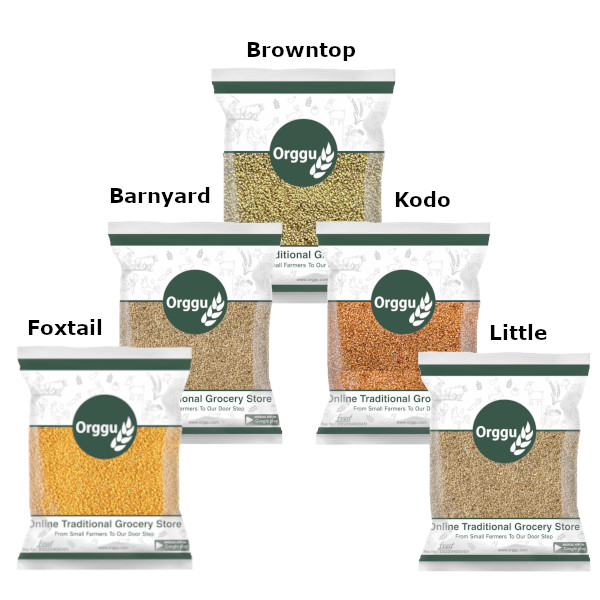
| Foxtail millet rava | Kangni / Thinai / Korralu | Mild, fluffy; the most versatile all-rounder for upma |
| Little millet rava | Kutki / Saamai / Samalu | Light and quick-cooking; easy to digest |
| Barnyard millet rava | Sanwa / Kuthiraivali / Oodalu | Fine texture; a favourite for lighter meal days |
| Kodo millet rava | Kodra / Varagu / Arikelu | Nutty; holds shape well in savoury dishes |
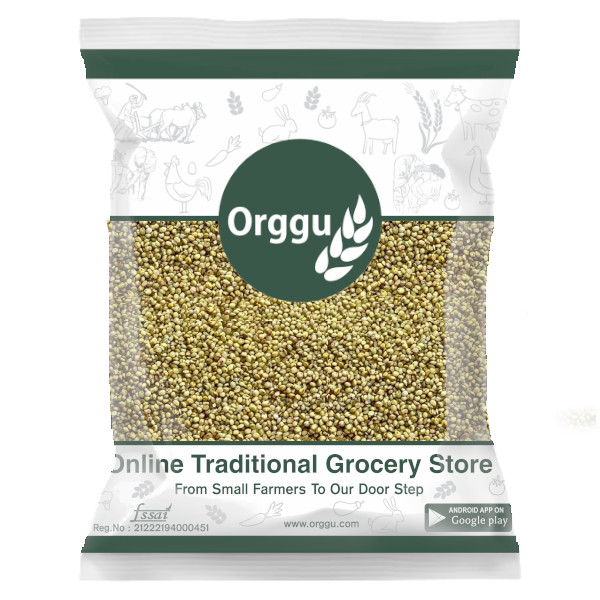
| Browntop millet rava | Korle / Andu korralu | Earthy; a rare, fibre-rich siridhanya |
| Pearl millet rava | Bajra / Kambu / Sajje | Hearty and warming; fuller flavour |
| Finger millet rava | Ragi / Nachni / Kezhvaragu | Darker, earthy; popular for porridge and calcium |
| Sorghum millet rava | Jowar / Cholam / Jonna | Neutral and versatile; good for upma and idli |
New to millet rava? Start with foxtail or little millet rava — their neutral taste is closest to wheat sooji, so your usual upma and idli recipes work with almost no change. For the whole-grain and flake forms, see our millet flakes guide.
Millet rava vs wheat rava (sooji/semolina)
Both are coarsely ground grains that cook fast, but they are not the same. Millet rava generally carries more dietary fibre than refined wheat sooji, and millet is naturally gluten-free — which matters for anyone avoiding wheat and barley. The points below are indicative — actual values vary by millet and brand — and the fibre context draws on the National Institute of Nutrition’s Indian Food Composition Tables (NIN IFCT 2017).
| Millet rava | Wheat rava (sooji) | |
|---|---|---|
| Base grain | Whole millet, bran largely retained | Refined wheat (endosperm) |
| Fibre | Higher | Lower |
| Gluten | Naturally gluten-free | Contains gluten |
| Cooking | Roast & cook in minutes | Roast & cook in minutes |
| Flavour | Nuttier; varies by millet | Neutral |
Curious how millets sit on the glycemic scale? See our millet glycemic index guide — remember that grinding and cooking method both affect how a food behaves, so treat single numbers as indicative rather than fixed.
Why people choose millet rava
- Whole-grain fibre. Because the bran is retained, rava keeps more fibre than refined wheat sooji (NIN IFCT 2017).
- Naturally gluten-free. Suitable for gluten-free kitchens, as long as the pack notes no cross-contamination.
- Fast. A quick roast and a few minutes on the stove — a genuine 15-minute breakfast.
- Versatile. Anything you make with wheat rava — upma, idli, dosa, sheera/kesari, porridge — works with millet rava.
- Easy swap. No new recipes to learn; just replace sooji one-for-one and adjust the water a little.
How to cook millet rava
Two rules make rava behave: roast it, and get the water right. A light dry-roast on low heat (until aromatic) keeps the granules separate and fluffy — many packs are pre-roasted, so check the label. Then cook roughly 1 part rava to 2.5–3 parts water; millet rava can absorb a touch more water than wheat sooji, so add it gradually. For the grain-cooking basics behind all of this, see how to cook millets.
Easy millet-rava recipes
1. Millet rava upma
Dry-roast foxtail or little millet rava and set aside. Temper mustard seeds, urad dal, curry leaves, green chilli, ginger and onion in a little oil, add vegetables, pour in hot water (about 2.5–3×), then stir in the rava and cook until fluffy. Finish with lemon and coriander — a classic breakfast in about 15 minutes.
2. Instant millet rava idli
Mix millet rava with curd and a little water, add a mustard-curry-leaf tempering, rest 10–15 minutes, then steam in idli moulds. Soft, fibre-rich idlis with no overnight fermentation.
3. Crisp millet rava dosa / uttapam
Whisk millet rava with a little rice flour, curd and water into a thin, pourable batter with chopped onion, chilli and coriander; rest briefly and cook on a hot tawa for lacy, crisp dosas.
4. Millet rava sheera (sweet)
Roast rava in a little ghee, add hot water or milk, jaggery or sugar to taste, and a pinch of cardamom; cook until it thickens for a warm festive-style sweet.
5. Millet rava porridge
Simmer ragi or little millet rava in milk or water with a little jaggery or fruit for a gentle breakfast or an easy bowl for kids and elders.
Buying & storing millet rava
Look for rava made from whole, unpolished millet, with a clean single-grain ingredient list and a clear gluten-free note if that matters to you. Store in an airtight container away from heat and moisture, and use within the best-before window — like all whole-grain products, the retained bran means rava is best kept cool and dry rather than stockpiled indefinitely.
Bring millet rava into your breakfast
Explore Orggu’s range of unpolished millet rava online — foxtail, little, barnyard, kodo, ragi, bajra and more, milled from whole grain. Pair it with our unpolished millets to build a full millet pantry.
Frequently Asked Questions
Sources & References
- Indian Food Composition Tables (2017) — National Institute of Nutrition (NIN), Hyderabad / ICMR (whole-millet fibre and mineral context)
- Orggu millet-names glossary (verified regional/rava names)
Nutrition figures are indicative and vary by millet, variety and processing.