Millets for Blood Pressure: A Low-Sodium Diet Guide

Certified organic food specialists · Sources: NIN Hyderabad, ICMR, USDA FoodData Central
If you are managing high blood pressure (hypertension) and wondering where millets fit, here is the honest picture: millets are whole grains, naturally low in sodium, and they provide fibre, magnesium and potassium — which is why they suit the kind of heart-healthy eating pattern usually recommended for blood pressure. But they are a food, not a medicine, they do not lower blood pressure on their own, and — importantly — the single biggest dietary lever for blood pressure is cutting down on salt, not switching grains. This guide explains how millets fit, what actually matters most, and how to use them, alongside your medical care.
Looking after digestion too? See millets for gut health — the same high-fibre whole grains, with tips to avoid bloating.
Why millets fit · What matters most: salt · Best millets · How to include them · Myths vs facts · FAQs
Why millets fit a blood-pressure-friendly diet
Eating patterns recommended for blood pressure — like the well-known DASH approach — emphasise whole grains, vegetables and fruit, and less sodium and processed food. Millets line up with the grain part of that:
- Whole grain, not refined. Swapping white rice or maida for an unpolished millet replaces a refined carbohydrate with a whole one.
- Naturally low in sodium. Plain millets contain very little sodium — what raises the sodium of a meal is the salt you add, not the grain.
- Fibre plus magnesium and potassium. Unpolished millets keep their fibre-rich bran and provide minerals such as magnesium and potassium (NIN IFCT 2017) — nutrients that feature in heart-healthy eating patterns.
None of this makes millets a blood-pressure drug. They help by being a wholesome, low-sodium grain within a better overall pattern — best built with your doctor. For the wider framework, see what are siridhanya millets.
What matters most: salt (be honest with yourself here)
It would be misleading to talk about millets without saying this plainly: for most people, the biggest dietary change for blood pressure is eating less salt — not swapping grains. That means going easy on added salt while cooking and at the table, and cutting back on the big hidden sources: packaged snacks, namkeen, papad, pickles, sauces and fried food. A millet meal drowned in salt and fried tempering is not a blood-pressure-friendly meal.
One common myth worth clearing: changing the type of salt does not reduce sodium. Rock salt, sea salt and non-iodized salt contain sodium just like regular salt — only using less salt reduces your intake. (For more on salt choices, see non-iodized salt — but remember, it is the quantity that matters for blood pressure.)
Best millets to include
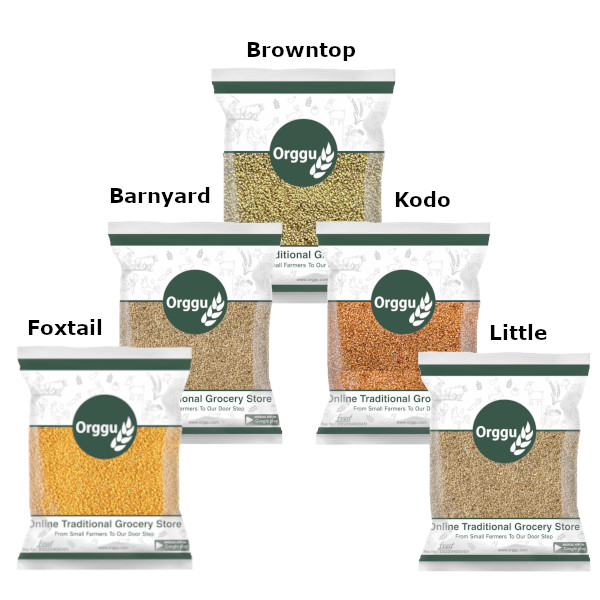
No single millet is special for blood pressure — rotating several unpolished whole millets is the practical approach. All of these are whole, low-sodium and a good rice replacement:
| Millet | Why it fits |
|---|---|
| Foxtail (guide) | Mild, rice-like, high fibre — the easiest first swap |
| Barnyard | Light, high-fibre, quick to cook |
| Little millet | Easy to digest, fibre-rich |
| Kodo millet | Nutty, filling, high fibre |
| Finger millet (ragi) | Whole-grain flour option; provides calcium too |
Choose unpolished millets so the fibre-rich bran stays intact. The Positive Millets Combo bundles several so you can rotate easily.
How to include millets
- Swap one meal first. Replace white rice or refined wheat with an unpolished millet at one meal a day.
- Go light on salt. Season with herbs, lemon, pepper and spices so you need less salt — this matters more than the grain itself.
- Load up on vegetables. Pair millets with plenty of vegetables and dal; keep fried tempering and papad to a minimum.
- Rotate. Different millets through the week — our 7-day millet diet plan shows one way.
Myths vs facts
| Myth | Fact |
|---|---|
| "Millets lower blood pressure / cure hypertension." | No food does that on its own. Millets are a low-sodium whole grain that supports a heart-healthy pattern — medical care and salt reduction still matter most. |
| "Eat millets and you can skip your BP medicine." | Never stop or change blood-pressure medication because of a food. Only your doctor can advise. |
| "Switching to rock/sea/non-iodized salt lowers blood pressure." | All salt contains sodium. Only using less salt reduces sodium — the type does not. |
| "The grain is what matters." | Salt, processed food, vegetables, activity and medication matter more — millets are one supportive piece. |
Where to start
Begin with unpolished millets online or the Positive Millets set to rotate several — as the whole-grain part of a lower-salt, vegetable-rich plan agreed with your doctor.
Related reading: millets for cholesterol · millets for diabetes · millets for PCOS · millet glycemic index.
Frequently Asked Questions
Sources & References
- Indian Food Composition Tables (2017) — National Institute of Nutrition (NIN), Hyderabad / ICMR (fibre and mineral content of millets).
- General dietary-guideline consensus that lower sodium plus whole grains, vegetables and fruit (e.g. DASH-style patterns) support healthy blood pressure.
General dietary information only. No quantified blood-pressure claim is made. This article is not a substitute for medical care.