Best Millets for Diabetes: Low GI Chart & How to Eat Them

Certified organic food specialists · Sources: NIN Hyderabad, ICMR, USDA FoodData Central
📖 10 min read · In this article:
For a full comparison of where each grain sits on the glycemic scale, see our millet glycemic index chart.
Diabetes affects over 100 million Indians, and that number is rising every year. If you or someone in your family has Type 2 diabetes, you already know that diet plays a crucial role in managing blood sugar levels. The biggest culprit in most Indian diets? White rice — with a high glycemic index of ~73, it causes rapid blood sugar spikes after every meal.
The good news is there's a natural, affordable alternative that Indian families have eaten for centuries — millets. Specifically, the 5 Siridhanya millets recommended by Dr. Khadar Vali are all classified as low glycemic index foods, meaning they release sugar slowly into the bloodstream instead of causing dangerous spikes. This guide compares all 5 Siridhanya millets side by side and helps you choose the best one for blood sugar management.
Why Millets Are Better Than Rice for Diabetes
The glycemic index (GI) measures how quickly a food raises blood sugar after eating. Foods with a GI below 55 are classified as "Low GI" — they release glucose slowly, preventing the sharp spikes and crashes that are dangerous for diabetics. Here's how common grains compare:
| Grain | Glycemic Index | Category |
|---|---|---|
| White Rice | ~73 | High |
| Wheat | ~62 | Medium |
| Barnyard Millet | ~41 | Low |
| Browntop Millet | ~45 | Low |
| Foxtail Millet | ~50 | Low |
| Little Millet | ~52 | Low |
| Kodo Millet | ~55 | Low |
The difference is striking — all 5 Siridhanya millets have a GI below 55, placing them firmly in the "Low GI" category. White rice, by comparison, is a high GI food that floods your bloodstream with sugar almost immediately after eating.
But it's not just about GI. Millets are packed with dietary fibre — 8 to 12 times more than white rice. This fibre acts as a physical barrier, slowing down the digestion and absorption of carbohydrates. The carbs in millets are also complex carbohydrates rather than simple carbs, meaning your body takes longer to break them down. The result: a slow, steady release of energy instead of a sudden sugar rush. For diabetics, this means more stable blood sugar levels throughout the day.
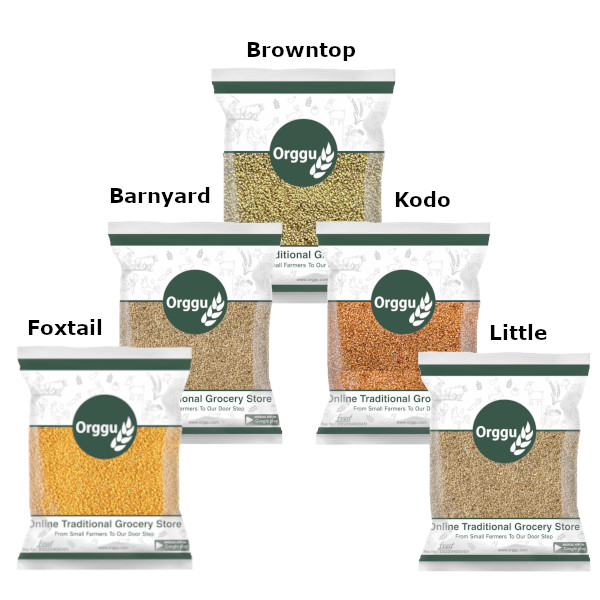
Shop the millets in this article
Myths vs Facts: Millets & Diabetes
There are many misconceptions about millets and diabetes management. Tap each card to reveal whether it's a myth or fact:
Best Millets for Diabetes — Ranked
Here are all 5 Siridhanya millets ranked from lowest to highest glycemic index — the lower the GI, the better for blood sugar control:
You can order the low-GI grains discussed here from our millets for diabetes collection, all 100% unpolished.
1. Barnyard Millet (GI ~41) — The Best Millet for Diabetes
Barnyard millet has the lowest glycemic index of any Siridhanya millet, making it the top choice for diabetics. With a GI of just 41 and an impressive 10.1g of fibre per 100g, it causes the slowest rise in blood sugar among all millets. Its high fibre content also helps you feel full longer, reducing the temptation to snack between meals — which is critical for blood sugar management. Known as Oodalu in Kannada, barnyard millet cooks exactly like rice and has a mild, neutral flavour.
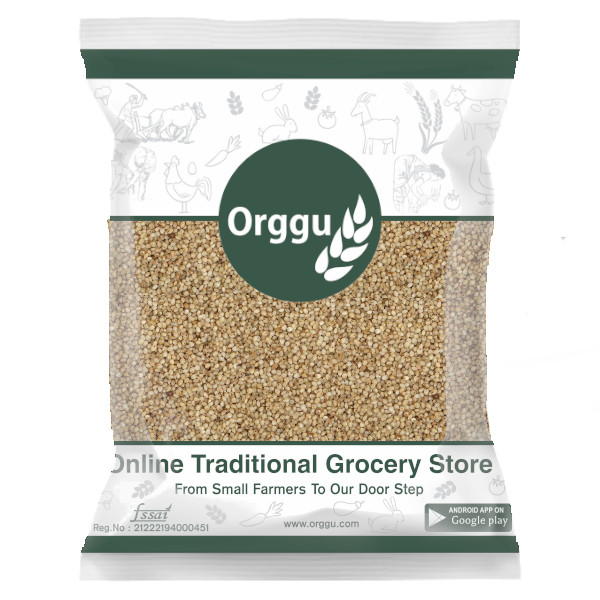
Learn more: Barnyard Millet (Oodalu): Complete Guide to Benefits, Nutrition & Recipes
2. Browntop Millet (GI ~45) — Highest Fibre, Highest Protein
Browntop millet is a powerhouse — with a very low GI of ~45, the highest protein (11.5g) and highest fibre (12.5g) content among all Siridhanya millets. The exceptionally high fibre creates a strong "brake" effect on sugar absorption, making it excellent for post-meal blood sugar control. It also has a satisfying, slightly nutty flavour. Known as Korle in Kannada, browntop millet is gaining popularity as one of the most nutritious grains available.
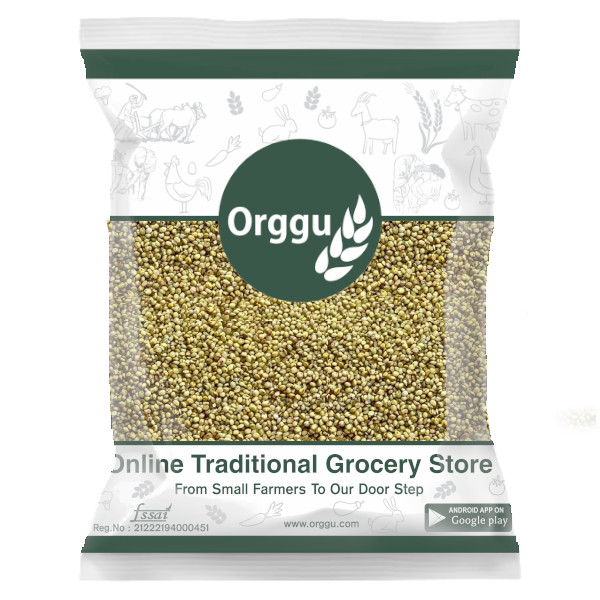
Learn more: Browntop Millet (Korle): Complete Guide to Benefits, Nutrition & Recipes
3. Foxtail Millet (GI ~50) — Most Popular, Tastes Closest to Rice
Foxtail millet is the most popular Siridhanya millet and the easiest transition from rice for most Indian families. With a GI of ~50 and 12.3g of protein per 100g, it offers excellent blood sugar control while tasting remarkably similar to white rice. If you're new to millets and worried about the taste change, foxtail millet is your best starting point. Known as Navane in Kannada, it works perfectly in biryani, pulao, lemon rice, and all traditional rice dishes.
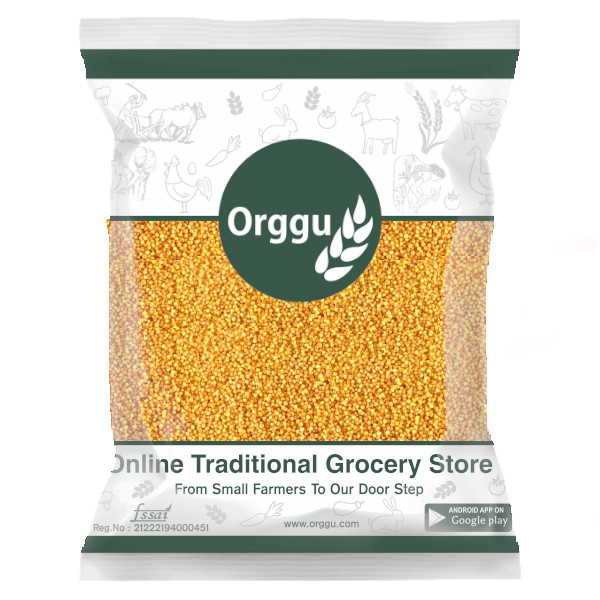
Learn more: Foxtail Millet (Navane): Complete Guide to Benefits, Nutrition & Recipes
4. Little Millet (GI ~52) — Highest Iron, Easiest to Cook
Little millet is the most beginner-friendly Siridhanya millet — it cooks the fastest, requires minimal soaking, and has a very mild flavour. With a GI of ~52 and the highest iron content (9.3mg per 100g) among Siridhanya millets, it's particularly beneficial for diabetic women who often face iron deficiency. The iron helps maintain energy levels and prevents the fatigue commonly associated with diabetes. Known as Saame in Kannada.
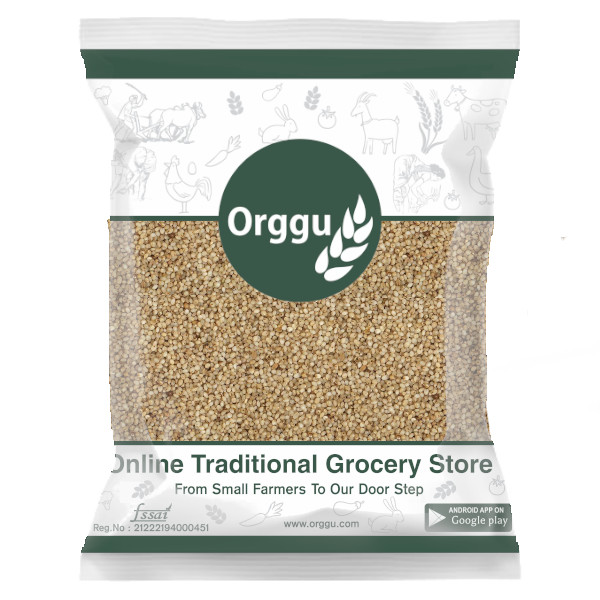
Learn more: Little Millet (Saame): Complete Guide to Benefits, Nutrition & Recipes
5. Kodo Millet (GI ~55) — Highest Antioxidants, Great for Heart Health
Kodo millet rounds out the Siridhanya five with a GI of ~55 — still firmly in the low GI category. What makes it special is its exceptionally high antioxidant and polyphenol content, which protects cells from oxidative damage. Since diabetics face a higher risk of heart disease, kodo millet's cardiovascular benefits make it an important part of a diabetes management diet. Known as Harka in Kannada, it has a light, fluffy texture when cooked.
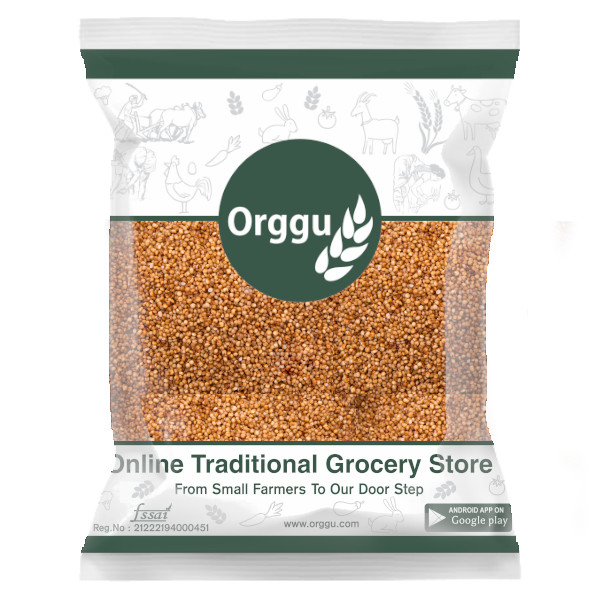
Learn more: Kodo Millet (Harka): Complete Guide to Benefits, Nutrition & Recipes
How to Include Millets in a Diabetic Diet
Switching to millets doesn't have to be an overnight overhaul. Here's a practical, step-by-step approach that works for most Indian families:
- Start by replacing one rice meal per day. Pick either lunch or dinner and swap white rice for any Siridhanya millet. Cook it exactly the same way — boil with water, serve with sambar, rasam, dal, or your regular curry.
- Gradually increase to 2-3 millet meals. After a week or two, once your family is comfortable with the taste, replace a second meal. Some people switch breakfast too — millet upma, millet dosa, and millet idli are all delicious options.
- Rotate between different millets each day. Dr. Khadar Vali recommends eating a different Siridhanya millet each day of the week. This ensures you get the unique nutritional benefits of each millet — the high fibre of barnyard, the protein of browntop, the iron of little millet, and so on.
- Soak millets before cooking. Soaking for 6-8 hours (overnight) improves digestibility and reduces anti-nutrients like phytic acid. This also makes the minerals more bioavailable for your body to absorb.
- Pair with vegetables, dal, and healthy fats. A balanced millet meal with protein (dal, eggs, paneer) and healthy fats (ghee, coconut oil) further slows down sugar absorption. Avoid pairing millets with sugary accompaniments.
- Avoid adding too much sugar or jaggery. This might seem obvious, but adding sugar to millet porridge or kheer defeats the purpose. If you need sweetness, use small amounts of jaggery or dates.
- Be consistent for a few months. Dr. Khadar Vali suggests eating Siridhanya millets consistently for at least 3-4 months to see meaningful improvements in blood sugar levels.
- Monitor your blood sugar regularly. Track your fasting and post-meal blood sugar levels as you transition to millets. Share these numbers with your doctor, especially if you take blood-sugar medication.
Millets vs Other Diabetic Foods
You might have heard of other "healthy" grains for diabetes — oats, quinoa, brown rice. How do millets compare?
If you prefer rotis and dosas, the same low-GI benefit is available as millet flour for diabetes.
Oats (GI ~55) are good for cholesterol but are imported, expensive, and don't fit naturally into Indian cooking. You can't make sambar-rice with oats. Millets, on the other hand, are a direct 1:1 replacement for rice in any Indian meal.
Quinoa (GI ~53) is nutritionally excellent but costs ₹400-800 per kg — 3-5 times the price of millets. It's an imported superfood that most Indian families can't afford daily. Millets offer comparable (often better) nutrition at a fraction of the cost, and they're grown locally by Indian farmers.
Brown rice (GI ~60-65) is better than white rice but still has a significantly higher GI than any Siridhanya millet. It also has less fibre and protein than most millets. The taste and texture are also less appealing to many people.
The bottom line: millets are more affordable, locally grown, higher in fibre, naturally gluten-free, and better suited to Indian cooking than any imported alternative. You don't need expensive health foods — the answer has been growing in Indian farms for thousands of years.
Buy Diabetic-Friendly Millets
Orggu offers all 5 Siridhanya millets — 100% unpolished, sourced directly from small farmers. Unpolished millets retain the fibre-rich bran layer that is essential for blood sugar control. Polished millets lose 60-70% of their fibre and nutrients, making them far less effective for diabetes management.
The best way to start is our Positive Millets Combo — all 5 Siridhanya millets in one pack so you can try each one and find your favourite:
Free delivery across Bangalore. ₹100 OFF on your first order above ₹200.
📲 Share this article on WhatsApp🌱 Why Choose Orggu Millets for Diabetes Management?
🌾 Small Farmers (50+ across Karnataka) → 🧹 100% Unpolished (fibre-rich bran intact) → ⚙️ Chemical-Free (no pesticides, no preservatives) → 📦 Fresh Packed (airtight, food-grade) → 🚚 Free Delivery (same week, to your door in Bangalore)
Shop the millets in this article
Frequently Asked Questions
Also read: Millets for Thyroid: Safe Choices & 7-Day Plan | What Are Siridhanya Millets? Complete Guide to the 5 Miracle Grains | Barnyard Millet (Oodalu): Complete Guide | Foxtail Millet (Navane): Benefits, Nutrition & Recipes
Sources & References
- Indian Food Composition Tables (2017) — National Institute of Nutrition, Hyderabad
- USDA FoodData Central — U.S. Department of Agriculture
- Indian Journal of Medical Research — Glycemic Index Studies
Ready to try Siridhanya millets?
Start with our 5-millet combo pack — one of each Siridhanya grain, 100% unpolished.
Buy Positive Millets ComboSee the Complete Dr Khadar Vali Diet Kit — millets + salt + oil + jaggery.
