Browntop Millet (Korale): Benefits of a Rare Grain

Certified organic food specialists · Sources: NIN Hyderabad, ICMR, USDA FoodData Central
📖 ~8 min read · In this article:
Find browntop’s regional names in our guides to browntop in Telugu (Andu Korralu) and browntop in Kannada (Korale), see the GI chart, and shop unpolished millets.
Browntop millet is the rarest and most prized of all the Siridhanya millets. Known as Korle in Kannada and Andu Korralu in Telugu, this ancient grain is considered by Dr. Khadar Vali to be the most powerful healing millet — especially for gut health and detoxification. While foxtail and barnyard millets are becoming more common, browntop millet remains extremely difficult to find because it grows primarily in Karnataka's dry, rain-fed regions and cannot be mass-cultivated.
What makes browntop millet truly exceptional is its nutritional profile — it has the highest protein (11.5g) and the highest fibre (12.5g) among all five Siridhanya millets. It grows semi-wild without pesticides or chemical fertilizers, making it one of the most naturally organic grains you can eat. If you're serious about millet-based healing, browntop millet is the crown jewel of Dr. Khadar Vali's Siridhanya protocol.
What is Browntop Millet?
Browntop millet (Brachiaria ramosa) is an ancient grain that grows semi-wild in the dryland areas of Karnataka, particularly in districts like Tumkur, Chitradurga, and Davangere. The grains are small, round, and brownish in colour. Unlike commercially cultivated crops, browntop millet is a hardy, self-sustaining plant that thrives in poor soil without irrigation, pesticides, or chemical fertilizers — it's one of the most naturally organic grains in existence.
Because browntop millet cannot be mass-cultivated using modern farming methods, it remains rare and is harvested in limited quantities by small farmers. This is why it's the most expensive Siridhanya millet — but also the most therapeutic. It is 100% gluten-free and suitable for celiac and gluten-sensitive individuals.
Important note: In Tamil, the name Panivaragu is sometimes used for browntop millet, but this actually refers to Proso Millet (Panicum miliaceum) — a completely different grain. Browntop millet (Brachiaria ramosa) and proso millet are botanically distinct species. Be cautious when purchasing to ensure you're getting genuine browntop millet.
| Language | Name |
|---|---|
| Kannada | Korle (ಕೋರ್ಲೆ) |
| Telugu | Andu Korralu (అండు కొర్రలు) |
| Hindi | Choti Kangni |
| Tamil | Sometimes confused with Panivaragu — see note above |
| Malayalam | No widely used name |
| Marathi | No widely used name |
Shop the millets in this article
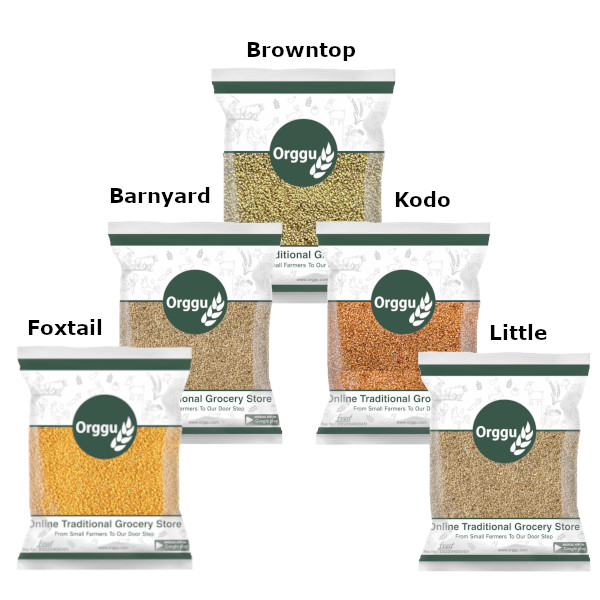
Nutritional Value of Browntop Millet
Here's the nutrition profile of browntop millet per 100g (unpolished) compared to white rice:
| Nutrient | Browntop Millet | White Rice (comparison) |
|---|---|---|
| Calories | ~331 kcal | ~365 kcal |
| Protein | 11.5g ★ Highest among Siridhanya! | 6.8g |
| Fat | 3.2g | 0.6g |
| Fibre | 12.5g ★ 31x more fibre! | 0.4g |
| Carbohydrates | 63g | 79g |
| Iron | 0.65mg | 0.8mg |
| Calcium | 10mg | 10mg |
| Glycemic Index | ~45 (Low) | ~73 (High) |
The numbers speak for themselves — browntop millet delivers 31x more fibre, nearly 70% more protein, and a significantly lower glycemic index than white rice. It has the highest protein and fibre content of any Siridhanya millet, making it the most nutrient-dense option in the entire positive millet family.
Health Benefits of Browntop Millet
- Excellent for gut health and detox: Dr. Khadar Vali considers browntop millet his top recommendation for gut healing and detoxification. The exceptionally high fibre content (12.5g per 100g) acts as a prebiotic — feeding beneficial gut bacteria and promoting a healthy microbiome.
- Helps manage cholesterol levels: The high fibre content binds to cholesterol in the digestive tract and helps remove it from the body. Regular consumption of browntop millet can help reduce LDL (bad cholesterol) and improve your overall lipid profile, supporting long-term heart health.
- Highest protein among Siridhanya millets: With 11.5g of protein per 100g, browntop millet outperforms all other positive millets in protein content. This makes it an excellent choice for vegetarians and anyone looking to increase their protein intake naturally through whole grains.
- Very high fibre for digestion: At 12.5g of fibre per 100g — the highest among all Siridhanya millets — browntop millet promotes regular bowel movements, prevents constipation, and keeps you feeling full for longer. This fibre content is over 31 times that of white rice.
- Grows without pesticides naturally: Browntop millet is a semi-wild crop that grows in dryland conditions without the need for pesticides, herbicides, or chemical fertilizers. When you eat browntop millet, you're consuming a grain that is truly organic by nature — not just by certification.
- Low GI for diabetics: With a glycemic index of approximately 45, browntop millet causes a much slower and steadier rise in blood sugar compared to white rice (GI ~73). It's an excellent grain choice for diabetics and anyone looking to maintain stable blood sugar levels.
- Naturally gluten-free: 100% safe for people with celiac disease or gluten sensitivity. A complete, nutritious whole grain alternative to wheat and other gluten-containing cereals.
- Rare and not easily available: Browntop millet is not stocked in most regular stores, and when it is, it's often polished or mislabelled. Orggu is one of the few trusted sources for genuine, unpolished browntop millet sourced directly from Karnataka's dryland farmers.
Easy Browntop Millet Recipes
Browntop millet has a distinctive earthy flavour that pairs wonderfully with bold, flavourful dishes:
1. Browntop Millet Rice (Korle Anna)
The simplest way to enjoy browntop millet — cook it just like rice and serve with sambar, rasam, dal, or any curry. The earthy flavour of browntop millet pairs especially well with strong-flavoured curries and sambar. Many people find this earthiness pleasant and distinctive — it's what makes browntop millet unique among the Siridhanya millets.
2. Browntop Millet Upma
A hearty, high-protein breakfast. Dry roast browntop millet rava lightly, then cook with mustard seeds, urad dal, curry leaves, onions, green chillies, and mixed vegetables. The result is a filling, nutritious upma with the added gut-healing benefits of browntop millet. Finish with a squeeze of lemon and fresh coriander.
3. Browntop Millet Khichdi
The ultimate comfort food — cook browntop millet with moong dal, turmeric, cumin, and a generous spoon of ghee. This is one of the most healing meals you can prepare, combining the gut-restorative power of browntop millet with the easy digestibility of moong dal. Perfect for dinner or when you need a light, nourishing meal.
4. Browntop Millet Dosa
Soak browntop millet and urad dal separately, grind to a smooth batter, and ferment overnight. Pour thin circles on a hot tawa for crispy, golden dosas loaded with protein and fibre. The fermentation makes the nutrients more bioavailable and adds a pleasant tang. Serve with coconut chutney and sambar.
How to Cook Browntop Millet
- Soak: Wash browntop millet thoroughly and soak for 6-8 hours (overnight is ideal). Minimum 30 minutes if short on time.
- Rinse: Drain the soaking water and rinse 2-3 times with fresh water.
- Cook: Use a 1:2.5 millet-to-water ratio. Bring water to a boil, add soaked millet, cover and cook on low flame for 15-20 minutes. Or pressure cook for 3 whistles.
- Rest: Turn off the heat, keep covered for 5 minutes. Fluff gently with a fork.
- Serve: Use as a direct replacement for rice in any meal.
Why Buy Unpolished Browntop Millet? And Why Orggu?
Browntop millet is hard to find in regular stores. Most sellers don't stock it at all, and when they do, it's often polished or mislabelled — sometimes confused with proso millet or other grains. Polishing removes the outer bran layer where most of the fibre, vitamins, and therapeutic compounds reside. Polished browntop millet loses the very properties that make it the most powerful Siridhanya millet.
Orggu is one of the few reliable sources for genuine unpolished browntop millet, sourced directly from farmers in Karnataka's dryland regions. Every batch is hand-cleaned, sun-dried, and verified to ensure you're getting authentic browntop millet — not a substitute. When browntop millet is this rare and valuable, quality and trust matter more than ever.
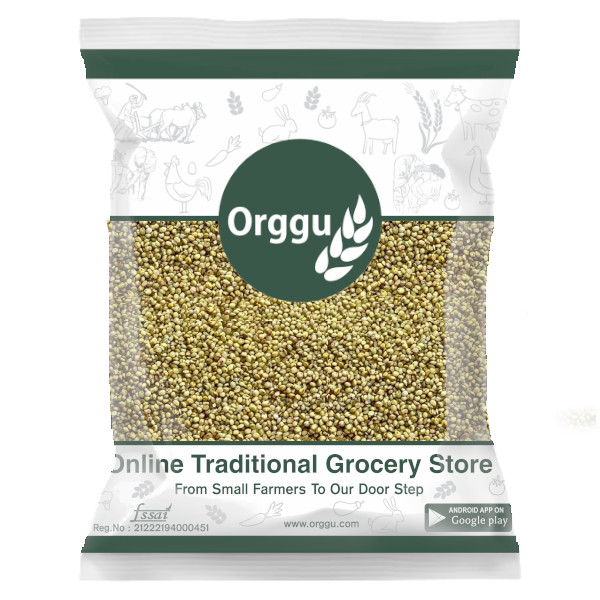
Want all 5 Siridhanya millets? Try our combo pack:
🌱 Why Choose Orggu Browntop Millet?
🌾 Dryland Farmers (Karnataka) → 🧹 Hand-Cleaned → ♨ Sun-Dried (zero chemicals) → 📦 Fresh Packed → 🚚 Free Delivery (to your door)
Shop the millets in this article
Frequently Asked Questions
Also read: Foxtail Millet (Navane): Benefits, Nutrition & Recipes | Barnyard Millet (Oodalu): Complete Guide | Kodo Millet (Harka): Benefits & Recipes | Little Millet (Saame): Complete Guide | What Are Siridhanya Millets?
Sources & References
- Indian Food Composition Tables (2017) — National Institute of Nutrition, Hyderabad
- USDA FoodData Central — U.S. Department of Agriculture
- Indian Journal of Medical Research — Glycemic Index Studies
Try browntop millet today
Highest fibre of all millets — 12.5g per 100g. 100% unpolished.
Buy Unpolished Browntop Millet