Groundnut Oil vs Sunflower Oil: Which Is Healthier for Indian Cooking?

Certified organic food specialists · Sources: NIN Hyderabad, ICMR, USDA FoodData Central
📖 9 min read · In this article:
Walk into any Indian supermarket and you will find sunflower oil dominating the shelves. Yellow bottles, big discounts, "heart healthy" labels plastered everywhere. Over the past two decades, sunflower oil has quietly replaced traditional cooking oils in millions of Indian kitchens — largely because of aggressive marketing and lower prices.
But here is what those labels do not tell you: sunflower oil contains 65.7 grams of omega-6 fatty acids per 100g — one of the highest among all cooking oils. That matters because excess omega-6, without enough omega-3 to balance it, triggers chronic low-grade inflammation in your body. The kind of silent inflammation linked to heart disease, diabetes, and arthritis.
So is the oil your grandmother used — groundnut oil — actually the healthier choice? We put both oils head to head using real data from USDA FoodData Central and NIN Hyderabad. The results are clear, and they might surprise you.
Quick Verdict: Groundnut Oil Wins for Indian Cooking
Now let us break down exactly why groundnut oil comes out on top, nutrient by nutrient.
Shop this article
Nutrition Face-Off: Groundnut Oil vs Sunflower Oil
All values are per 100g of oil, sourced from USDA FoodData Central. This is not opinion — it is data.
| Nutrient (per 100g) | Groundnut Oil | Sunflower Oil | Winner |
|---|---|---|---|
| Calories | 884 kcal | 884 kcal | Tie |
| MUFA | 46.2g | 19.5g | Groundnut ✅ |
| PUFA | 32g | 65.7g | Groundnut ✅ (lower is better) |
| Saturated Fat | 16.9g | 10.3g | Sunflower ✅ |
| Vitamin E | 15.7mg | 41.1mg | Sunflower ✅ |
| Smoke Point | 230°C | 227°C | Groundnut ✅ |
| Omega-6 | 32g | 65.7g | Groundnut ✅ (lower is better) |
| Antioxidants | Resveratrol + Polyphenols | Low | Groundnut ✅ |
Groundnut oil wins 5 out of 8 categories. Sunflower oil only wins on saturated fat and Vitamin E. Let us visualise the three most critical numbers.
Visual Score Card
via orggu.com · Data from USDA FoodData Central
Myths vs Facts: What You Have Been Told Is Wrong
There is a lot of misinformation about cooking oils. Tap each card to reveal the truth:
The Omega-6 Problem: Why Sunflower Oil Is Risky
This is the single most important section of this article. Most Indians do not know about the omega-6 problem, and it is quietly damaging their health.
Your body needs both omega-6 and omega-3 fatty acids. But the ratio matters enormously. The ideal omega-6 to omega-3 ratio recommended by nutrition researchers is 4:1. Here is the problem: most Indians who cook with sunflower oil daily consume a ratio of 20:1 or higher.
Chronic inflammation is not something you feel immediately. It builds up over years. Research links excess omega-6 consumption to increased risk of cardiovascular disease, type 2 diabetes, rheumatoid arthritis, and even certain cancers. This does not mean sunflower oil is poison — it means using it as your only cooking oil, every day, for years, creates a cumulative problem.
Groundnut oil, with 32g of omega-6, is not perfect either — but it is nearly half the omega-6 load of sunflower oil. Combined with its 46.2g of anti-inflammatory MUFA, the overall fatty acid profile of groundnut oil is significantly more balanced for daily Indian cooking.
Smoke Point and Cooking Methods
The smoke point is the temperature at which oil starts to break down and release toxic compounds like aldehydes and acrolein. For Indian cooking — which involves a lot of deep frying and high-heat tempering — a high smoke point is essential.
| Cooking Method | Temperature Range | Groundnut Oil | Sunflower Oil |
|---|---|---|---|
| Deep Frying | 170–190°C | ✅ Safe (margin: 40°C+) | ✅ Safe (margin: 37°C+) |
| Stir Frying / Tawa | 150–200°C | ✅ Safe | ✅ Safe |
| Tadka / Tempering | 180–220°C | ✅ Safe | ⚠ Borderline at high heat |
| Repeated Frying | 160–180°C | ✅ More stable (higher MUFA) | ⚠ Degrades faster (high PUFA) |
Both oils handle normal cooking temperatures well. But the real difference shows up during repeated frying and high-heat tempering. Groundnut oil's higher MUFA content makes it more oxidatively stable — it does not break down as quickly as sunflower oil when reheated. Sunflower oil's high PUFA content (65.7g) makes it more prone to oxidation, producing harmful free radicals faster when reused.
Best Uses: Which Oil for Which Dish?
| Cooking Method | Recommended Oil | Why |
|---|---|---|
| Deep frying (vada, pakora, poori) | Groundnut oil ✅ | Higher smoke point, more stable MUFA, clean nutty taste |
| Tadka / Tempering | Groundnut oil ✅ | Handles high heat, nutty aroma enhances dal and sambar |
| Stir frying vegetables | Groundnut oil ✅ | Does not overpower vegetables, stable at tawa temperatures |
| Biryani & gravies | Groundnut oil ✅ | Rich flavour base, traditional South Indian choice |
| Light sautéing & salad dressing | Sunflower oil ✅ | Neutral flavour works well for mild dishes |
| Baking | Sunflower oil ✅ | Odourless, does not impart flavour to cakes and bread |
The bottom line: for 90% of Indian cooking — which involves frying, tempering, and making curries — groundnut oil is the better choice. Sunflower oil is only preferable when you specifically need a flavourless, neutral oil.
Test Your Knowledge: Groundnut vs Sunflower Oil
Q1: How much more MUFA does groundnut oil have compared to sunflower oil?
Q2: What is the omega-6 content of sunflower oil per 100g?
Q3: Which oil contains resveratrol antioxidants?
The Orggu Difference
🌱 Why Orggu Cold Pressed Groundnut Oil Is Different
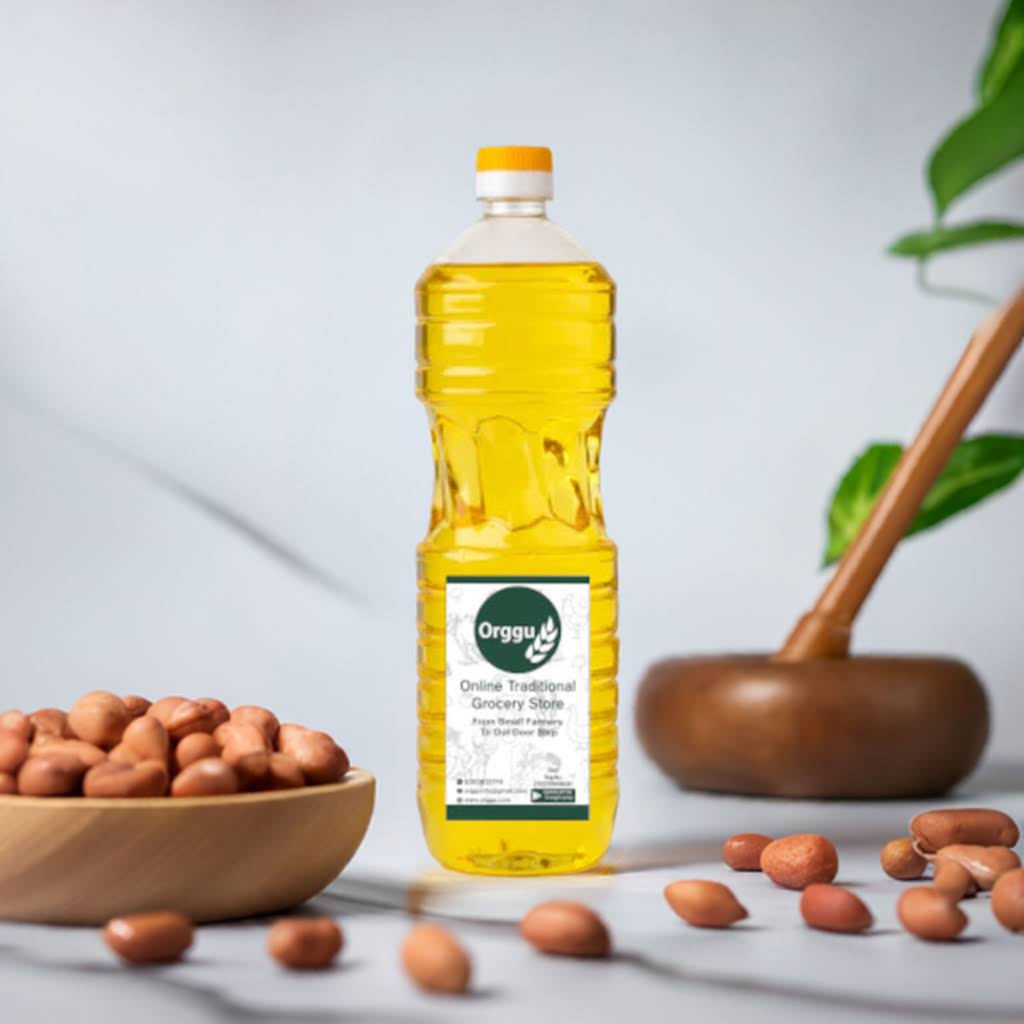
We source groundnuts directly from small farmers across Karnataka. No middlemen, no blending, no refining. Our oil is extracted using traditional cold press methods — either bull-driven wooden ghani or mechanical expeller below 50°C. The result is pure, golden groundnut oil with full MUFA content (46.2g), natural resveratrol, and zero chemical residues. Every batch is tested and FSSAI certified.
The balanced takeaway
To keep this honest: neither oil is a villain or a miracle. Groundnut (peanut) oil suits everyday Indian cooking well — it has a higher smoke point and more monounsaturated fat, so it holds up to frying and tempering. Sunflower oil is fine for lighter cooking; its main drawback is that it is high in omega-6, so the sensible move is simply not to rely on one high-omega-6 oil for everything — use a variety of fats and keep the total moderate. What matters most for health is the overall diet and the amount of oil, not chasing a single "best" oil.
Whichever you choose, an unrefined, cold-pressed oil keeps more of its natural goodness than a refined one. For the role of fats in a heart-healthy pattern, see millets for cholesterol.
Which oil is better for daily Indian cooking, groundnut or sunflower?
Groundnut oil generally suits Indian cooking better — it has a higher smoke point and more monounsaturated fat, so it stands up to frying and tempering. Sunflower oil is fine for lighter cooking. The best habit is to use a variety of oils and keep the total amount moderate rather than relying on one.
Is sunflower oil bad for health?
Sunflower oil is not "bad" in normal amounts. It is high in omega-6 fats, so the main point is not to over-rely on it for every dish — balance it with other oils and keep total oil moderate. As with any oil, quantity and overall diet matter more than the single oil you pick.
Shop this article
Frequently Asked Questions
Related reading: Cold Pressed Groundnut Oil Benefits · What is Cold Pressed Oil? · Best Cooking Oil for Indian Kitchen · Refined vs Cold Pressed Oil