Millets for PCOS: A Low-GI Diet Guide (2026)

Certified organic food specialists · Sources: NIN Hyderabad, ICMR, USDA FoodData Central
If you are living with PCOS (polycystic ovary syndrome) and wondering where millets fit, here is the honest picture: millets are low-glycemic-index, high-fibre whole grains, and that is exactly the kind of carbohydrate often recommended in a PCOS-friendly eating pattern. They are a food, not a treatment — they do not cure or reverse PCOS — but as a simple swap for white rice and refined wheat, they can support the way many people with PCOS are already advised to eat. This guide explains why, which millets to choose, and how to use them, always alongside your own medical care.
Also watching your heart numbers? See millets for cholesterol — the same high-fibre, whole-grain logic.
Why millets fit a PCOS-friendly diet · Best millets for PCOS · How to include them · Myths vs facts · Where to start · FAQs
Why millets fit a PCOS-friendly diet
PCOS is a hormonal condition, and for many people it comes with insulin resistance — the body has to work harder to keep blood sugar steady. Because of this, dietitians often suggest a pattern built on low-glycemic-index (GI) carbohydrates, plenty of fibre, and fewer refined grains and added sugars. Millets sit naturally in that pattern:
- Low glycemic index. All the common siridhanya millets have a GI below about 55 — barnyard is around 41 — so they raise blood sugar more slowly than white rice (~73) (Atkinson et al., Diabetes Care 2008). See our millet glycemic index guide for the full chart.
- High fibre. Unpolished millets keep their bran, so they are rich in dietary fibre, which slows digestion and helps you feel full for longer (NIN IFCT 2017).
- Whole grain, not refined. Choosing an unpolished millet over polished rice or maida means more minerals and fibre and a gentler effect on blood sugar.
None of this makes millets a cure. What it does mean is that swapping refined grains for millets is a small, practical change that lines up with standard PCOS dietary advice — best made as part of a plan your doctor or dietitian agrees with. To understand the wider siridhanya framework, see what are siridhanya millets.
Best millets for PCOS
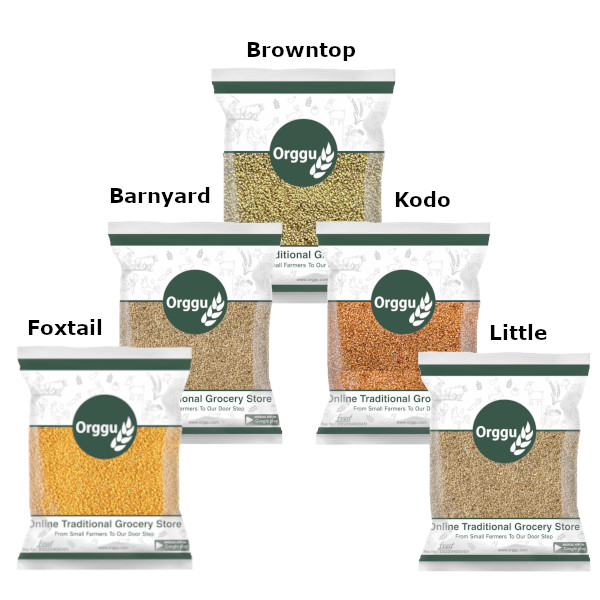
There is no single magic millet — rotating several is more practical and more balanced. All of these are low-GI, high-fibre and a good rice replacement; choose unpolished so you keep the fibre-rich bran.
| Millet | Glycemic index (approx.) | Why it fits |
|---|---|---|
| Barnyard (guide) | ~41 (lowest) | The lowest-GI millet; light and quick to cook |
| Foxtail (guide) | Low | Mild, rice-like — the easiest first swap |
| Little (guide) | Low | Light, easy to digest, high fibre |
| Kodo (guide) | Low | Nutty, filling, fibre-rich |
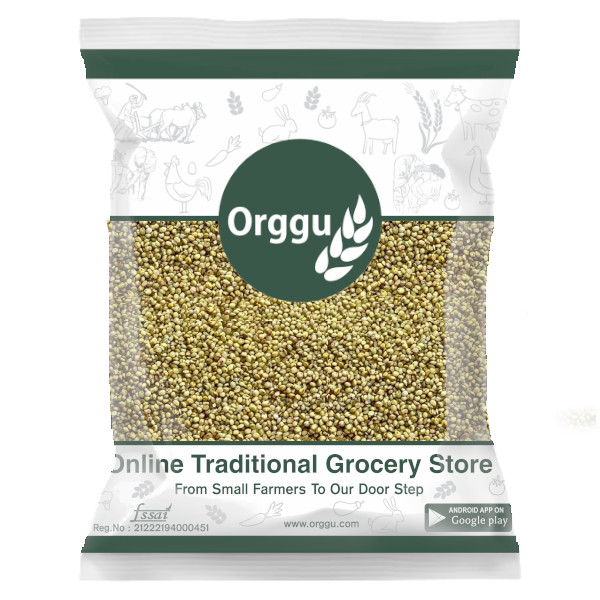
| Browntop | Low | One of the highest-fibre siridhanya millets |
GI values are indicative and shift with how a grain is cooked, cooled and paired — treat them as a guide, not a fixed number. The Positive Millets Combo bundles all five so you can rotate them easily.
How to include millets in a PCOS-friendly diet
- Swap one meal first. Replace white rice or refined wheat with an unpolished millet at one meal a day, then build from there.
- Pair with protein and vegetables. Combine millets with dal, curd, paneer, eggs or plenty of vegetables — protein and fibre together blunt the blood-sugar rise further.
- Keep portions moderate. Low-GI does not mean unlimited; sensible portions still matter, especially if weight management is a goal.
- Rotate. Use different millets across the week for variety and a broader nutrient mix — our 7-day millet diet plan shows one way to do this.
- Choose unpolished. Polishing strips the bran and raises the GI; always pick unpolished millets.
Because weight and blood-sugar management are central to many PCOS plans, the same low-GI, high-fibre logic behind our millets for weight loss guide applies here too — with the important caveat that your targets should be set with your doctor.
Myths vs facts
| Myth | Fact |
|---|---|
| "Millets cure or reverse PCOS." | No food cures or reverses PCOS. Millets are a nutritious low-GI grain that can support a healthy eating pattern — medical care is still essential. |
| "Millets balance hormones." | No food balances hormones directly. Millets help by being a low-GI, high-fibre carbohydrate, which supports blood-sugar and weight goals many with PCOS work toward. |
| "You can eat unlimited millets because they are healthy." | Portions still matter. Millets are a better carbohydrate, not a free food. |
| "Any millet product is fine." | Polished millets lose their fibre advantage. Choose unpolished millets to keep the benefit. |
Where to start
Begin with unpolished millets online — barnyard, foxtail, little and kodo are all easy first swaps — or the Positive Millets set to rotate all five. Pair the change with a plan from your doctor or dietitian.
Related reading: millet glycemic index guide · millets for weight loss · millets for thyroid · what are siridhanya millets.
Frequently Asked Questions
Sources & References
- Atkinson FS, Foster-Powell K, Brand-Miller JC. International tables of glycemic index and glycemic load values: 2008. Diabetes Care, 2008 (glycemic index values).
- Indian Food Composition Tables (2017) — National Institute of Nutrition (NIN), Hyderabad / ICMR (fibre and mineral content of millets).
General dietary information only. GI/nutrition figures are indicative and vary by variety and preparation. This article makes no medical claim about PCOS.