7 Seeds You Should Eat Daily for Better Health

Certified organic food specialists · Sources: NIN Hyderabad, ICMR, USDA FoodData Central
7 Seeds You Should Eat Daily for Better Health
A single tablespoon of chia seeds has more omega-3 than a serving of salmon, more calcium per calorie than milk, and more fibre than most vegetables. Seeds are the most nutrient-dense food you can add to your diet, gram for gram.
Whether you want to boost immunity, improve digestion, fill common nutrient gaps (omega-3, zinc, magnesium), or just eat better without overhauling your entire diet — seeds are the simplest starting point. Two tablespoons a day is all it takes.
This guide covers 7 seeds worth eating daily: exact quantities, best time to eat each one, how to prep them, and a 2-minute daily routine. Every seed mentioned is available on Orggu. Browse the full seeds collection →
📱 Share this guide on WhatsApp📖 In this guide:
Why Eat Seeds Daily?
Seeds pack more micronutrients per gram than almost any other food group. They are concentrated sources of omega-3 fatty acids, plant protein, dietary fibre, zinc, magnesium, and vitamin E — nutrients that modern Indian diets are consistently short on.
This is not new knowledge. Sabja seeds have been in Indian summer drinks for centuries. Flax (alsi) is a staple in Rajasthani and Punjabi cooking. Sesame seeds appear in every South Indian festival. Traditional Indian kitchens understood what modern nutrition science now confirms with data.
The modern angle: processed foods, refined oils, and polished grains have stripped these nutrients from daily diets. Most urban Indians are deficient in omega-3, zinc, and magnesium — three nutrients that seeds provide in abundance.
Shop this article
The 7 Best Seeds to Eat Daily
1. Chia Seeds — Omega-3 & Fibre Champion
Chia seeds are the most concentrated plant source of omega-3 fatty acids (ALA) on the planet — 17g per 100g. They also pack 34g of fibre and 17g of complete protein per 100g. Two tablespoons provide more omega-3 than a serving of salmon, without the mercury concerns.
When soaked in water for 15 minutes, chia seeds form a gel that slows digestion, keeps you full longer, and feeds beneficial gut bacteria. This gel also makes them one of the best seeds for weight management — they expand 12x their size in liquid.
Daily dose: 1 tablespoon, soaked 15 minutes in water or milk.
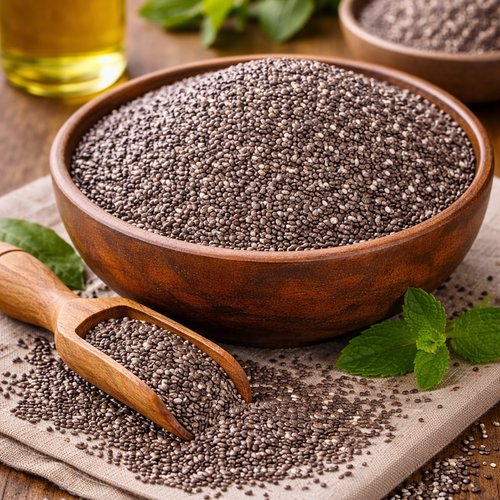
Chia Seeds
Buy Now →2. Flax Seeds — Lignans for Heart Health
Flax seeds (alsi) contain 22g of omega-3 per 100g and 27g of fibre. But what sets them apart is their lignan content — plant compounds with oestrogen-like properties that are clinically shown to reduce LDL cholesterol by 8–15% over 3 months. Flax has 800x more lignans than any other food.
Critical: flax seeds must be ground fresh before eating. Whole flax seeds pass through your digestive system completely undigested — you get zero nutrition from them. Grind in a dry mixer, store in the fridge for up to 3 days, and add to anything.
Daily dose: 1 tablespoon, always freshly ground.
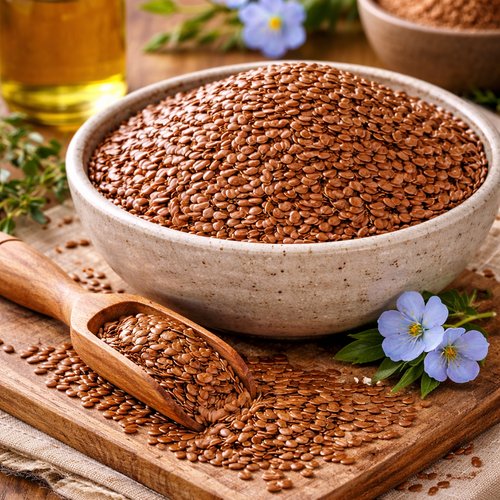
Flax Seeds (Alsi)
Buy Now →3. Pumpkin Seeds — Zinc for Immunity
Pumpkin seeds contain 7.8mg of zinc per 100g — making them one of the richest plant sources of this immunity-critical mineral. Most Indian adults are zinc-deficient without knowing it, which shows up as frequent colds, slow wound healing, and poor skin health. They also pack 30g of protein per 100g.
Pumpkin seeds are particularly important for men's health — zinc supports prostate function and testosterone production. A small handful daily is one of the simplest dietary interventions for filling the zinc gap.
Daily dose: Small handful (~20g), raw or lightly roasted.
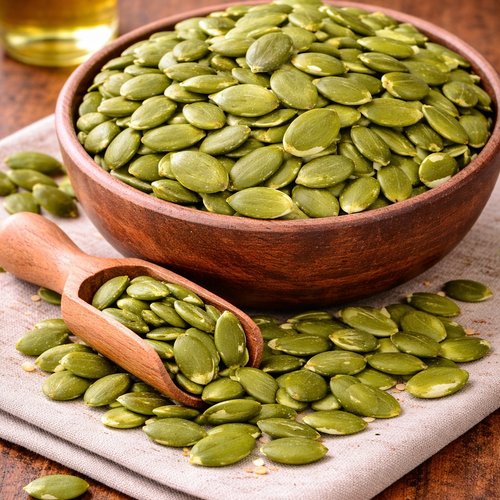
Pumpkin Seeds
Buy Now →4. Sunflower Seeds — Vitamin E Powerhouse
Sunflower seeds deliver 35mg of vitamin E per 100g — that is 234% of the recommended daily intake from just a small handful. Vitamin E is the body's primary fat-soluble antioxidant, protecting cell membranes from oxidative damage. It is also one of the most effective nutrients for skin health and hair strength.
Beyond vitamin E, sunflower seeds provide 21g of protein per 100g and significant amounts of selenium, copper, and B vitamins. They taste nutty and slightly sweet when lightly roasted — making them one of the most enjoyable seeds to snack on.
Daily dose: Small handful (~20g) as a snack or salad topping.
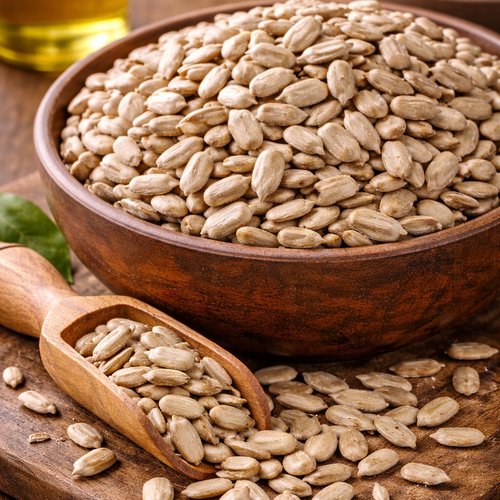
Sunflower Seeds
Buy Now →5. Sabja Seeds (Basil Seeds) — Traditional Cooling Superfood
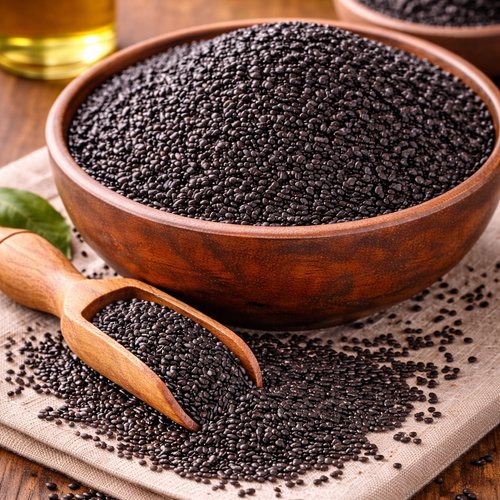
Sabja seeds have been a summer staple in Indian households for generations — added to falooda, nimbu pani, and sherbets for their cooling effect. They contain 3x more fibre per gram than chia seeds, along with iron and magnesium. When soaked in water, they swell within seconds (much faster than chia) and form a translucent gel coating.
Sabja and chia are not the same — despite looking similar. Sabja seeds are black, swell faster, have a milder taste, and are traditionally used for body cooling and digestive relief. Chia seeds are grey-speckled, have more omega-3, and take longer to gel.
Daily dose: 1 teaspoon, soaked in water for 10 minutes.
Sabja Seeds (Basil Seeds)
Buy Now →6. Watermelon Seeds — Hidden Protein Source
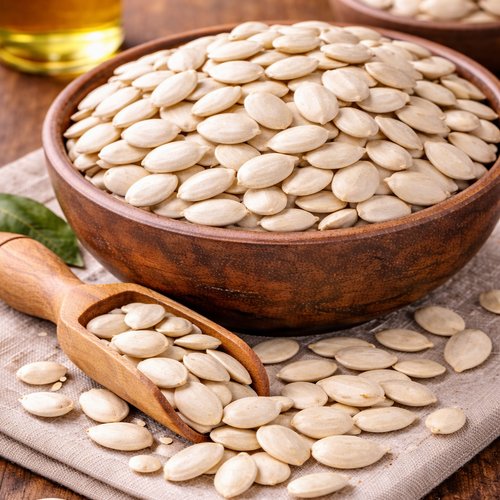
Most people throw watermelon seeds away. That is a mistake — dried watermelon seeds contain 28g of protein per 100g (more than chicken breast per calorie), along with high levels of iron and magnesium. They are one of the most underrated protein sources in Indian diets.
Lightly roasted with a pinch of salt, watermelon seeds become a crunchy, nutty snack that rivals any packaged chips — with dramatically better nutrition. They are also calorie-efficient: a small handful gives you protein and minerals without excess fat.
Daily dose: Small handful (~15g), lightly roasted as a snack.
Watermelon Seeds
Buy Now →7. Cucumber Seeds — Ayurvedic Mineral Source
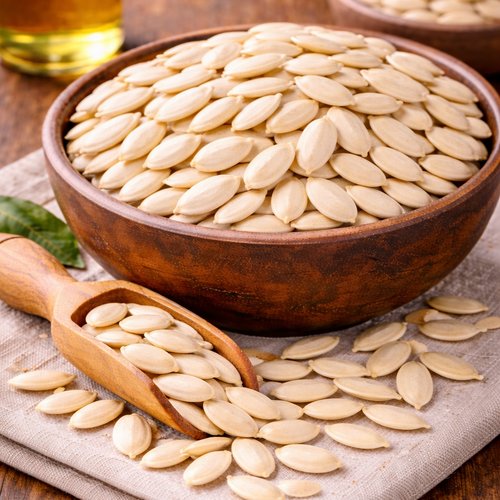
Cucumber seeds are rich in potassium, magnesium, and zinc — a mineral trio that supports hydration, muscle function, and immune health. In Ayurvedic tradition, cucumber seeds are considered a cooling food that reduces body heat, supports kidney function, and aids digestion.
They have a mild, neutral taste that blends easily into smoothies, yogurt, or soaked water. For people who find stronger seeds like flax or pumpkin too intense in flavour, cucumber seeds are an easy entry point.
Daily dose: 1 teaspoon in smoothies, yogurt, or soaked in water.
Cucumber Seeds
Buy Now →Bonus: Quinoa is technically a seed, not a grain. It is the only plant seed with all 9 essential amino acids (complete protein). If you want an 8th seed in your rotation, quinoa as a rice replacement 2–3 times a week rounds out the nutritional picture.
Best Time to Eat Seeds
Timing affects absorption. Here is when each seed works best:
| Time | Best Seeds | Why |
|---|---|---|
| Morning with breakfast | Chia, Flax | Omega-3 absorbs better when eaten with fat (yogurt, milk, oats). Morning fibre sets digestion rhythm for the day. |
| Mid-morning / evening snack | Pumpkin, Sunflower, Watermelon | Protein and healthy fats keep energy stable between meals. Replaces biscuits and chips. |
| Soaked before bed | Sabja | Cooling effect supports overnight digestion. Traditional Indian practice for summer nights. |
| Pre-workout (30 min before) | Pumpkin | Magnesium prevents muscle cramps during exercise. Protein supports performance. |
How to Prepare Seeds (Soak, Grind, Roast)
Different seeds need different prep for maximum nutrition:
| Method | Seeds | Why |
|---|---|---|
| Soak (15–30 min in water) | Chia, Sabja, Flax | Activates nutrients, makes fibre digestible, forms beneficial gel |
| Grind (dry mixer) | Flax (always), Cucumber (optional) | Whole flax passes through undigested. Grinding breaks the hard shell for nutrient access. |
| Light roast (dry pan, no oil) | Pumpkin, Sunflower, Watermelon | Brings out nutty flavour and crunch. Keep heat low — dark roasting destroys healthy fats. |
| Raw | All seeds | Every seed can be eaten raw. Roasting is for taste, not a nutrition requirement. |
Daily Seed Mix Recipe — Your 2-Minute Routine
Here is the exact daily routine that covers your nutritional bases:
Step 2: Soak 1 tablespoon chia seeds in half a cup of water overnight.
Step 3: Morning — mix the chia gel + 1 teaspoon ground flax into yogurt, smoothie, or oats.
Step 4: Snack time — eat a small handful of mixed roasted pumpkin + sunflower + watermelon seeds.
Total daily cost: ~₹20 (much cheaper than a multivitamin, and actually absorbable by your body).
Common Mistakes to Avoid
Eating whole flax seeds. They pass through your system completely undigested. You get zero nutrition. Always grind fresh.
Buying pre-ground flax. Ground flax oxidises within days, losing omega-3 potency. Buy whole seeds and grind small batches yourself. Store in the fridge, use within 3 days.
Roasting too dark. High heat destroys the polyunsaturated fats that make seeds healthy in the first place. Light dry roast on low flame — stop when you smell a nutty aroma, before any browning.
Skipping the soak for chia and sabja. Eaten dry, they absorb water from your gut and can cause bloating, cramps, or constipation. Always soak in liquid for at least 10–15 minutes before eating.
Eating too much. More is not better. 2 tablespoons of mixed seeds daily is optimal. Exceeding that adds excessive fibre that causes gas, bloating, and digestive discomfort.
Buying conventionally treated seeds. Many commercial seeds are treated with pesticides or irradiated for shelf life. Orggu's seeds are chemical-free and packed fresh per order — no treatments, no additives.
🌱 Why Orggu Seeds?
Orggu stocks all 8 seed varieties — chia, flax, sabja, pumpkin, sunflower, watermelon, cucumber, and quinoa. Every batch is chemical-free, untreated, and packed fresh per order. No artificial processing, no irradiation, no additives. What you get is the seed in its natural state, with full nutritional potency intact.
How Much of Each Seed to Eat Daily
One of the most common questions is simply how much mixed seeds to eat daily. For most healthy adults, a total of about 1–2 tablespoons of mixed seeds a day is a sensible amount — enough to add fibre, protein and healthy fats without overdoing calories. Seeds are nutrient-dense but also calorie-dense, so more is not better. If you are new to seeds, start with a teaspoon and build up over a week or two, with plenty of water (the fibre needs it — the same rule that keeps millets gentle on digestion).
| Seed | Typical daily amount | Tip |
|---|---|---|
| Flax (alsi) | 1 tsp – 1 tbsp | Grind it — whole flax passes through undigested |
| Chia | 1 tsp – 1 tbsp | Soak 10–15 min; drink water with it |
| Pumpkin | 1 tbsp | Great source of magnesium and zinc |
| Sunflower | 1 tbsp | Unsalted; vitamin E rich |
| Sabja (basil) | 1 tsp (soaked) | Always soak until gel-like before eating |
| Watermelon | 1 tbsp | Roast lightly for a nutty snack |
| Cucumber | 1 tsp | Mild; blends well into a mix |
A practical rule: one mixed spoon (about 1–2 tbsp total) once a day covers most people — you do not need every seed every day, so feel free to rotate. If you are pregnant, breastfeeding, or on any medication, check the amount with your doctor. For where seeds fit a low-glycemic way of eating, see the millet glycemic index guide.
How much mixed seeds should I eat daily?
For most healthy adults, about 1–2 tablespoons of mixed seeds a day is plenty. Start with a teaspoon and build up gradually with enough water, because the fibre needs it. Seeds are calorie-dense, so more is not better — a single mixed spoon once a day is a sensible amount.
Can I eat all seven seeds together every day?
Yes, a small mixed spoon of the seven seeds is fine for most people — but you do not have to include every seed every day; rotating is just as good. Always soak sabja and chia first, keep portions modest, and check with a doctor if you are pregnant, breastfeeding or on medication.
Shop this article
Frequently Asked Questions
Also read: 7 Best Dry Fruits to Eat Daily | 5 Best Millets for Diabetes | Cold Pressed Oil Benefits
Sources & References
- Indian Food Composition Tables (2017) — National Institute of Nutrition, Hyderabad
- USDA FoodData Central — U.S. Department of Agriculture
- Indian Journal of Medical Research — Glycemic Index Studies
Start your daily seed habit today
Chia Seeds · Flax Seeds · Pumpkin Seeds · Sunflower Seeds
Chemical-free seeds, packed fresh. Delivered across India.
See all 8 varieties: Seeds Collection
