Refined Oil vs Cold Pressed Oil: Which Is Actually Healthier?

Certified organic food specialists · Sources: NIN Hyderabad, ICMR, USDA FoodData Central
📖 10 min read · In this article:
Here is a startling fact: over 80% of Indian households cook with refined oil every single day — without knowing what "refining" actually does to their food. Walk into any Indian kitchen and you will likely find a bottle of refined sunflower, soybean, or groundnut oil sitting on the counter. It looks clean, smells like nothing, and costs less than the alternatives. But that apparent purity hides a troubling reality.
The refining process involves washing oilseeds with hexane — a chemical solvent derived from petroleum — then heating the oil above 200°C, bleaching it with activated clays, and deodorizing it with high-pressure steam. By the time refined oil reaches your kitchen, it has been stripped of nearly every nutrient it once contained. The golden colour is gone. The natural aroma is gone. The Vitamin E, the antioxidants, the polyphenols — all gone.
On the other side stands cold pressed oil — extracted the way your grandmother did it, by mechanically crushing seeds below 50°C with zero chemicals. Same seed, dramatically different oil. In this guide, we will break down exactly what happens during refining, compare the nutrition side by side using USDA and NIN Hyderabad data, and help you make an informed choice about what goes into your cooking.
What is Refined Oil?
Refined oil is produced through a multi-stage industrial process designed to maximize oil yield, extend shelf life, and create a neutral-tasting product. While this makes it commercially efficient, each stage of refining removes or destroys natural nutrients. Here is the 6-step refining process that every bottle of refined oil goes through:
- Solvent Extraction: Oilseeds are washed with hexane (a petroleum-derived chemical) to dissolve and extract maximum oil. This yields 30-40% more oil than mechanical pressing but introduces chemical residues.
- Degumming: Phosphoric acid or water is added to remove phospholipids (gums). This also strips away lecithin, a natural emulsifier beneficial for brain health.
- Neutralization: Sodium hydroxide (caustic soda) is used to remove free fatty acids. This step alters the oil's natural composition and can create soap-like byproducts.
- Bleaching: The oil is passed through activated clay or carbon filters to remove colour pigments. This process also destroys carotenoids and chlorophyll — natural antioxidants that give oil its golden colour.
- Deodorizing: The oil is heated to 230-260°C under vacuum with high-pressure steam to remove all natural smell and taste. This extreme heat destroys most remaining Vitamin E and can create trans fats.
- Winterization: The oil is cooled to remove any waxes or saturated fats that might cause cloudiness. The result is a perfectly clear, odourless, tasteless liquid — but nutritionally hollow.
🏭 Refined Oil (Industrial) — Chemically Processed
Hexane extraction → Degumming → Bleaching → Deodorizing → Winterizing → Nutrient-stripped oil
⚙️ Expeller Pressed — Partially Processed
Steel press → Moderate heat (60-100°C) → No chemicals → Some nutrients retained
🐂 Cold Pressed / Bull-Driven — Purest Method
Wooden or steel press → Below 50°C → Zero chemicals → All nutrients intact
Shop this article
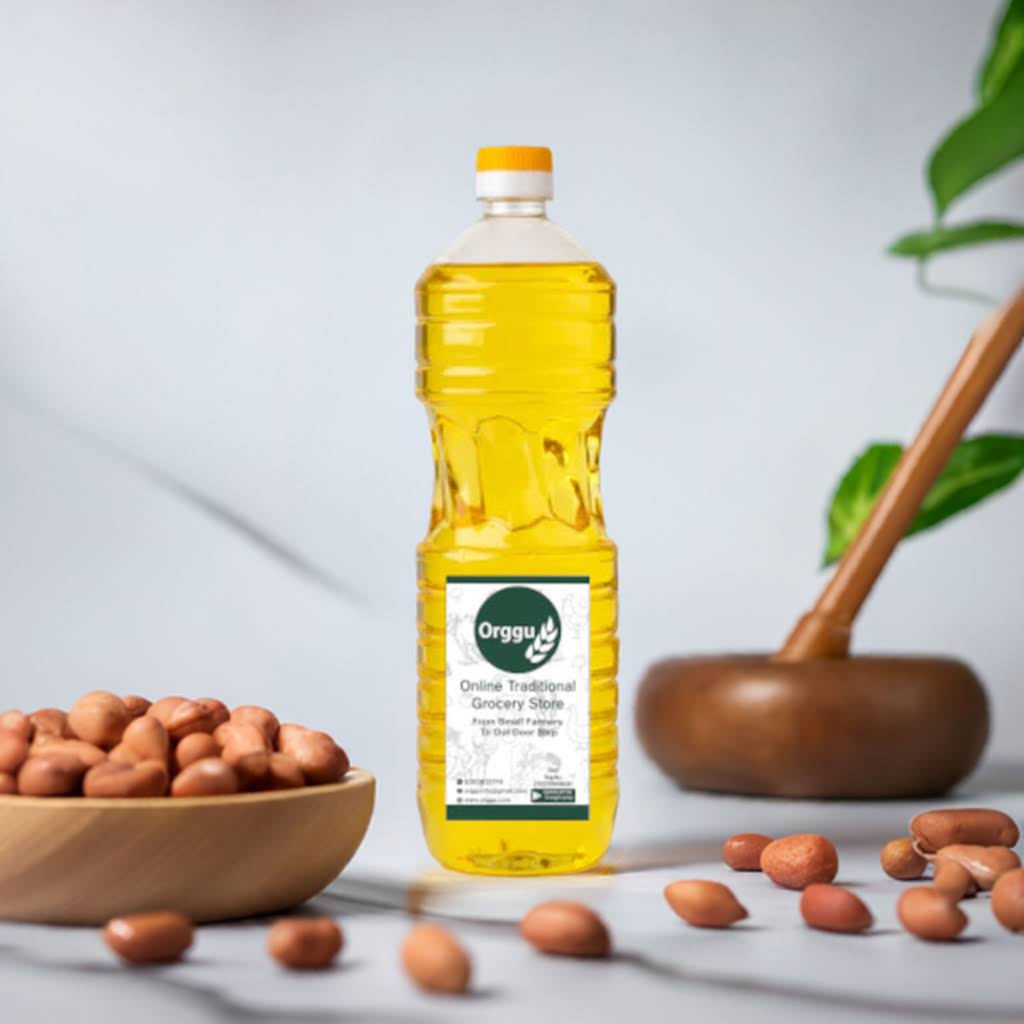
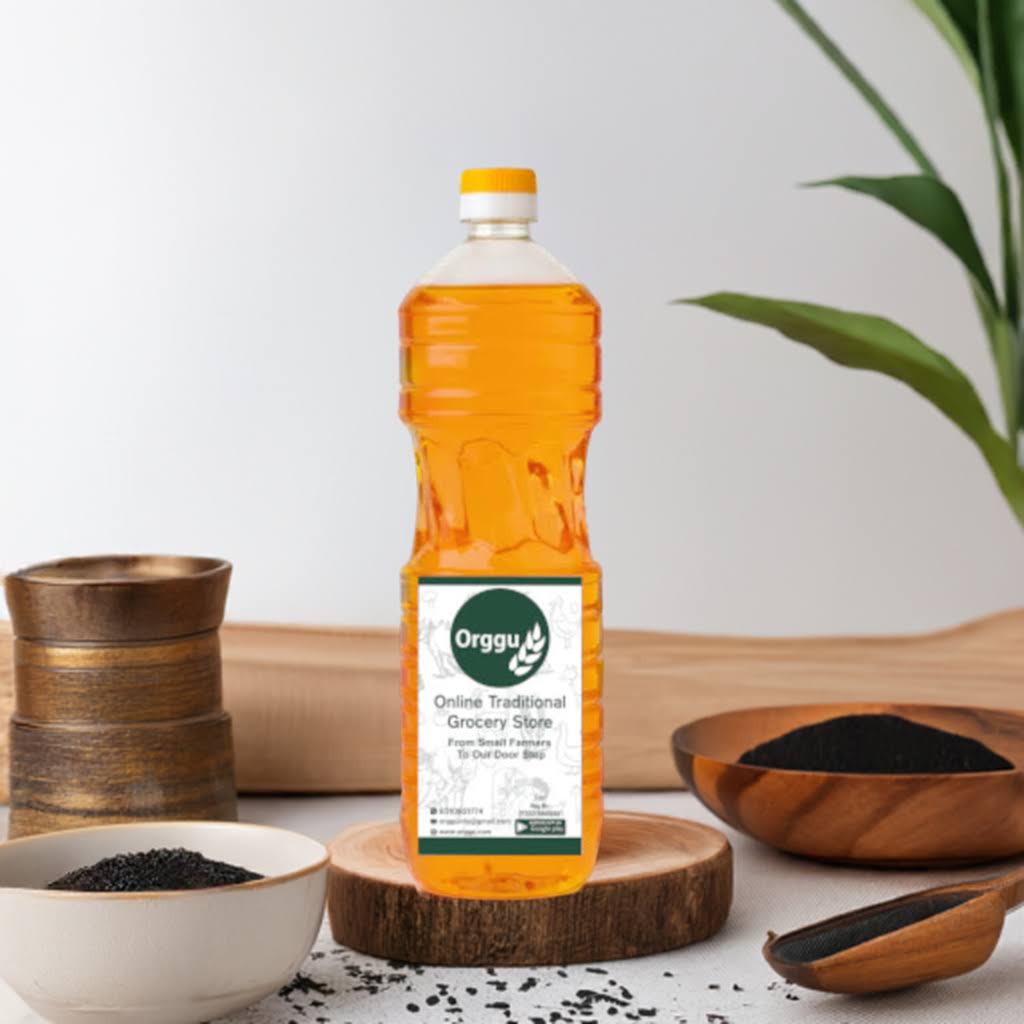
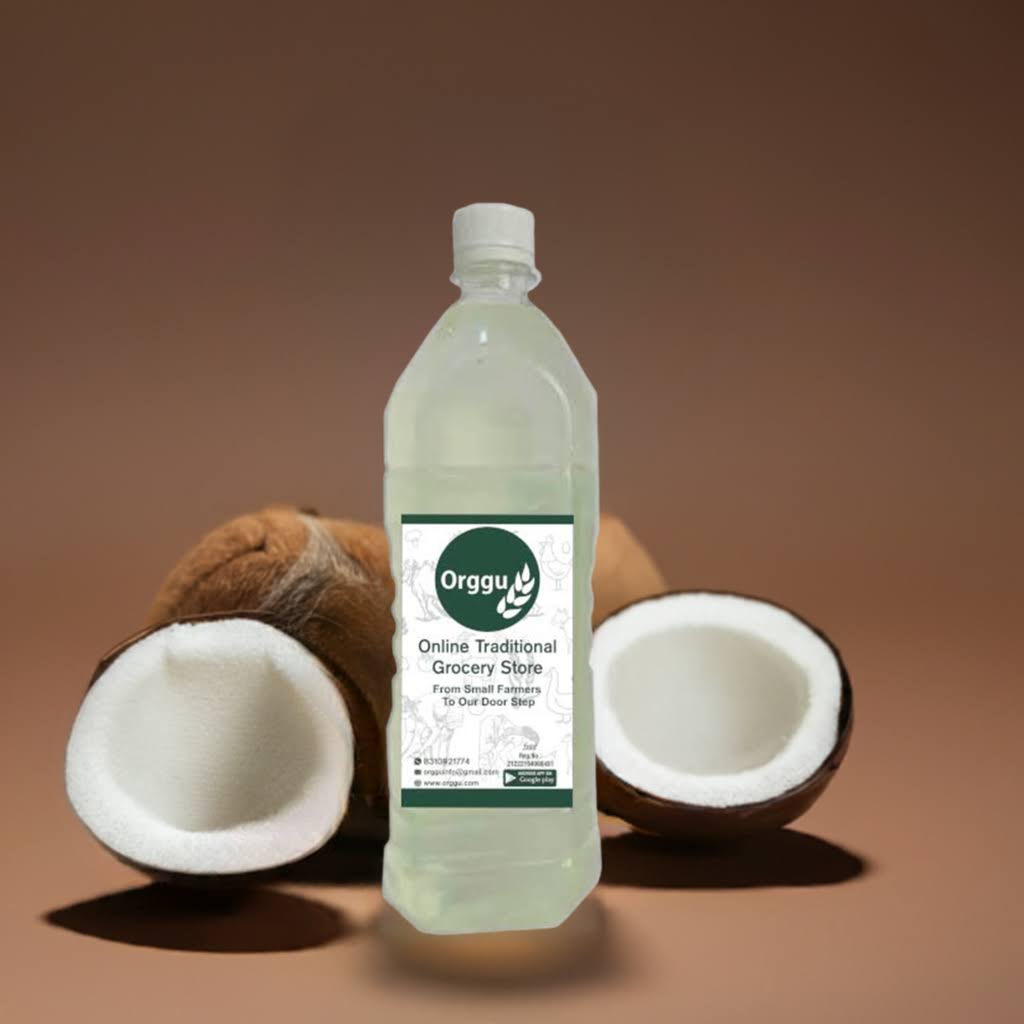
What is Cold Pressed Oil?
Cold pressed oil is extracted by mechanically crushing oilseeds at temperatures below 50°C, without using any chemical solvents, heat treatment, or additives. The process is simple: clean seeds go in, pure oil comes out. No hexane, no bleaching, no deodorizing.
In India, cold pressing has been practised for over 5,000 years. The traditional method uses a wooden mortar and pestle called chekku (Tamil), ghani (Hindi), or ghaani (Kannada). In the purest form — bull-driven marachekku — a bullock slowly rotates the wooden press, crushing seeds at the gentlest possible speed. The oil flows out naturally, is filtered through cloth, and is ready for cooking.
Modern cold pressing uses steel expellers that work faster while maintaining the below-50°C principle. The result is the same: oil that retains its natural golden colour, distinct seed aroma, full Vitamin E content, all antioxidants, and the rich flavour that makes food taste the way it should. To understand the full range of health benefits, read our detailed guide on cold pressed oil benefits.
The key difference is philosophical as much as practical: cold pressing treats the oilseed as a whole food to be preserved, while refining treats it as a raw material to be processed into a uniform industrial product.
Myths vs Facts: Refined Oil vs Cold Pressed Oil
There is a lot of misinformation about cooking oils. Let us separate fact from fiction. Tap each card to reveal the truth:
Nutrition Comparison: Cold Pressed vs Refined Oil
The numbers tell a clear story. Here is a side-by-side nutritional comparison of cold pressed oil versus refined oil (per 100g, based on USDA FoodData Central and NIN Hyderabad data):
| Nutrient | Cold Pressed Oil ✅ | Refined Oil ❌ |
|---|---|---|
| Vitamin E | 15.7mg (100% retained) | 1.5-2mg (85-90% destroyed) |
| MUFA (Monounsaturated) | 46.2g (preserved) | 46g (largely intact) |
| PUFA (Polyunsaturated) | 32g (preserved) | 31.7g (largely intact) |
| Trans Fats | 0g (zero) | 0.1-0.5g (formed during deodorizing) |
| Antioxidants | High (polyphenols, resveratrol intact) | Very low (nearly all destroyed) |
| Chemical Residues | None | Trace hexane, bleaching agents possible |
| Omega-6 (Linoleic Acid) | 32g (natural level) | 31.7g (similar, but without balancing antioxidants) |
| Phytosterols | 207mg (retained) | ~100mg (partially removed during refining) |
via orggu.com · Data from USDA FoodData Central & NIN Hyderabad Indian Food Composition Tables
Visual Score Card: Cold Pressed vs Refined
via orggu.com · Data from USDA FoodData Central
How Refining Destroys Nutrients: Stage by Stage
Each step of the refining process removes specific nutrients from the oil. Here is a breakdown of what is lost at every stage:
| Refining Stage | What It Does | Nutrients Destroyed |
|---|---|---|
| 1. Hexane Extraction | Dissolves oil from seeds using chemical solvent | Introduces chemical residues; damages delicate fatty acids |
| 2. Degumming | Removes phospholipids with phosphoric acid | Lecithin (brain health), phospholipids (cell membrane support) |
| 3. Neutralization | Caustic soda removes free fatty acids | Some essential fatty acids, natural flavour compounds |
| 4. Bleaching | Activated clay strips colour pigments | Carotenoids (50-70% destroyed), chlorophyll, some Vitamin E |
| 5. Deodorizing | 230-260°C steam removes aroma | Vitamin E (60-70% destroyed here alone), polyphenols, resveratrol, creates trans fats |
| 6. Winterization | Cooling removes waxes and saturated fats | Natural waxes (skin protection), some phytosterols |
The cumulative effect is devastating. By the time all six stages are complete, the oil has lost up to 90% of its Vitamin E, virtually all polyphenol antioxidants, most phytosterols, and its entire natural flavour and aroma profile. What remains is a calorie-dense, nutrient-poor liquid that provides energy but almost no micronutritional value.
Cold pressed oil skips all six of these stages. The seeds are simply crushed mechanically, the oil flows out naturally, and it is filtered through cloth. That is the entire process. Every vitamin, every antioxidant, every flavour compound stays exactly where nature put it.
Health Effects: Cold Pressed vs Refined Oil
The nutritional differences translate into real health consequences when you cook with these oils every day. Here is how the two compare across five critical health dimensions:
1. Heart Health
Cold Pressed: Rich in MUFA (monounsaturated fatty acids) and natural antioxidants that actively reduce LDL (bad) cholesterol while maintaining HDL (good) cholesterol. The polyphenols in cold pressed oil help prevent oxidation of LDL particles — a key driver of arterial plaque formation. A study in the Journal of Nutrition found that diets using unrefined groundnut oil reduced cardiovascular risk markers by 14%.
Refined: While MUFA content is largely preserved during refining, the loss of antioxidants means the oil offers far less protection against LDL oxidation. The deodorizing stage (230-260°C) can also create small amounts of trans fats, which are directly linked to increased heart disease risk.
2. Inflammation
Cold Pressed: Contains anti-inflammatory compounds including polyphenols, resveratrol (in groundnut oil), sesamol (in sesame oil), and tocopherols. These naturally occurring compounds help reduce chronic inflammation — the root cause of many lifestyle diseases.
Refined: Nearly all anti-inflammatory compounds are destroyed during bleaching and deodorizing. The high omega-6 content without balancing antioxidants can actually promote inflammation when consumed in excess. Most Indians already have an omega-6 to omega-3 ratio of 20:1 (ideal is 4:1), and refined oils worsen this imbalance.
3. Vitamin E & Antioxidant Protection
Cold Pressed: Retains 15.7mg of Vitamin E per 100g (in groundnut oil) — a powerful antioxidant that protects cells from oxidative damage, supports skin health, boosts immunity, and may reduce cancer risk. Also retains carotenoids and phytosterols.
Refined: Contains only 1.5-2mg of Vitamin E per 100g — a loss of 85-90%. Carotenoids are largely destroyed during bleaching. This means refined oil provides calories without the protective micronutrients that should come with them.
4. Chemical Exposure
Cold Pressed: Zero chemical exposure at any stage. No hexane, no caustic soda, no bleaching agents, no synthetic additives. The oil is as natural as the seed it came from.
Refined: Exposed to hexane during extraction, phosphoric acid during degumming, sodium hydroxide during neutralization, and bleaching clays during decolourization. While most of these are removed during processing, trace residues can remain. Long-term effects of chronic low-level exposure to these chemicals are still being studied.
5. Cancer Risk
Cold Pressed: The antioxidants in cold pressed oil — particularly Vitamin E, resveratrol, and polyphenols — have been shown in studies to have anti-carcinogenic properties. They neutralize free radicals that can damage DNA and trigger cancerous cell growth.
Refined: The deodorizing stage, which heats oil to 230-260°C, can produce glycidyl esters and 3-MCPD esters — compounds classified as probable carcinogens by the International Agency for Research on Cancer (IARC). While FSSAI sets limits on these contaminants, they are entirely absent in cold pressed oils because no high-temperature processing occurs.
Smoke Point Guide: Cold Pressed vs Refined
One of the biggest myths about cold pressed oil is that it cannot handle high-heat cooking. The smoke point — the temperature at which oil starts to break down and release toxic fumes — varies by oil type, not just extraction method. Here is a comparison of the most common Indian cooking oils:
| Oil Type | Cold Pressed Smoke Point | Refined Smoke Point | Indian Cooking Suitability |
|---|---|---|---|
| Groundnut Oil | ~230°C ✅ | ~232°C | Excellent for deep frying, tadka, all cooking |
| Coconut Oil | ~177°C | ~204°C | Good for medium-heat South Indian cooking |
| Sesame Oil | ~210°C ✅ | ~232°C | Great for stir-frying, pickles, chutneys |
| Mustard Oil | ~254°C ✅ | ~254°C | Excellent for North Indian frying and pickling |
| Sunflower Oil | ~107°C | ~232°C | Refined only for high heat; cold pressed for salads |
As you can see, cold pressed groundnut oil (230°C), mustard oil (254°C), and sesame oil (210°C) all have smoke points well above typical Indian deep frying temperatures (170-190°C). The idea that cold pressed oil cannot handle Indian cooking is simply not true for these oils.
Which Oil for Which Dish?
Not all cooking methods require the same oil. Here is a quick guide to choosing the right cold pressed oil for every type of Indian cooking:
| Cooking Method | Recommended Cold Pressed Oil | Why |
|---|---|---|
| Deep frying (vada, pakora, poori) | Groundnut oil ✅ | High smoke point (230°C), stable, clean nutty taste |
| Tadka / Tempering | Groundnut or sesame oil ✅ | Natural aroma enhances dal, sambar, rasam beautifully |
| Stir frying | Groundnut or mustard oil ✅ | Handles high heat well, adds authentic flavour |
| Biryani & Gravies | Groundnut oil ✅ | Rich flavour base, traditional South Indian choice |
| South Indian breakfast (appam, dosa, puttu) | Coconut oil ✅ | Essential coconut aroma, medium heat is perfect |
| Pickles & Chutneys | Sesame or mustard oil ✅ | Traditional preservative properties, distinctive taste |
| Salad dressings | Sesame or groundnut oil ✅ | Rich flavour at room temperature, full nutrients |
| North Indian curries | Mustard oil ✅ | Pungent flavour that defines North Indian cuisine |
The key takeaway: cold pressed groundnut oil is the most versatile choice for the average Indian kitchen. It handles nearly every cooking method, has a pleasant nutty flavour that complements all cuisines, and has the highest nutrient retention of any high-smoke-point oil.
📲 Share this on WhatsAppTest Your Knowledge: Refined vs Cold Pressed Oil
Q1: What chemical solvent is used to extract refined oil from seeds?
Q2: How much Vitamin E does the refining process destroy?
Q3: What is the smoke point of cold pressed groundnut oil?
Q4: Which oil retains resveratrol antioxidants — the same compound found in red grapes?
The Orggu Difference
🌱 Farm to Doorstep: How Your Cold Pressed Oil Reaches You
🌾 Small Farmers (50+ across Karnataka) → 🧹 Hand-Cleaned (no machine polishing) → ⚙️ Cold Pressed (below 50°C, zero chemicals) → 📦 Fresh Packed (airtight, food-grade) → 🚚 Free Delivery (same week, to your door)
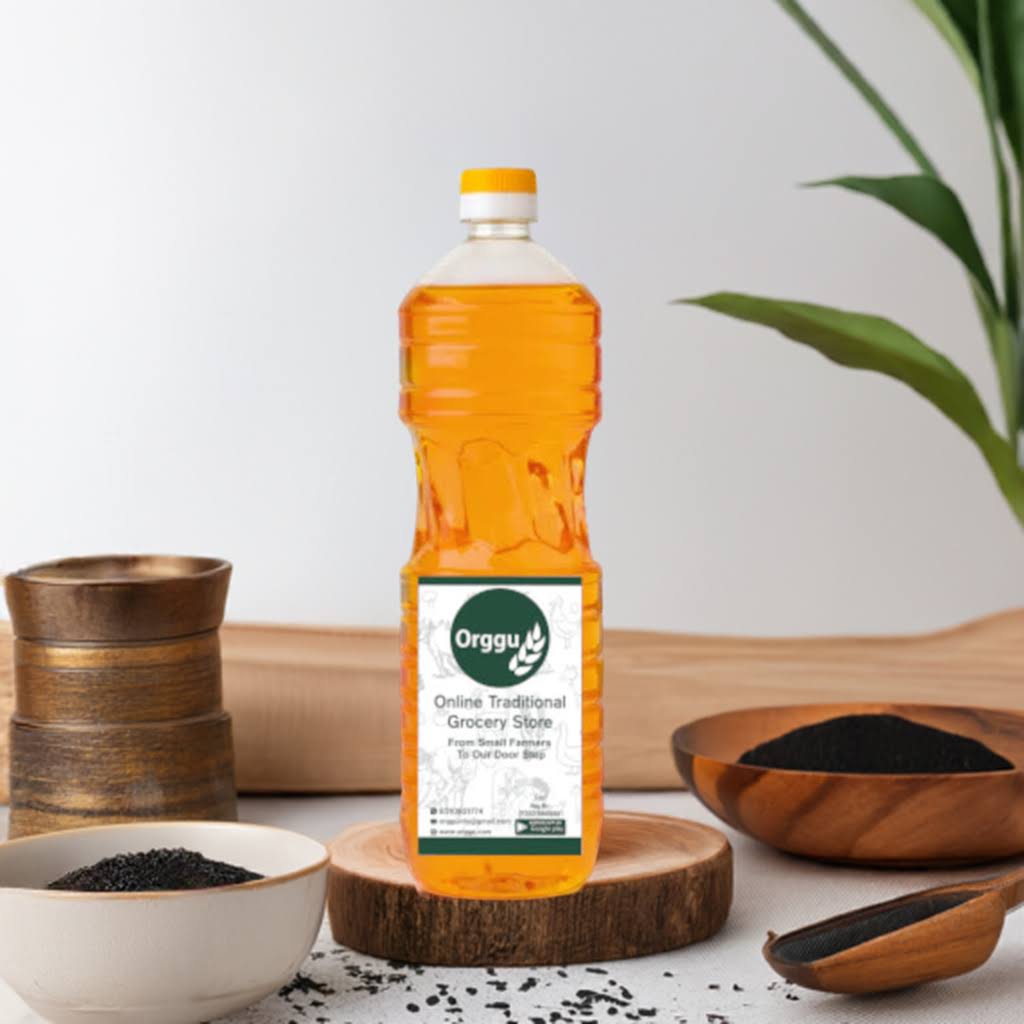
At Orggu, we believe cooking oil should nourish your family, not just heat your food. Every bottle of Orggu cold pressed oil is extracted from farm-fresh seeds sourced directly from small farmers in Karnataka. We cold press in small batches to ensure maximum freshness, and we never use chemicals, preservatives, or additives of any kind. When you open a bottle of Orggu oil, you should be able to smell the seed it came from — that is our standard of purity.

Shop this article
Frequently Asked Questions
Want to learn more about healthy cooking oils? Read our detailed guides on What is Cold Pressed Oil? Benefits, Types & Why It's Better, Groundnut Oil Benefits: Nutrition, Smoke Point & Cooking Guide, and Bull-Driven Oil (Marachekku) — The Ancient Way of Extracting Pure Oil.
Sources & References
- Indian Food Composition Tables (2017) — National Institute of Nutrition, Hyderabad
- USDA FoodData Central — U.S. Department of Agriculture
- Indian Journal of Medical Research — Glycemic Index Studies
Try our bull-driven cold pressed oils
Sesame Oil · Coconut Oil · Groundnut Oil
No chemicals, no heat processing. Delivered across India.
Compare all 3 oils: Bull-Driven Oil Collection
