Coconut Oil Benefits: Complete Guide for Cooking, Skin & Hair

Certified organic food specialists · Sources: NIN Hyderabad, ICMR, USDA FoodData Central
In This Guide (10 min read)
Coconut oil is easily the most controversial cooking oil in the world. Health experts have argued about it for decades. Some call it a superfood with miraculous healing properties. Others warn that its high saturated fat content makes it dangerous for heart health. So who is right?
The truth is — it depends entirely on the type of coconut oil and how you use it. A cold pressed, unrefined coconut oil extracted through traditional methods (like bull-driven marachekku) is fundamentally different from a refined, bleached, deodorized coconut oil you find on supermarket shelves. The science backs this up clearly.
In this guide, we break down everything you need to know about coconut oil — the real science behind MCTs and lauric acid, proven benefits for cooking, skin, and hair, when to use it (and when not to), and how to pick the right one. No hype, no fear-mongering. Just facts.
What Makes Coconut Oil Special
Coconut oil stands apart from every other cooking oil for one reason: Medium Chain Triglycerides (MCTs). About 65% of coconut oil is made up of MCTs — a type of fat that your body processes completely differently from the long-chain fatty acids found in most other oils.
Here is why that matters. Long-chain fatty acids (found in soybean oil, sunflower oil, etc.) go through a slow digestion process — they travel through your lymphatic system, get packaged into lipoproteins, and can be stored as body fat. MCTs skip all of that. They go directly to your liver, where they are rapidly converted into energy. Think of MCTs as the express lane for fat metabolism.
The star MCT in coconut oil is lauric acid, which makes up about 47% of its total fatty acid content. Lauric acid is extraordinarily rare in nature — the only other significant source is human breast milk. It has powerful antibacterial, antiviral, and antifungal properties. When your body digests lauric acid, it produces monolaurin, a compound that can destroy harmful pathogens including bacteria, viruses, and fungi.
No other cooking oil comes close to this combination. Olive oil has polyphenols. Groundnut oil has vitamin E. But only coconut oil gives you MCTs and lauric acid in meaningful quantities.
Shop this article
Nutrition Profile: Coconut Oil vs Other Oils
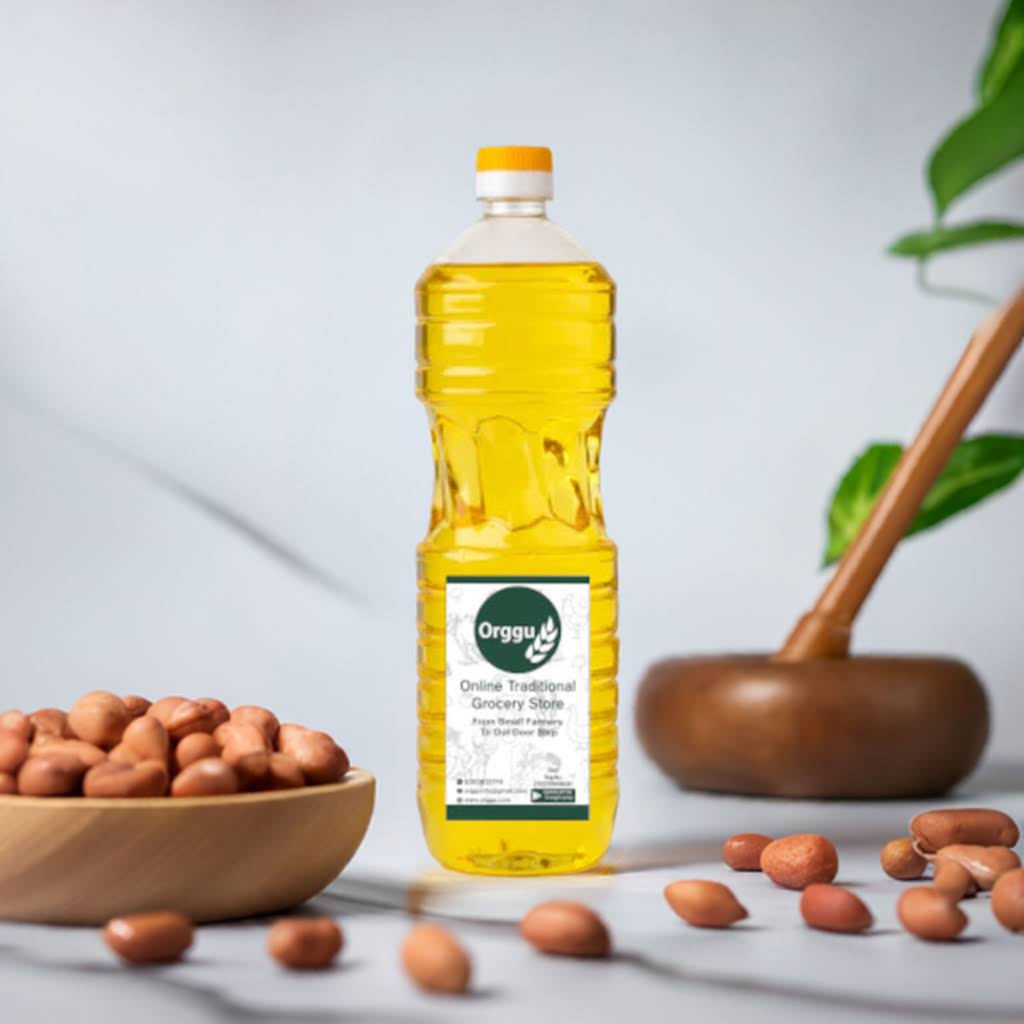
Let us look at the numbers. Here is how coconut oil compares to groundnut oil and olive oil per 100g (data from USDA FoodData Central):
| Nutrient (per 100g) | Coconut Oil | Groundnut Oil | Olive Oil |
|---|---|---|---|
| Calories | 862 kcal | 884 kcal | 884 kcal |
| Saturated Fat | 82.5g | 16.9g | 13.8g |
| Monounsaturated (MUFA) | 6.3g | 46.2g | 73g |
| MCTs | 58g | 0g | 0g |
| Lauric Acid | 47g | 0g | 0g |
| Vitamin E | 0.09mg | 15.7mg | 14.3mg |
| Smoke Point | 177°C | 230°C | 160°C |
Yes, coconut oil has the highest saturated fat. But look at the MCT and lauric acid rows — those are nutrients that zero other cooking oils provide. That is the trade-off, and for many people, it is well worth it.
Myths vs Facts About Coconut Oil
There is a lot of misinformation out there. Tap each card to reveal the truth:
Coconut Oil vs Groundnut Oil — Head to Head
6 Proven Cooking Benefits of Coconut Oil
1. High in MCTs — Quick Energy, Not Stored as Fat
The MCTs in coconut oil are sent directly to your liver for immediate energy conversion. Unlike long-chain fats from other oils that go through a slow digestion process and can be stored as body fat, MCTs are rapidly metabolized. This makes coconut oil an excellent choice for people looking for quick, sustained energy from their cooking fat.
2. Natural Antimicrobial Properties
Lauric acid gives coconut oil natural antibacterial and antifungal properties. When you cook with cold pressed coconut oil, these compounds help preserve food naturally. This is one reason traditional South Indian cooking has relied on coconut oil for centuries — it kept food safer in hot, humid climates before refrigeration existed.
3. Perfect for South Indian Cuisine
Coconut oil is irreplaceable in authentic South Indian cooking. Appam cooked in coconut oil has that distinctive crispy edge. Puttu steamed with coconut oil has the right aroma. Kerala stew without coconut oil is incomplete. The natural coconut flavour enhances these dishes in a way no other oil can replicate.
4. Ideal for Baking — Vegan Butter Substitute
Coconut oil is solid at room temperature (below 24°C), which makes it an excellent substitute for butter in baking. It creates the same flaky texture in pie crusts, the same moisture in cakes, and the same richness in cookies. For vegan baking, cold pressed coconut oil is the gold standard replacement for butter.
5. Enhances Flavour of Rice and Curry
A teaspoon of coconut oil added to rice while cooking does two things: it prevents the grains from sticking together, and it adds a subtle, fragrant flavour. In curries, coconut oil rounds out the spice profile and adds depth. Many traditional recipes specifically call for coconut oil as the tempering (tadka) fat for a reason — the flavour combination with mustard seeds, curry leaves, and dried chillies is unmatched.
6. Stable at Medium Heat
With a smoke point of 177°C, cold pressed coconut oil is perfectly stable for sauteing, stir-frying, tempering, and most stovetop cooking. It does not break down into harmful compounds at normal cooking temperatures. However, it is important to know its limits — do not use it for deep frying (which requires 180-200°C). For deep frying, use groundnut oil with its 230°C smoke point.
5 Skin Benefits of Coconut Oil
1. Deep Moisturizer
Coconut oil is an emollient — it fills the gaps between skin cells to create a smooth, soft surface. The medium-chain fatty acids penetrate the skin more effectively than mineral oil-based moisturizers. Apply a thin layer of cold pressed coconut oil after bathing while your skin is still slightly damp for maximum absorption. It works especially well for dry elbows, knees, and heels.
2. Antimicrobial Skin Protection
The lauric acid in coconut oil has been shown to kill Staphylococcus aureus, a bacteria commonly responsible for skin infections. A study published in the Journal of Dermatological Science found that lauric acid was more effective than benzoyl peroxide at killing acne-causing bacteria. For minor cuts and scrapes, applying a thin layer of coconut oil creates a protective antimicrobial barrier.
3. Supports Wound Healing
Research in the journal Skin Pharmacology and Physiology showed that virgin coconut oil accelerated wound healing in animal studies by increasing collagen production and antioxidant activity. The anti-inflammatory properties reduce redness and swelling around minor wounds. While it is not a replacement for medical treatment, it can complement the healing process for minor skin injuries.
4. Natural Makeup Remover
Coconut oil dissolves even waterproof makeup effectively because oil dissolves oil — it breaks down the waxes and pigments in cosmetics without harsh chemicals. Massage a small amount onto your face, then wipe clean with a warm damp cloth. Follow with your regular cleanser. It is gentle enough for the delicate eye area and leaves your skin moisturized instead of stripped dry.
5. Baby Massage Oil
Cold pressed coconut oil has been the traditional choice for baby massage in India for centuries, and modern science confirms its safety. A study in the Indian Journal of Dermatology found that coconut oil improved skin barrier function in premature infants. Its natural antimicrobial properties provide an extra layer of protection for delicate baby skin. Always use pure, cold pressed coconut oil — never refined — for babies.
4 Hair Benefits of Coconut Oil
1. Reduces Protein Loss
This is the most scientifically validated benefit. A landmark study published in the Journal of Cosmetic Science tested coconut oil against mineral oil and sunflower oil on hair. Coconut oil was the only one that significantly reduced protein loss in both damaged and undamaged hair. The lauric acid molecule is small enough to penetrate the hair shaft and bind to the internal protein structure, preventing it from washing out during shampooing.
2. Deep Conditioning Treatment
For a deep conditioning treatment, warm 2-3 tablespoons of cold pressed coconut oil and massage it into your hair from roots to tips. Leave it on for at least 30 minutes (overnight for best results), then wash with a mild shampoo. The oil penetrates the hair cortex and reduces water absorption, which prevents the repeated swelling and shrinking that causes hair damage.
3. Dandruff Treatment
The antifungal properties of lauric acid make coconut oil effective against Malassezia — the fungus responsible for most dandruff. Regular scalp massage with warm coconut oil reduces flaking, itching, and scalp dryness. Combine with a few drops of tea tree oil for enhanced antifungal action. Apply twice a week for consistent results.
4. Natural Shine and Frizz Control
A tiny amount of coconut oil (half a teaspoon) smoothed over dry hair tames frizz and adds natural shine. It works by coating the hair cuticle and preventing moisture from entering the shaft (which is what causes frizz in humid weather). Unlike silicone-based serums, coconut oil actually nourishes your hair while controlling frizz. Use very sparingly — too much will make hair look greasy.
Cold Pressed vs Refined Coconut Oil
This is the most important distinction. Not all coconut oil is created equal. Here is a detailed comparison:
| Parameter | Cold Pressed | Refined |
|---|---|---|
| Extraction Method | Mechanical pressing at low temperature (<49°C) | Chemical solvents, bleaching, deodorizing |
| MCT Content | Full — 58-65g per 100g | Reduced during processing |
| Lauric Acid | Full — 47g per 100g | Partially degraded |
| Natural Aroma | Rich coconut aroma | No aroma (deodorized) |
| Smoke Point | 177°C | 204°C |
| Chemical Residues | None | Possible hexane traces |
| Antioxidants | Retained (polyphenols, tocopherols) | Mostly destroyed |
| Best For | Cooking, skin, hair — full benefits | High-heat cooking only |
The verdict is clear: if you want the health benefits of coconut oil, cold pressed is the only option that delivers. Refined coconut oil has a higher smoke point, but it loses the very compounds (lauric acid, MCTs, antioxidants) that make coconut oil special in the first place.
Want to learn more about the differences? Read our detailed guide: Refined vs Cold Pressed Oil — What is the Real Difference?
Coconut Oil Cooking Guide
Knowing when to use coconut oil — and when to reach for a different oil — is the key to getting the best results:
| Cooking Method | Coconut Oil? | Notes |
|---|---|---|
| Tempering (Tadka) | Excellent | Perfect with mustard seeds, curry leaves, chillies |
| Sauteing Vegetables | Excellent | Adds subtle sweetness, medium heat is ideal |
| Making Appam/Puttu | Excellent | Traditional and irreplaceable for authentic flavour |
| Baking | Excellent | 1:1 replacement for butter, great in cookies and cakes |
| Rice Cooking | Good | 1 tsp per cup of rice prevents sticking, adds flavour |
| Stir Frying | Good | Keep heat at medium, do not let oil smoke |
| Shallow Frying | Okay | Fine for dosas and crepes at controlled temperature |
| Deep Frying | Avoid | 177°C smoke point is too low — use groundnut oil |
| High-Heat Wok Cooking | Avoid | Requires 200°C+ — exceeds smoke point |
Test Your Coconut Oil Knowledge
Q1: What percentage of coconut oil is MCTs (Medium Chain Triglycerides)?
Q2: What is the smoke point of cold pressed coconut oil?
Q3: Which fatty acid makes up 47% of coconut oil?
Q4: Which cooking method is coconut oil NOT ideal for?
The Orggu Difference
Why Orggu Cold Pressed Coconut Oil is Different
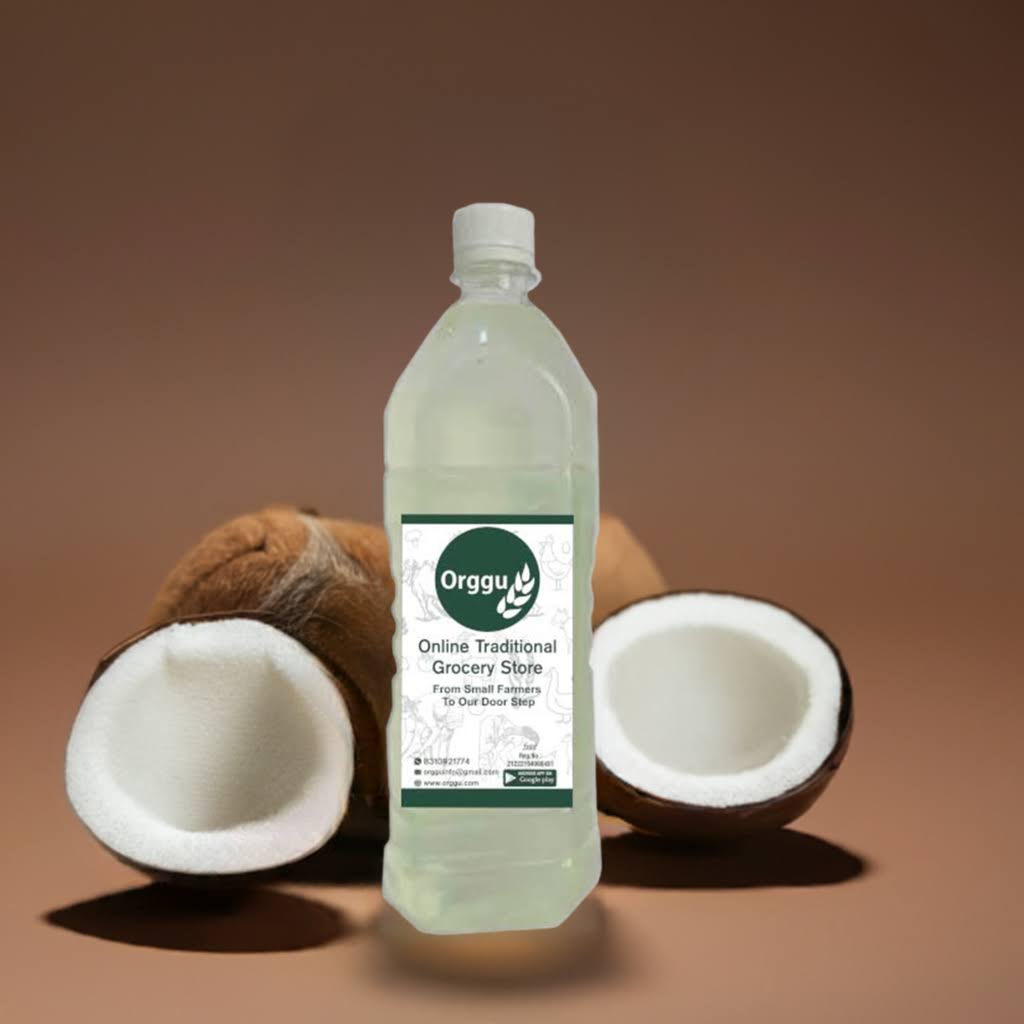
Our coconut oil is extracted using a traditional bull-driven wooden press (marachekku) at room temperature. No heat, no chemicals, no machines with metal parts that overheat the oil. This slow, traditional method ensures that every drop retains its full MCT content, lauric acid, natural aroma, and antioxidants.
We source our coconuts directly from farms in Tamil Nadu and Karnataka. Each batch is small — typically 50-100 litres — because quality cannot be mass-produced. The result is coconut oil that smells, tastes, and nourishes the way nature intended.

Shop Pure Cold Pressed Coconut Oil
Bull-driven extraction. Full MCT retention. Farm to bottle.
Shop Now