Millets vs Rice: Which is Healthier? Complete Nutrition Comparison

Sources: NIN Hyderabad, ICMR, USDA FoodData Central
📖 11 min read · In this article:
Rice is the undisputed king of Indian kitchens. From steaming plates of sambar rice in the south to biryani in the north, rice feeds over a billion Indians every single day. It's comforting, versatile, and deeply woven into our culture and traditions. But in recent years, a quiet revolution has been underway — millets are making a powerful comeback.
The United Nations declared 2023 the International Year of Millets, putting a global spotlight on these ancient grains that India's ancestors ate for thousands of years before the Green Revolution pushed rice and wheat to the forefront. Health-conscious Indians, nutritionists, and even government programmes are now championing millets as the healthier alternative to polished white rice.
But is the hype justified? Are millets really healthier than rice? Or is this just another food trend? In this comprehensive comparison, we'll look at the hard numbers — calories, protein, fibre, minerals, glycemic index — and give you a clear, evidence-based answer. We'll also cover specific use cases: which is better for diabetes, which is better for weight loss, and when rice might actually be the better choice. Let's settle the debate once and for all.
Myths vs Facts: Millets vs Rice
Tap each card to reveal whether it's a myth or fact:
Millets vs Rice: Nutrition Comparison Table
Let's start with the facts. Here's a side-by-side nutritional comparison of white rice against four popular millets, per 100 grams of dry grain. These numbers speak for themselves:
| Nutrient | White Rice | Foxtail Millet | Kodo Millet | Little Millet | Barnyard Millet |
|---|---|---|---|---|---|
| Calories | 350 | 331 | 309 | 329 | 307 |
| Protein | 6.8g | 12.3g | 8.3g | 7.7g | 6.2g |
| Fibre | 0.2g | 8g | 9g | 7.6g | 10.1g |
| Iron | 0.7mg | 2.8mg | 0.5mg | 1.8mg | 5mg |
| Calcium | 10mg | 31mg | 27mg | 17mg | 11mg |
| Glycemic Index | 73 (High) | 50 (Low) | 55 (Low) | 52 (Low) | 50 (Low) |
Visual Score Card: Foxtail Millet vs White Rice
via orggu.com · Data from NIN Hyderabad, Indian Food Composition Tables
The numbers don't lie. Every single millet outperforms white rice in fibre, glycemic index, and most minerals. Millets have 30-50 times more fibre than polished white rice, nearly double the protein in many cases, and significantly more iron and calcium. White rice's only advantage is that it's a faster source of simple carbohydrates — which, as we'll see, is actually a disadvantage for most people.
Let's dig deeper into what these differences mean for your health.
Making the switch from rice? Start with one whole grain — you can buy unpolished millets online.
Shop the millets in this article
7 Reasons Why Millets Are Healthier Than Rice
1. Dramatically Higher Fibre Content
This is the single biggest difference between millets and rice — and it impacts almost every aspect of health. White rice contains a mere 0.2g of fibre per 100g, because the polishing process strips away the bran layer entirely. Millets, on the other hand, contain 7-10g of fibre per 100g — that's 30 to 50 times more fibre. Dietary fibre is essential for healthy digestion, regular bowel movements, and feeding the beneficial gut bacteria that support your immune system. A diet low in fibre (like one dominated by white rice) is linked to constipation, poor gut health, and increased risk of colon cancer. Switching to millets is one of the easiest ways to dramatically increase your daily fibre intake.
2. Lower Glycemic Index — No Blood Sugar Spikes
The glycemic index (GI) measures how quickly a food raises your blood sugar after eating. White rice has a GI of 73 — classified as "High GI". This means eating rice causes a rapid spike in blood sugar, followed by a crash that leaves you feeling hungry and tired. All millets fall in the "Low GI" category (50-55), meaning they release glucose slowly and steadily into your bloodstream. No sudden spikes, no crashes, no mid-afternoon drowsiness. For the 100+ million Indians living with diabetes or pre-diabetes, this difference is life-changing.
3. Nearly Double the Protein
White rice provides 6.8g of protein per 100g — decent, but not impressive. Foxtail millet delivers 12.3g of protein per 100g — almost double. Even kodo millet (8.3g) and little millet (7.7g) beat rice comfortably. Higher protein means better muscle maintenance, stronger immunity, and greater satiety after meals. For vegetarian Indians who rely heavily on grains for protein, switching from rice to millets can meaningfully increase daily protein intake without adding any new foods to the diet.
4. Rich in Essential Minerals
Millets are significantly richer in iron, calcium, and magnesium than white rice. Barnyard millet contains 5mg of iron per 100g compared to rice's 0.7mg — that's 7 times more iron. Foxtail millet has 31mg of calcium compared to rice's 10mg — 3 times more calcium. These minerals are critical for preventing anaemia (extremely common in Indian women), building strong bones, and supporting hundreds of enzymatic processes in the body. Rice simply cannot match millets in mineral density.
5. Naturally Gluten-Free
Like rice, all millets are naturally gluten-free, making them safe for people with celiac disease or gluten sensitivity. But millets offer this benefit alongside dramatically superior nutrition. If you're avoiding gluten and relying on rice as your primary grain, switching to millets gives you the same gluten-free safety net with vastly better nutritional returns — more fibre, more protein, more minerals, and a lower glycemic impact.
6. Better for Weight Loss
If weight management is your goal, millets have a clear edge over rice. The high fibre content keeps you feeling full for hours longer than rice does, naturally reducing your calorie intake between meals. Millets also have fewer calories per 100g — barnyard millet has just 307 calories compared to rice's 350. Over months of daily meals, this calorie difference adds up. The low glycemic index also helps — when blood sugar stays stable, your body is less likely to store excess energy as fat. Studies show that replacing high-GI foods with low-GI alternatives leads to significant reductions in body weight and waist circumference over time.
7. More Eco-Friendly and Sustainable
This isn't a health benefit, but it matters. Rice paddies require 3,000-5,000 litres of water to produce 1 kg of grain and release methane, a potent greenhouse gas. Millets need just 300-500 litres of water per kg — that's up to 10 times less water. Millets also grow in poor soil, need minimal pesticides, and mature faster than rice. In a world facing water scarcity and climate change, choosing millets is an act of environmental responsibility. When you switch to millets, you're not just improving your health — you're reducing your ecological footprint.
Millets for Diabetes: Why They Beat Rice
For the 100+ million Indians managing diabetes, the choice between millets and rice can make a real clinical difference. The key metric is the glycemic index (GI) — a measure of how quickly a food spikes your blood sugar. White rice has a GI of 73 (high), while millets range from 50-55 (low). That's not a marginal difference — it's a completely different category.
But GI alone doesn't tell the full story. Millets' high fibre content acts as a physical barrier that slows down the digestion and absorption of carbohydrates. The carbs in millets are complex carbohydrates that take longer to break down, resulting in a slow, gradual release of glucose rather than a sudden flood. Multiple studies published in the Journal of Food Science and Technology have shown that replacing rice with millets leads to significant reductions in fasting blood sugar and HbA1c levels over 3-6 months.
Foxtail millet, with its low GI of 50 and high protein content of 12.3g, is particularly effective for diabetics. It tastes closest to rice, making the transition easiest, and its protein-fibre combination provides excellent post-meal blood sugar control.
Learn more: Best Millets for Diabetes: Which Millet Helps Lower Blood Sugar?
Millets for Weight Loss: Why They Beat Rice
When it comes to weight loss, the calorie difference between millets and rice is significant over time. Kodo millet has just 309 calories per 100g compared to rice's 350 — a saving of 41 calories per serving. Barnyard millet is even lower at 307 calories. Over 2-3 meals a day for months, this adds up to thousands of saved calories without reducing your portion size at all.
But the real weight loss advantage is satiety. Millets' high fibre content (9g in kodo millet vs 0.2g in rice) keeps you feeling full for 2-3 hours longer than rice does. When you're not hungry between meals, you naturally eat fewer snacks and smaller portions. The low glycemic index also helps — stable blood sugar means fewer cravings for sweets and fried foods. Studies show that diets rich in low-GI, high-fibre foods lead to greater weight loss and better weight maintenance than calorie-restricted diets based on high-GI foods.
Kodo millet is an excellent choice for weight loss — it has the ideal combination of low calories, high fibre, and high antioxidant content that supports healthy metabolism.
Learn more: Millets for Weight Loss: How to Lose Weight Naturally with Millets
When Is Rice Better Than Millets?
To be fair, rice does have its place. Here are situations where rice might be the better choice:
- Post-workout recovery: After intense exercise, your muscles need quick-digesting carbohydrates to replenish glycogen stores. White rice's high GI is actually an advantage here — it delivers glucose rapidly when your body needs it most. Athletes and gym-goers often prefer rice for post-workout meals.
- Easier to digest: For people with sensitive stomachs, recovering from illness, or dealing with digestive issues like IBS, white rice is gentler on the gut. Its low fibre content means less bloating and gas, which can be a concern when first switching to high-fibre millets.
- Better for very young children: Paediatricians often recommend rice-based foods for babies and toddlers because it's hypoallergenic and easy to digest. Millets' high fibre content can be too much for developing digestive systems. Introduce millets gradually after age 2-3.
- Cultural and emotional value: Rice is deeply tied to Indian festivals, rituals, and family traditions. From Pongal to Onam sadya, rice carries emotional significance that goes beyond nutrition. There's nothing wrong with enjoying rice at special occasions while eating millets for everyday meals.
The key takeaway: rice is not "bad" — it's simply nutritionally inferior to millets for daily consumption. The ideal approach for most people is to eat millets as your everyday staple and enjoy rice occasionally for specific purposes.
How to Switch from Rice to Millets
Making the switch doesn't have to be sudden or stressful. Here's a practical, gradual approach that works for most Indian families:
- Start with a 50-50 mix. Cook half rice and half millet together for the first 1-2 weeks. This lets your family adjust to the slightly different taste and texture without a dramatic change. Gradually increase the millet proportion until you're eating 100% millet.
- Soak millets for 4-6 hours before cooking. Soaking softens the grain, reduces cooking time, removes anti-nutrients like phytic acid, and makes minerals more bioavailable. Overnight soaking is even better. Drain the water before cooking.
- Try one millet at a time. Don't overwhelm yourself by buying all millets at once. Start with foxtail millet or little millet — they taste closest to rice and are the easiest for beginners. Once you're comfortable, explore kodo millet, barnyard millet, and browntop millet.
- Use millets in familiar recipes. You don't need special "millet recipes." Simply replace rice with millet in dishes you already cook — millet rice with sambar, millet pulao, millet upma, millet dosa, millet idli, even millet biryani. The cooking method is almost identical to rice.
- Rotate millets through the week. Each millet has a unique nutritional profile. Eating a different millet each day ensures you get the full spectrum of benefits — foxtail for protein, kodo for antioxidants, barnyard for fibre, little millet for iron.
- Give it 3-4 weeks. Your taste buds need time to adjust. Most people who stick with millets for a month find they actually prefer the taste — millets have a satisfying, slightly nutty flavour that rice lacks. Many report feeling lighter, more energetic, and less bloated after switching.
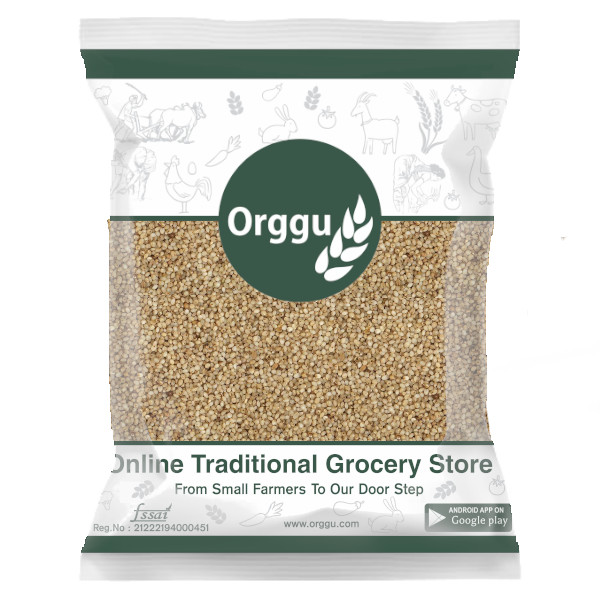
Want to try all millets at once? Our Positive Millets Combo includes all 5 Siridhanya millets — the perfect starter pack for families switching from rice to millets:
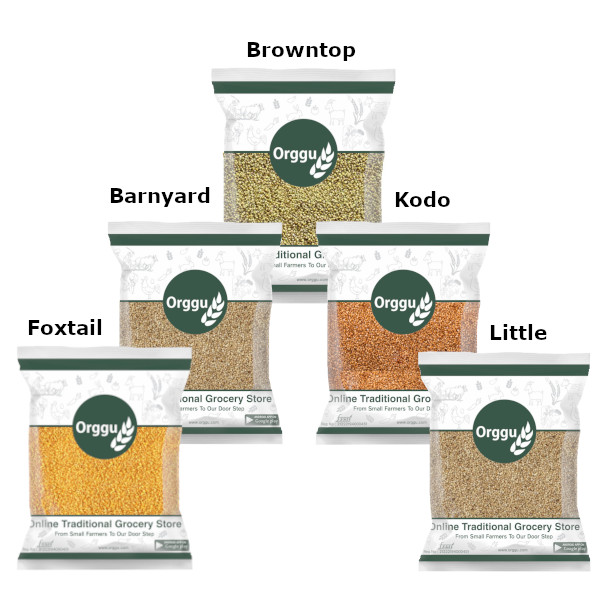
🌱 Start Your Millet Journey with Orggu
🌾 Small Farmers (50+ across Karnataka) → ☀️ Sun-Dried (natural processing) → 🧹 Hand-Cleaned (never machine-polished) → 📦 Fresh Packed (airtight, food-grade) → 🚚 Free Delivery (across Bangalore)
Individual millets vs rice (foxtail, barnyard, kodo)
People often ask about a specific millet rather than millets in general — for example foxtail millet vs rice or barnyard millet vs rice. The short answer: every unpolished millet is a whole grain, so each is higher in fibre and lower on the glycemic index than white rice. Which one to pick is mostly about taste and texture:
| Millet vs white rice | How it compares |
|---|---|
| Foxtail millet | Mild and rice-like — the easiest first swap; whole grain, more fibre, lower GI (guide) |
| Barnyard millet | Lowest-GI millet, very light and quick to cook (guide) |
| Kodo millet | Nutty and filling, high in fibre — a hearty rice replacement |
| Little millet | Soft, easy to digest, cooks rice-like |
The GI figures behind this are in our millet glycemic index guide; for how the fibre helps digestion, see millets for gut health.
Is foxtail millet better than rice?
Nutritionally, unpolished foxtail millet is a whole grain — it keeps more fibre and has a lower glycemic index than polished white rice, which is why it is a popular rice replacement. Both can fit a balanced diet; the millet advantage comes mainly from keeping it unpolished.
Which millet is the best replacement for rice?
There is no single best one — foxtail, little and barnyard millet all cook up rice-like and make easy first swaps. Rotating a few unpolished millets through the week is better than picking just one, and keeping them unpolished matters more than the choice of millet.
Shop the millets in this article
Frequently Asked Questions
Also read: Siridhanya Millets: Complete Guide to Benefits | Dr Khadar Vali Millet Diet Plan | Millets for Diabetes | Millets for Weight Loss | Polished vs Unpolished Millets
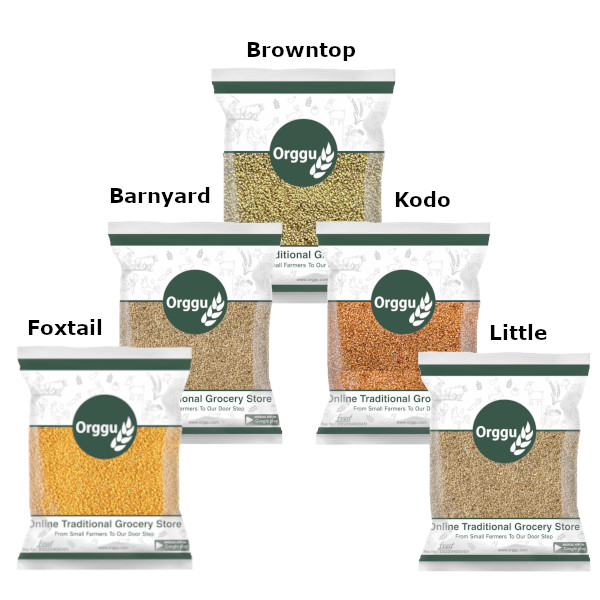
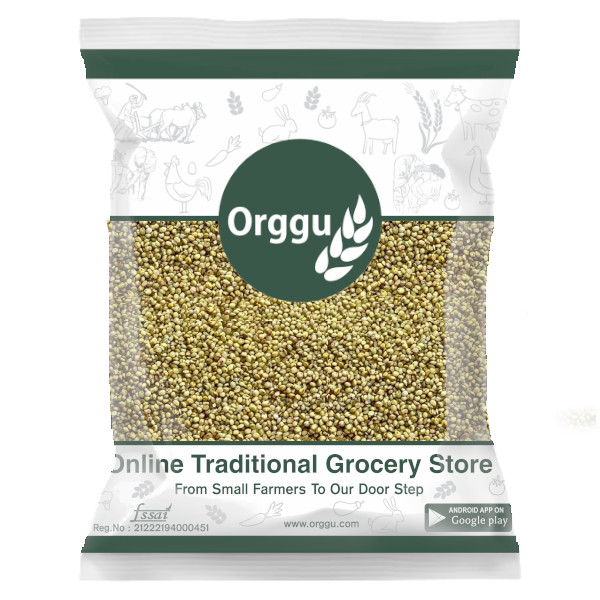
Ready to try Siridhanya millets?
Start with our 5-millet combo pack — one of each Siridhanya grain, 100% unpolished.
Buy Positive Millets ComboSee the Complete Dr Khadar Vali Diet Kit — millets + salt + oil + jaggery.
