Millets vs Quinoa: Price, Protein & GI Compared for India

Certified organic food specialists · Sources: NIN Hyderabad, ICMR, USDA FoodData Central
📖 9 min read · In this article:
Walk into any upscale grocery store in Bangalore, Mumbai, or Delhi, and you'll find quinoa sitting pretty on the shelf at ₹500-800 per kg. It's marketed as the ultimate superfood — protein-rich, gluten-free, endorsed by Western health influencers and fitness gurus. Instagram is full of quinoa salad bowls and quinoa smoothie recipes. The message is clear: if you care about health, you eat quinoa.
But here's the thing nobody talks about. India grows millets that are MORE nutritious than quinoa — with more fibre, more calcium, more iron — and they cost just ₹100-200 per kg. Foxtail millet, barnyard millet, kodo millet, little millet, browntop millet — these ancient grains have been grown on Indian soil for over 5,000 years. They don't need to be imported from Peru or Bolivia. They grow in our own fields, in our own climate, supporting our own farmers.
So why are we paying 5x more for an imported grain when something better has been growing in our backyard all along? In this article, we'll put millets and quinoa head-to-head — nutrition, price, sustainability, and practicality — using data from NIN Hyderabad and the USDA. The results might surprise you.
Quick Verdict: Millets vs Quinoa
Bottom line? Millets are the smarter choice for Indian kitchens. They're local, affordable, and nutritionally superior in most categories. Quinoa is a fine grain — but it's not worth 5x the price when millets deliver equal or better nutrition.
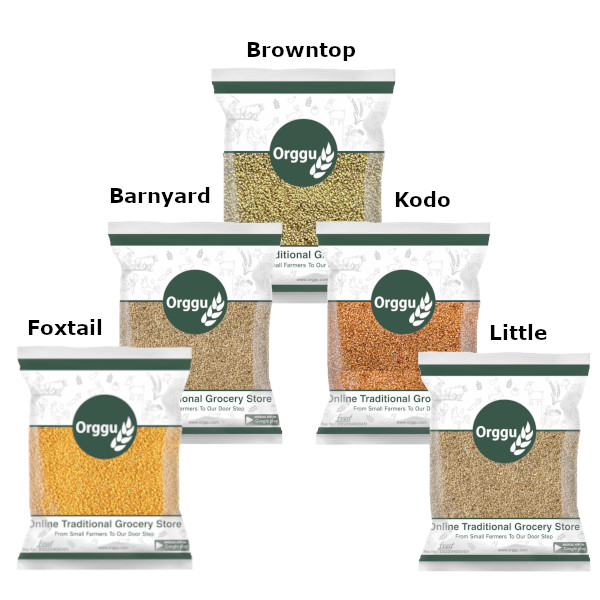
Shop the millets in this article
What Are Millets?
Millets are a group of small-seeded cereal grains that have been cultivated in India and Africa for over 5,000 years. India is the world's largest producer of millets, growing over 170 lakh tonnes annually across states like Karnataka, Rajasthan, Maharashtra, and Andhra Pradesh. The United Nations declared 2023 the International Year of Millets — a proposal led by India — recognising their nutritional value and climate resilience.
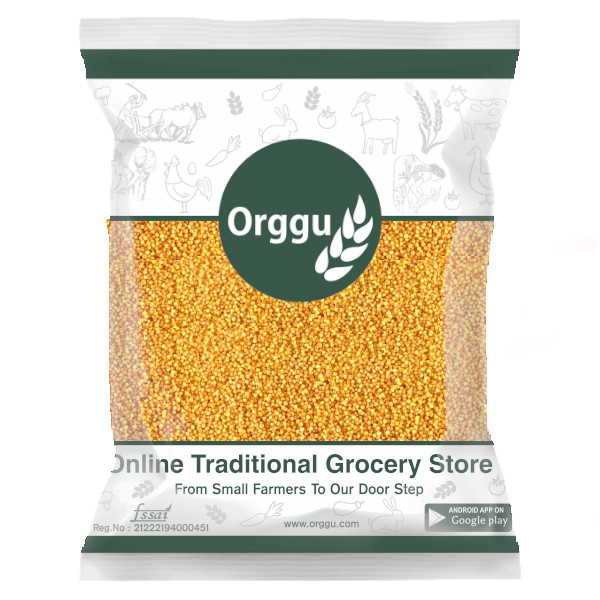
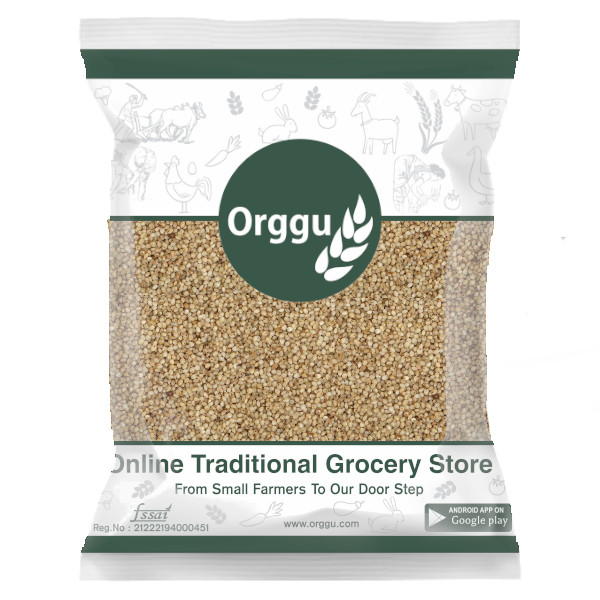
The five most important millets in India are known as Siridhanya millets: foxtail millet (navane), barnyard millet (oodalu), kodo millet (harka), little millet (saame), and browntop millet (korle). Each has a unique nutritional profile and health benefit. Unlike quinoa, which is a pseudo-cereal native to the Andes mountains of South America, millets are true grains deeply embedded in Indian food culture.
New to millets? Read our complete guide: Siridhanya Millets: Complete Guide to the 5 Miracle Grains & Their Benefits
Nutrition Face-Off: Millets vs Quinoa (Per 100g)
Let's compare the numbers. Here's a detailed nutritional breakdown of four Siridhanya millets versus quinoa, per 100 grams of dry grain:
| Nutrient | Foxtail Millet | Barnyard Millet | Kodo Millet | Little Millet | Quinoa |
|---|---|---|---|---|---|
| Protein | 12.3g | 6.2g | 8.3g | 7.7g | 14.1g ✅ |
| Fibre | 8g | 10.1g ✅ | 9g | 7.6g | 7g |
| Calcium | 31mg | 20mg | 27mg | 17mg | 47mg |
| Iron | 2.8mg | 18.6mg ✅ | 0.5mg | 9.3mg | 4.6mg |
| Glycemic Index | Low (50) | Very Low (45) | Low (55) | Low (52) | Low (53) |
| Price/kg | ₹118 ✅ | ₹128 ✅ | ₹118 ✅ | ₹128 ✅ | ₹500-800 |
Note: Finger millet (ragi) — while not a Siridhanya millet — has an extraordinary 344mg of calcium per 100g, which is 7x more than quinoa's 47mg. For calcium, no grain on the planet beats ragi.
via orggu.com · Data from NIN Hyderabad (IFCT 2017) & USDA FoodData Central
Visual Score Card: Millets vs Quinoa
via orggu.com · Data from NIN Hyderabad & USDA
Myths vs Facts: Millets vs Quinoa
Tap each card to reveal whether it's a myth or fact:
Price Comparison: Millets vs Quinoa
This is where the difference becomes impossible to ignore. Let's look at what you'd spend per month if you consume about 500g per week (roughly 2 kg/month) of each grain:
| Grain | Price/kg | Monthly Cost (2 kg) | Savings vs Quinoa |
|---|---|---|---|
| Foxtail Millet | ₹118 | ₹236 | ₹964 - ₹1,364 saved |
| Kodo Millet | ₹118 | ₹236 | ₹964 - ₹1,364 saved |
| Barnyard Millet | ₹128 | ₹256 | ₹944 - ₹1,344 saved |
| Little Millet | ₹128 | ₹256 | ₹944 - ₹1,344 saved |
| Quinoa | ₹600 (avg) | ₹1,200 | — |
The 5 Siridhanya Millets
Each of the five Siridhanya millets has a distinct nutritional strength. Here's a quick overview:
🌾 Foxtail Millet (Navane) — Best All-Rounder
Highest protein among Siridhanya millets at 12.3g/100g. Tastes closest to rice. Ideal for everyday meals — millet rice, upma, dosa, pulao.
🌾 Barnyard Millet (Oodalu) — Highest Iron
18.6mg iron per 100g — that's 4x more than quinoa. Also has the highest fibre (10.1g) and lowest GI among all millets. Excellent for anaemia prevention.
🌾 Kodo Millet (Harka) — Diabetes-Friendly
Rich in antioxidants and polyphenols. Low glycemic index makes it particularly effective for blood sugar management. Great for those transitioning from rice.
🌾 Little Millet (Saame) — Weight Loss Champion
Lowest calorie count among millets with solid fibre content. Keeps you full for hours. Extremely versatile — works in any rice-based recipe.
🌾 Browntop Millet (Korle) — Rarest & Most Potent
The rarest of all Siridhanya millets. Exceptionally high in fibre (12.5g). Known for gut health and digestive benefits. Grown primarily in Karnataka.
Why Millets Win for Indians
Beyond the nutrition numbers, there are compelling reasons why millets make more sense for Indian families than quinoa:
1. Locally grown, locally sourced. Millets are grown across India — Karnataka, Rajasthan, Maharashtra, Andhra Pradesh, Tamil Nadu. When you buy millets, your money goes directly to Indian farmers, not to South American exporters. You're supporting local agriculture and local livelihoods.
2. Incredibly water-efficient. Millets need just 300-500 litres of water per kg compared to rice's 3,000-5,000 litres. Quinoa also needs moderate water, but it's not adapted to Indian conditions. In a country facing severe water stress, choosing millets is an act of environmental responsibility.
3. Climate-resilient and sustainable. Millets thrive in poor soil, survive droughts, and need minimal chemical inputs. They grow in semi-arid regions where no other crop can survive. With climate change intensifying, millets are India's most future-proof food crop. Quinoa, adapted to the cool Andean highlands, struggles in Indian heat and humidity.
4. Part of Indian food tradition. Your great-grandparents ate millets daily. Ragi mudde in Karnataka, bajra roti in Rajasthan, jowar bhakri in Maharashtra — millets are woven into India's food heritage. They work perfectly with Indian cooking styles: sambar, rasam, curd rice, dosa, idli, upma. Quinoa? It's a foreign grain that requires Western-style preparation and doesn't naturally fit Indian meal patterns.
5. Available and affordable. You don't need to visit a fancy organic store to find millets. They're available in local kirana shops, supermarkets, and online. At ₹118-148 per kg, millets are accessible to every Indian household, not just the upper-middle class who can afford ₹800/kg quinoa.
Test Your Knowledge: Millets vs Quinoa Quiz
The Orggu Difference
🌱 Why Buy Millets from Orggu?
🌾 Small Farmers (50+ across Karnataka) → ☀️ Sun-Dried (natural processing) → 🧹 Hand-Cleaned (never machine-polished) → 📦 Fresh Packed (airtight, food-grade) → 🚚 Free Delivery (across Bangalore)
Every grain is 100% unpolished — meaning you get the full bran layer with all the fibre, minerals, and nutrients intact. Most supermarket millets are machine-polished, which strips away up to 70% of the nutrition. At Orggu, we never polish our millets.
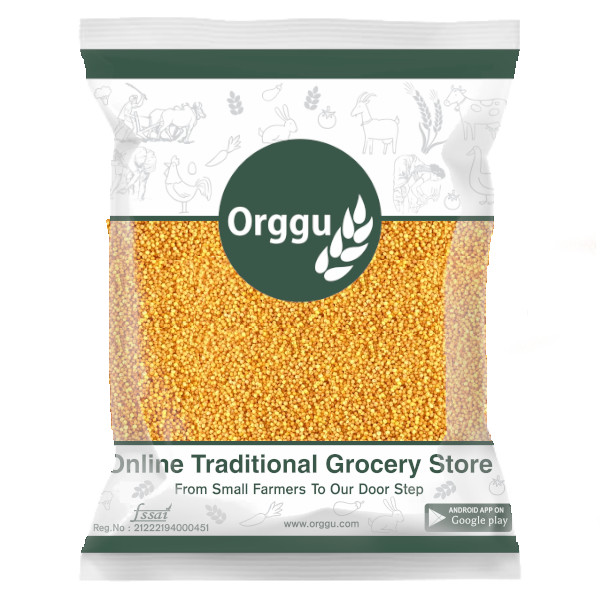
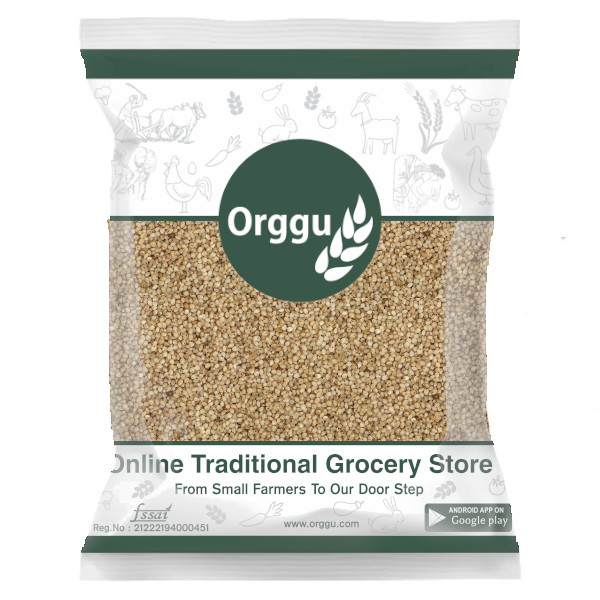
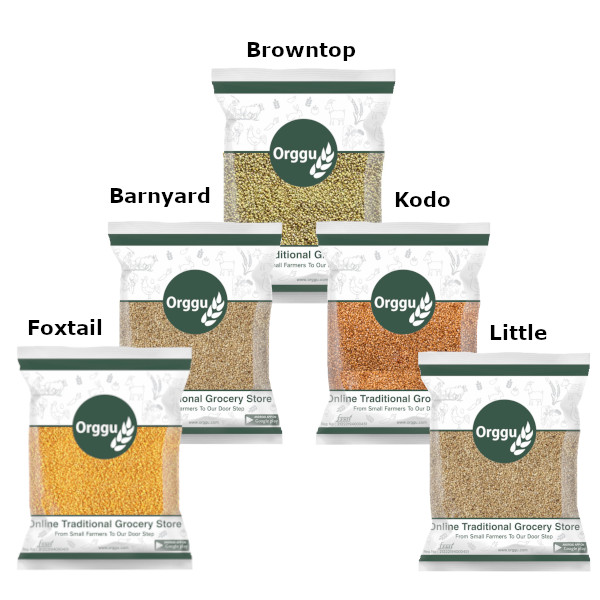
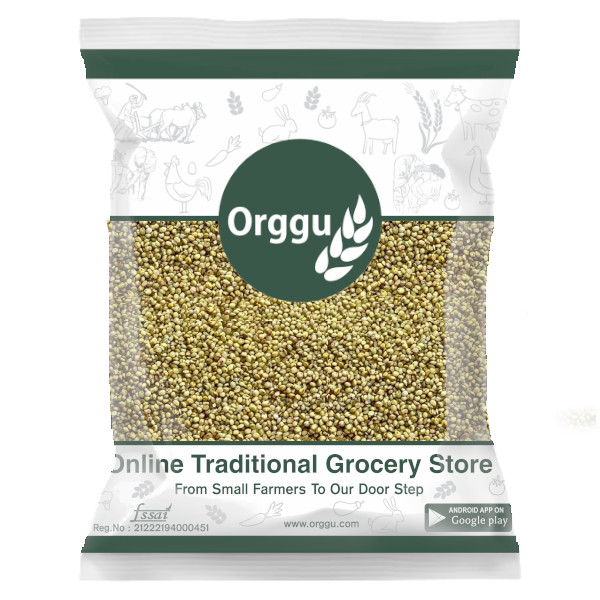
Shop the millets in this article
Frequently Asked Questions
Also read: Siridhanya Millets: Complete Guide | Foxtail Millet Benefits | Millets vs Rice | Millets for Diabetes | Millets for Weight Loss | Polished vs Unpolished Millets
Sources & References
- Indian Food Composition Tables (2017) — National Institute of Nutrition, Hyderabad
- USDA FoodData Central — U.S. Department of Agriculture
- Indian Journal of Medical Research — Glycemic Index Studies
Get all 5 Siridhanya millets
Same nutrition as quinoa. 5x cheaper. 100% unpolished, farm-direct.
Buy Positive Millets Combo