Orggu
From Small Farmers
Positive millets (Siridhanya) — 100% unpolished, sourced from Karnataka farmers. Delivered across India, with transparent delivery rates by pincode.
These are the millets Dr Khadar Vali recommends — grouped here under his positive-grain concept.
The term "positive millets" comes from renowned Indian food scientist Dr. Khadar Vali, who describes five specific millets as "positive grains" and grains such as rice, wheat and maize as "negative". He recommends the positive grains as everyday staples in place of refined rice and wheat.
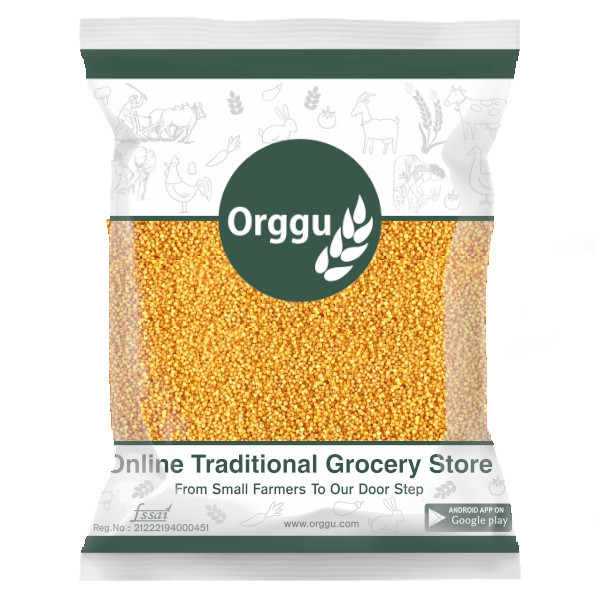
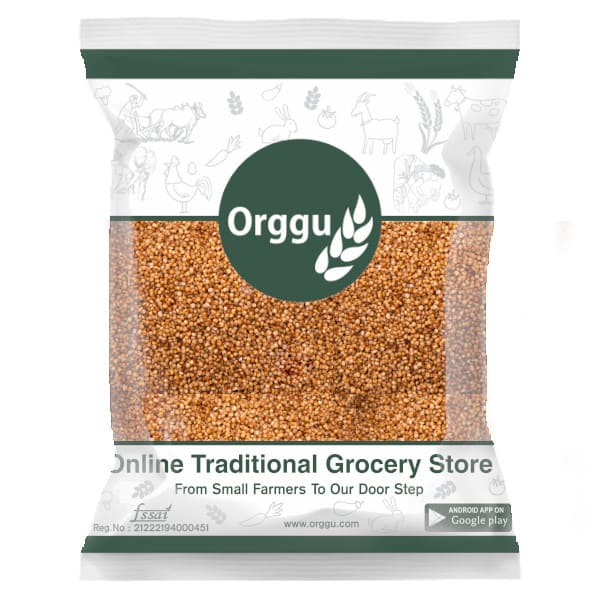
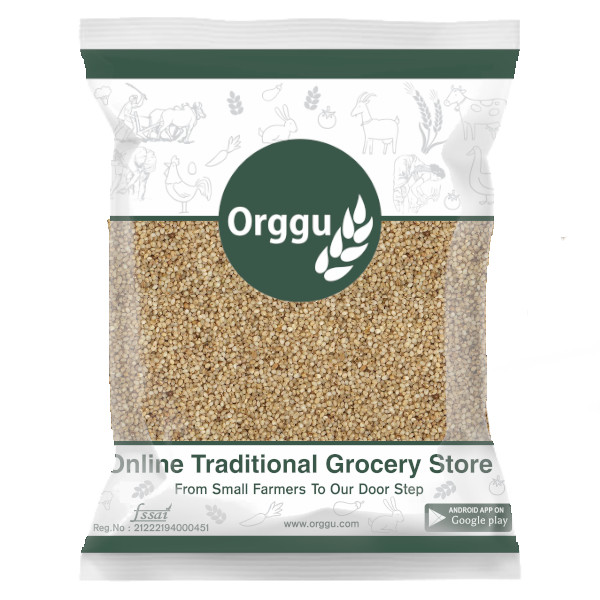
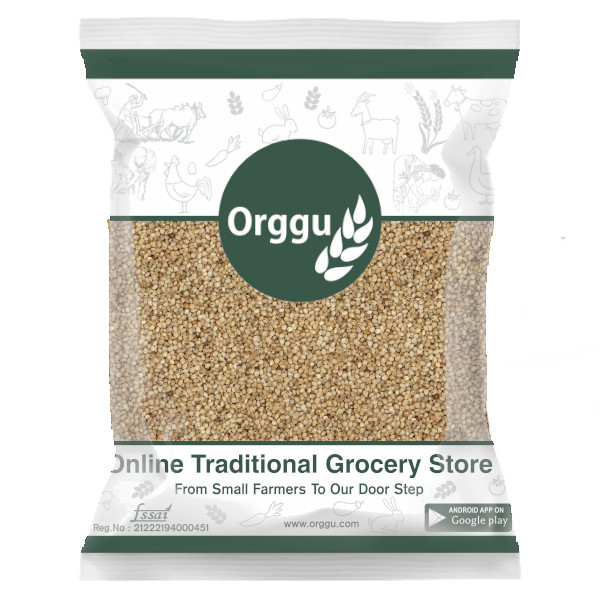
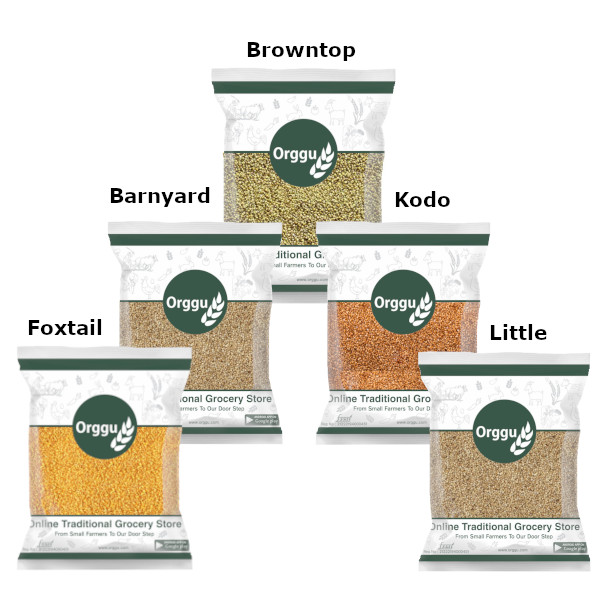
The 5 positive millets are Foxtail Millet (Navane), Kodo Millet (Harka), Little Millet (Saame), Barnyard Millet (Oodalu), and Browntop Millet (Korle). Each of these grains has a unique nutritional profile, but they all share key characteristics: high fiber content, low glycemic index, rich mineral density, and a central place in Dr Khadar Vali's positive-grain diet. Little millet is rich in iron and B-vitamins, and barnyard millet is among the highest in fibre. In Dr Khadar Vali's teachings, foxtail millet is associated with blood sugar control, kodo millet with liver and kidney health, and browntop millet with detoxification. These associations come from Dr Khadar Vali's teachings and are not established by clinical research.
While millets are not a substitute for medical treatment, their nutritional superiority over refined grains is well documented. At Orggu, all our positive millets are 100% unpolished, sourced directly from small farmers, and delivered fresh to your doorstep anywhere in India.
| Grain | Nature | Dr Khadar Vali's label | Fiber | Glycemic Index |
|---|---|---|---|---|
| Foxtail Millet | Positive | Alkaline | 6.7g | 50 |
| Kodo Millet | Positive | Alkaline | 6.4g | 40 |
| Little Millet | Positive | Alkaline | 7.6g | 45 |
| Barnyard Millet | Positive | Alkaline | 6.0g | 42 |
| Browntop Millet | Positive | Alkaline | 8.0g | 44 |
| White Rice | Negative | Acidic | 0.4g | 73 |
| Wheat | Negative | Acidic | 1.2g | 62 |
| Maize | Negative | Acidic | 2.7g | 69 |
'Positive millets' is the name Dr Khadar Vali gives to five Siridhanya millets. The 5 positive millets are Foxtail, Kodo, Little, Barnyard, and Browntop millet. Dr Khadar Vali calls them 'positive' grains and recommends them as everyday staples in place of refined rice and wheat.
Dr Khadar Vali describes positive millets as alkaline grains. Nutritionally, they are whole grains rich in fibre and minerals, with a lower glycemic index than white rice, and can be part of a balanced diet.
No. Millets are a food, not medicine, and are not a substitute for medical treatment. As fibre-rich, low-GI whole grains they can be part of a balanced diet; if you are managing a health condition, follow your doctor's advice.
Yes, positive millets are nutritionally superior to rice and wheat. They have higher fiber content, a lower glycemic index, and more minerals like iron, calcium, and magnesium.
Start by replacing one meal of rice or wheat with a positive millet. Soak the millet overnight, cook it like rice, and eat it with your regular side dishes. Gradually increase to 2-3 millet meals per day.
Free delivery on all orders. 100% unpolished. Farm fresh guaranteed.
Shop All Millets