

Non-Iodized Sea Salt Powder
What customers say on Google
Customer reviews

Frequently Bought Together
Complete your kitchen — pair this with what other Orggu customers buy
- FSSAI Lic. No. 21224194003133
- Free delivery in Bangalore · Ships across India in 2–10 business days (charges at checkout)
- Cash on delivery in Bangalore; prepaid elsewhere in India
- Refund or replacement for damaged or wrong items
Compare and shop: Sea Salt · Non-Iodized Salt
Which salt should I buy?
| Sea salt powder (this page) | Sea salt crystals | |
|---|---|---|
| What it is | Sea salt powder, non-iodized | Coarse sea salt crystals, non-iodized |
| Source | Ground from the same Thoothukudi crystals | Thoothukudi salt pans, Tamil Nadu |
| How it is made | Sun-dried, washed and ground; nothing added, no anti-caking agent | Sun-dried and washed; nothing added, no anti-caking agent |
| Packs | 500 g — ₹30 1 kg — ₹50 | 500 g — ₹30 1 kg — ₹50 |
| Lowest price per kg | ₹50 | ₹50 |
| Choose it for | Pickle masalas and quick brines — it dissolves quickly | Pickling, brining and salting before drying |
Today’s prices from our catalogue.
Fine sea salt, ground from Thoothukudi crystals
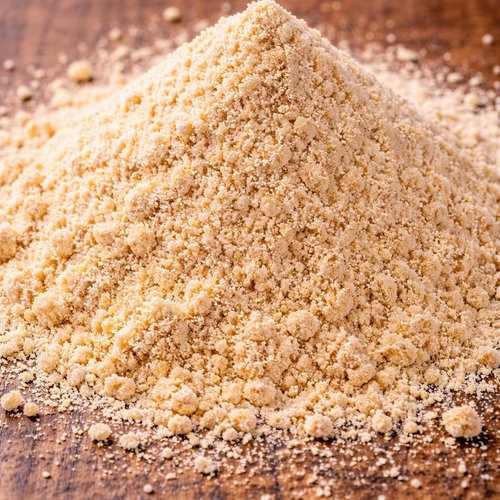
This powder is our Thoothukudi sea salt crystals, ground fine. The salt is sun-dried in the salt pans of Thoothukudi (Tuticorin), Tamil Nadu, and washed; the powder is ground from those crystals, and nothing is added — no iodine and no anti-caking or free-flow agent. It comes in 500 g and 1 kg packs.
Powder or crystals?
Choose the powder when a pickle or preserving recipe asks for fine salt: it blends evenly into a pickle masala and dissolves quickly when you make a brine. The crystals suit pickles and brines where coarse salt is traditional. Both are the same salt; the table above compares packs and prices.
How it differs from iodized table salt
Look at the label of a packet of iodized table salt and you will usually see potassium iodate (the iodine) and an anti-caking or free-flow agent. This powder has neither: the only ingredient is sea salt. That is also why it behaves differently in the jar — it can clump in damp weather, and it may look slightly less white than refined table salt.
Where the powder works best
- Pickle masala — mixes evenly with chilli powder, mustard and fenugreek.
- Quick brines — dissolves without grinding or heating.
- Salting before sun-drying — rubbed over sliced raw mango, gooseberry or vegetables.
- Pickles — where a recipe asks for fine salt rather than crystals.
For pickles, many cooks keep the crystals for the brine and the powder for the masala mix, because fine salt blends evenly with the spices. Either way, use a dry spoon so no moisture gets into the jar.
Iodine: not your everyday salt
Please read the iodine note above: iodized salt is recommended for most households in India, and non-iodized salt suits specific uses such as pickling, or people whose doctor advises it. For everyday cooking and at the table, keep using iodized salt.
Sodium
Every kind of salt — sea, rock or iodized table salt — is almost entirely sodium chloride, so switching type does not lower the sodium you eat; only using less does. (USDA FoodData Central lists about 38.7 g of sodium per 100 g for both table salt and iodized table salt, FDC 173468 and 746775.)
Storage
Fine salt with nothing added to keep it free-flowing will clump when the air is humid. Keep it in a dry, airtight jar, use a dry spoon, and shake or break up any lumps; that is normal for salt without an anti-caking agent.
See both forms of our sea salt in sea salt online, and the whole range in non-iodized salt.


