
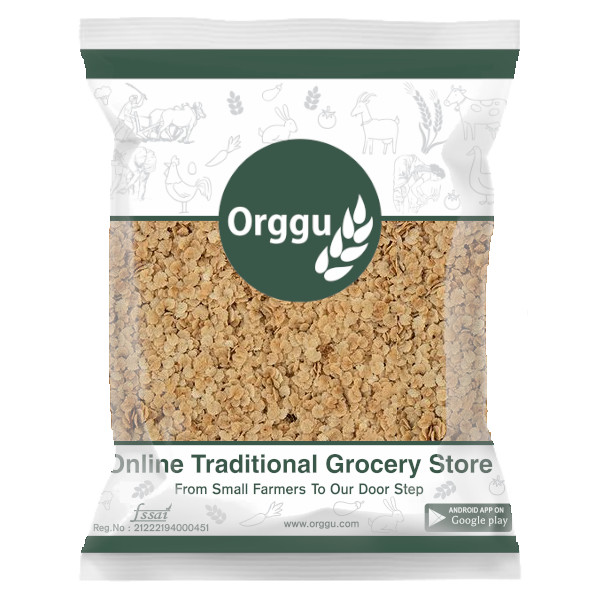
Kodo Millet Flakes (Varagu Aval)
What customers say on Google
Customer reviews

Frequently Bought Together
Complete your kitchen — pair this with what other Orggu customers buy


- FSSAI Lic. No. 21224194003133
- Made from unpolished kodo millet
- No pesticides or chemicals used
- Free delivery in Bangalore · Ships across India in 2–10 business days (charges at checkout)
- Cash on delivery in Bangalore; prepaid elsewhere in India
- Refund or replacement for damaged or wrong items
Compare and shop: Millet Flakes · Millet flakes (millet poha) guide
Which flakes should I buy?
| Kodo millet flakes (this page) | Barnyard millet flakes | |
|---|---|---|
| What it is | Made from unpolished kodo millet | Made from unpolished barnyard millet |
| Packs | 250 g — ₹69 500 g — ₹129 | 250 g — ₹89 500 g — ₹179 |
| Lowest price per 100 g | ₹26 | ₹36 |
| Choose it for | Poha and upma with a little more bite | Soft poha, milk porridge, fasting-day dishes |
Today’s prices from our catalogue.
Kodo millet flakes
These flakes are made from unpolished kodo millet, called kodo or kodra in Hindi and varagu in Tamil, so in Tamil you may hear them called varagu aval. They are a little darker than foxtail or barnyard flakes and keep more bite when cooked, which suits savoury poha and upma. No pesticides or chemicals used.
Poha is the Marathi word for rice flakes; in Tamil they are aval, in Telugu atukulu, in Kannada avalakki and in Hindi chiura.
How to cook kodo millet flakes
Flakes need no long cooking. Put them in a sieve, rinse them quickly under running water and let them drain for a few minutes until they soften. Rinse briefly: soaked too long, flakes turn mushy. If they still feel hard after draining, sprinkle a little more water and wait a minute or two.
- Kodo poha — Heat a spoon of oil, add mustard seeds, curry leaves, green chilli and sliced onion, then a pinch of turmeric and salt. Toss in the drained flakes, cover and cook on low heat for two or three minutes. Finish with lemon juice and chopped coriander. A handful of roasted peanuts goes well with the firmer texture.
- Vegetable upma — cook onion, carrot, beans and peas in a mustard-seed tempering, add the drained flakes and a splash of water, and cover for a few minutes.
- Curd flakes — mix the softened flakes with curd, salt and a mustard and curry-leaf tempering for a cool lunchbox dish.
- Porridge — Simmer the flakes in milk or water, stirring, until soft, then sweeten with jaggery and add a pinch of cardamom.
Kodo or barnyard millet flakes?
Choose kodo flakes when you want a poha that holds its shape and a slightly earthy taste. Choose barnyard flakes for something softer and milder, especially for sweet dishes. The table on this page compares their packs and today’s price per 100 g.
Looking for the whole grain? See kodo millet (unpolished).
Storing them
Keep the flakes in an airtight container in a cool, dry place and use a dry spoon. Use them within about three months of buying. They come in a plastic pouch; once it is open, seal it tightly or move the flakes to a jar.
Gluten
Millets contain no gluten by nature. These flakes have not been tested for gluten, so we cannot promise a pack is free of traces; if you have coeliac disease, ask your doctor which products are safe for you. We sell them as a plain everyday food and make no health claims for them.
Compare all our millet flakes, or read our millet flakes guide for every type and more recipes.