Millet Names in Indian Languages: Complete Glossary

Certified organic food specialists · Sources: NIN Hyderabad, ICMR, USDA FoodData Central

If you’ve ever stood in front of a sack of millets at the local kirana and wondered "is this the same grain my grandmother called navane / thinai / kangni?" — this glossary is the answer. Below is a single, cross-checked reference table for every common Indian millet, with its name in eight major Indian languages and a direct link to buy the unpolished grain. Bookmark it, share it with parents and grandparents, and stop second-guessing what to ask for at the shop.
Millet names — master glossary
Tap any English name to see the product. Both the regional script and the romanized form are shown for every cell. On mobile, scroll the table sideways to see all language columns.
| Millet (English) | Hindi | Tamil | Telugu | Kannada | Malayalam | Bengali | Marathi | Gujarati |
|---|---|---|---|---|---|---|---|---|
| Foxtail Millet Setaria italica | कंगनी (Kangni) | தினை (Thinai) | కొర్రలు (Korralu) | ನವಣೆ (Navane) | തിന (Thina) | কাওন (Kaon) | राळा (Rala / Kang) | કાંગ (Kang) |
| Finger Millet (Ragi) Eleusine coracana | रागी / मंडुआ (Ragi / Mandua) | கேழ்வரகு / ராகி (Kezhvaragu / Ragi) | రాగులు (Ragulu) | ರಾಗಿ (Ragi) | മുത്താറി / പഞ്ഞിപ്പുല്ല് (Muthaari / Panji Pullu) | মাড়ুয়া (Marua) | नाचणी (Nachni) | નાગલી / બાવટો (Nagli / Bavto) |
| Pearl Millet (Bajra) Pennisetum glaucum | बाजरा (Bajra) | கம்பு (Kambu) | సజ్జలు (Sajjalu) | ಸಜ್ಜೆ (Sajje) | ബജ്റ / കമ്പം (Bajra / Kambam) | বাজরা (Bajra) | बाजरी (Bajri) | બાજરી / બાજરો (Bajri / Bajro) |
| Sorghum (Jowar) Sorghum bicolor | ज्वार (Jowar / Jwar) | சோளம் (Cholam) | జొన్నలు (Jonnalu) | ಜೋಳ (Jola) | ചോളം (Cholam) | জোয়ার (Jowar) | ज्वारी (Jwari) | જુવાર (Juvar) |
| Kodo Millet Paspalum scrobiculatum | कोदो / कोदरा (Kodo / Kodra) | வரகு (Varagu) | అరికెలు (Arikelu) | ಹಾರಕ (Harka) | വരക് (Varak) | কোদো (Kodo) | कोद्रा (Kodra) | કોદરા (Kodra) |
| Little Millet Panicum sumatrense | कुटकी (Kutki) | சாமை (Samai) | సామలు (Samalu) | ಸಾಮೆ (Saame) | ചാമ (Chama) | সামা (Sama) | सावा / वरी (Sava / Vari) | ગજરો (Gajro) |
| Barnyard Millet Echinochloa frumentacea | सांवा / झंगोरा (Sanwa / Jhangora) | குதிரைவாளி (Kuthiraivali) | బొంత సామలు / ఊదలు (Bontha Samalu / Udalu) | ಊದಲು (Oodalu) | കവടപ്പുല്ല് (Kavadapullu) | শ্যামা চাল (Shyama Chal) | भगर / वरई (Bhagar / Varai) | સામો / મોરિયો (Samo / Moriyo) |
| Browntop Millet Brachiaria ramosa | —† | பால பயறு / குலசாமை (Pala pul / Kula Samai) | అండు కొర్రలు (Andu Korralu) | ಕೊರಲೆ (Korale) | —† | —† | —† | —† |
| Proso Millet Panicum miliaceum | चेना / बर्री (Cheena / Barri) | பனிவரகு (Pani Varagu) | వరిగలు (Varigalu) | ಬರಗು (Baragu) | പനിവരഗു (Panivaragu) | চীনা (Cheena) | वरई (Varai) | ચીનો (Cheno) |
† Browntop millet has no traditional name in Hindi, Bengali, Marathi, Gujarati or Malayalam — the crop is regionally limited to parts of Karnataka, Andhra Pradesh and Tamil Nadu, and was never part of those regional cuisines. We chose to leave these cells blank rather than print invented or marketing-only names.
How to use this glossary
Two common cases:
- Shopping in a regional shop or market: use the column for your language. The traditional name is what local sellers and farmers will recognise — “kangni” at a Mumbai kirana, “navane” at a Bengaluru shop, “thinai” at a Chennai store all mean foxtail millet.
- Cooking from a regional recipe: recipes in Tamil, Telugu, Kannada or Hindi often use only the local name. Use this glossary to identify which English-language millet to buy and which product link in our store maps to it.
Where two names appear in one cell (for example, finger millet in Tamil is both kezhvaragu and ragi), the older heritage name is listed first and the more common modern name second.
The 9 millets at a glance
Below is each millet with a one-paragraph plain-language summary and links to the product and (where available) the dedicated benefits article.
Foxtail Millet · Setaria italica
Also known as: कंगनी (Kangni) · தினை (Thinai) · కొర్రలు (Korralu) · ನವಣೆ (Navane) · തിന (Thina) · কাওন (Kaon) · राळा (Rala / Kang) · કાંગ (Kang)
The most widely grown small millet in India. Cooks in 15 minutes, has a mild nutty flavour, and is a staple of South Indian breakfasts (upma, pongal, bisi bele bath). Highest iron content among the small millets.
Finger Millet (Ragi) · Eleusine coracana
Also known as: रागी / मंडुआ (Ragi / Mandua) · கேழ்வரகு / ராகி (Kezhvaragu / Ragi) · రాగులు (Ragulu) · ರಾಗಿ (Ragi) · മുത്താറി / പഞ്ഞിപ്പുല്ല് (Muthaari / Panji Pullu) · মাড়ুয়া (Marua) · नाचणी (Nachni) · નાગલી / બાવટો (Nagli / Bavto)
India’s most calcium-dense grain (344 mg per 100 g — over three times that of rice). The base for ragi mudde in Karnataka, ragi malt drinks for infants and elders, and ragi roti across South India.
Pearl Millet (Bajra) · Pennisetum glaucum
Also known as: बाजरा (Bajra) · கம்பு (Kambu) · సజ్జలు (Sajjalu) · ಸಜ್ಜೆ (Sajje) · ബജ്റ / കമ്പം (Bajra / Kambam) · বাজরা (Bajra) · बाजरी (Bajri) · બાજરી / બાજરો (Bajri / Bajro)
The drought-hardy giant of the millet family — the staple winter grain of Rajasthan, Gujarat and Haryana. Bajra rotis, bajra khichdi and bajra raab are the everyday foods built on it. Naturally warming, high in iron and magnesium.
Sorghum (Jowar) · Sorghum bicolor
Also known as: ज्वार (Jowar / Jwar) · சோளம் (Cholam) · జొన్నలు (Jonnalu) · ಜೋಳ (Jola) · ചോളം (Cholam) · জোয়ার (Jowar) · ज्वारी (Jwari) · જુવાર (Juvar)
India’s second-most-grown millet after pearl, and the unleavened roti grain of Maharashtra and North Karnataka (jowar bhakri). Available as white sorghum (mild) and red sorghum (heartier, more pigmented).
Kodo Millet · Paspalum scrobiculatum
Also known as: कोदो / कोदरा (Kodo / Kodra) · வரகு (Varagu) · అరికెలు (Arikelu) · ಹಾರಕ (Harka) · വരക് (Varak) · কোদো (Kodo) · कोद्रा (Kodra) · કોદરા (Kodra)
A Siridhanya grain with one of the lowest glycaemic indexes among cereals. Long preferred by tribal farmers of central India for being hardy and storage-stable. Cooks like rice, soaks well as kodo bath or upma.
Little Millet · Panicum sumatrense
Also known as: कुटकी (Kutki) · சாமை (Samai) · సామలు (Samalu) · ಸಾಮೆ (Saame) · ചാമ (Chama) · সামা (Sama) · सावा / वरी (Sava / Vari) · ગજરો (Gajro)
The fastest-cooking Siridhanya millet — ready in 12 minutes. Smallest grain, mildest flavour, and the easiest substitute for white rice in a daily diet. Popular in Tamil Nadu (samai sadham) and Andhra (samalu pongal).
Barnyard Millet · Echinochloa frumentacea
Also known as: सांवा / झंगोरा (Sanwa / Jhangora) · குதிரைவாளி (Kuthiraivali) · బొంత సామలు / ఊదలు (Bontha Samalu / Udalu) · ಊದಲು (Oodalu) · കവടപ്പുല്ല് (Kavadapullu) · শ্যামা চাল (Shyama Chal) · भगर / वरई (Bhagar / Varai) · સામો / મોરિયો (Samo / Moriyo)
The lowest-GI millet on the Indian shelf — ideal for diabetes-friendly meals. Traditionally eaten as Navratri vrat food (sama / bhagar / vrat ke chawal) because it’s not classed as a cereal in fasting tradition.
Browntop Millet · Brachiaria ramosa
Also known as: பால பயறு / குலசாமை (Pala pul / Kula Samai) · అండు కొర్రలు (Andu Korralu) · ಕೊರಲೆ (Korale)
The rarest of the Siridhanya five and one of the highest in dietary fibre (around 12.5 g per 100 g). Historically grown only in pockets of Karnataka, Andhra Pradesh and Tamil Nadu — which is why no traditional name exists in most other Indian languages, including Hindi.
Proso Millet · Panicum miliaceum
Also known as: चेना / बर्री (Cheena / Barri) · பனிவரகு (Pani Varagu) · వరిగలు (Varigalu) · ಬರಗು (Baragu) · പനിവരഗു (Panivaragu) · চীনা (Cheena) · वरई (Varai) · ચીનો (Cheno)
The protein leader of the small millets (around 12.5 g per 100 g). Light-coloured, mild-flavoured grain that fluffs up like couscous. Popular in Himalayan kitchens (cheena) and increasingly in South Indian millet rotation diets.
Frequently asked questions
What is ragi called in Tamil and Telugu?
Ragi is called kezhvaragu (கேழ்வரகு) in traditional Tamil and is also widely known by its Sanskrit/Kannada name ragi. In Telugu, the standard name is ragulu (రాగులు). All three refer to the same grain: finger millet, scientifically Eleusine coracana.
Is bajra and pearl millet the same thing?
Yes. Bajra (Hindi/Gujarati/Marathi bajri) and pearl millet are the same grain — Pennisetum glaucum. In Tamil it is called kambu, in Telugu sajjalu, in Kannada sajje. It is the most widely grown millet in India and the staple winter grain of Rajasthan and Gujarat.
What is the difference between samai, sama and sanwa?
These names sound similar but refer to different millets. Samai (சாமை) in Tamil and samalu (సామలు) in Telugu both mean little millet (Panicum sumatrense). Sama or sanwa in Hindi typically means barnyard millet (Echinochloa frumentacea) — the grain eaten during Navratri fasting. They are different grains; check the English name when buying.
What are the 5 Siridhanya millets?
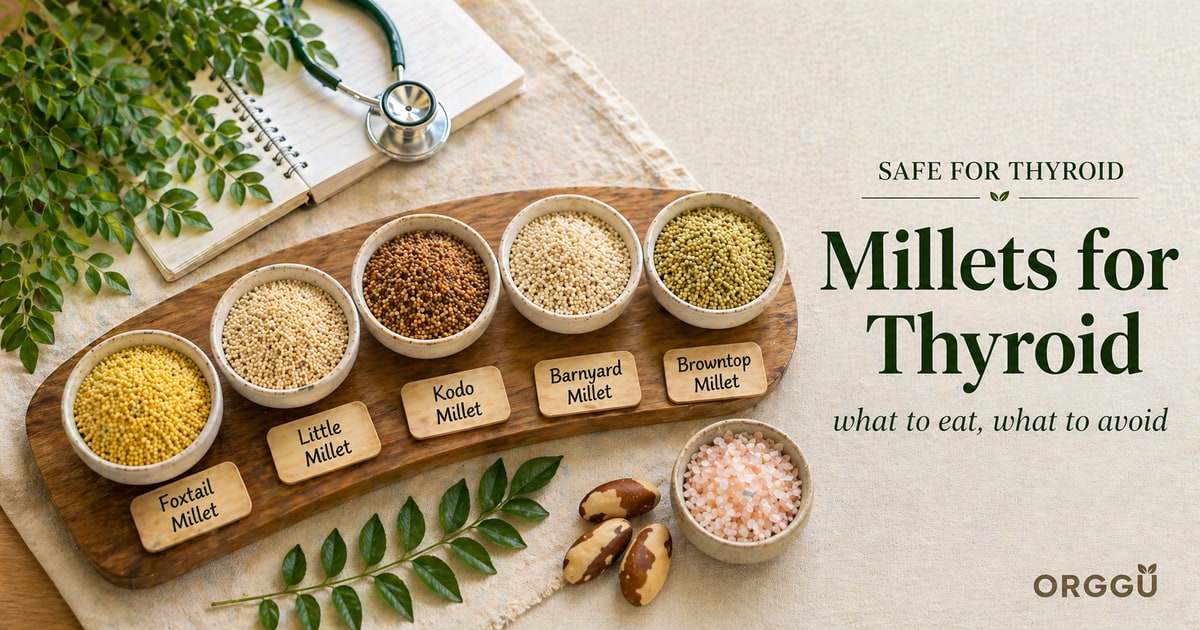
Dr. Khadar Vali’s Siridhanya (“positive”) millets are the 5 small millets: foxtail, kodo, little, browntop and barnyard. We sell each individually as well as in our Positive Millets Combo. Pearl millet, sorghum, finger millet and proso are nutritious too but are major millets, not Siridhanya.
Why does the table show “—” for browntop millet in some languages?
Browntop millet (Brachiaria ramosa) is grown traditionally only in parts of Karnataka, Andhra Pradesh and Tamil Nadu. It has no native vernacular name in Hindi, Bengali, Marathi, Gujarati or Malayalam because it was never part of those regional cuisines. We chose to leave those cells blank rather than print invented or marketing-only names — the term “Hari Kangni” that some e-commerce sites use is a recent coinage, not a traditional Hindi word.
Is jowar a millet?
Yes. Jowar (Hindi) is sorghum — Sorghum bicolor. It is technically classified as a major millet. In Marathi it is jwari, in Gujarati juvar, in Tamil/Malayalam cholam, in Kannada jola and in Telugu jonnalu. It is the second-most-grown millet in India after bajra.
Which millet is best for someone new to millets?
Start with foxtail or little millet. Both cook in 12–15 minutes, have a mild flavour and substitute directly for rice in dishes like pongal, upma, lemon rice, biryani or curd rice. Once your kitchen is comfortable with one, rotate the others in. Our 5-millet combo is built for this rotation.
Where to start
If your goal is a daily-rotation millet kitchen, the simplest path is the Positive Millets Combo — one pack each of foxtail, kodo, little, browntop and barnyard. If you have a specific dish in mind (bajra roti, ragi mudde, jowar bhakri, varagu sadham), buy the single millet from the table above and we’ll deliver it farm-direct.


New to millets? Start with all 5 in one pack
The Positive Millets Combo bundles foxtail, kodo, little, browntop and barnyard — the 5 Siridhanya millets — in one pack at a combo price.
Buy Positive Millets ComboLooking for a single millet? Tap any English name in the glossary table above to go to its product page — or browse the Dr. Khadar Vali Millets collection.