
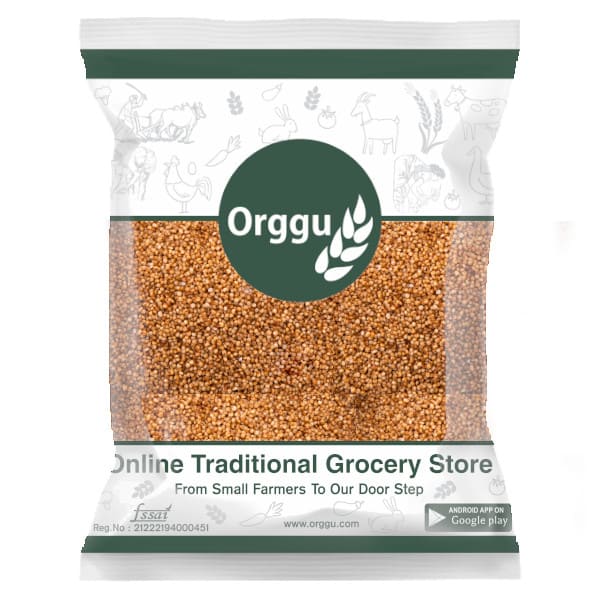
Kodo millet Unpolished

Kodo Millet (Varagu): A Complete Guide
Kodo millet (Paspalum scrobiculatum), known as Varagu in Tamil, Arikelu in Telugu, and Kodra in Hindi, is one of the five Siridhanya millets recommended by Dr. Khadar Vali for managing lifestyle diseases. It has been cultivated in India for over 3,000 years and was a staple grain in many tribal and rural communities before the Green Revolution shifted diets toward rice and wheat.
Why Unpolished Kodo Millet?
Polishing removes the bran layer — the most fibre-rich and nutrient-dense part of the grain. Unpolished kodo millet retains its outer bran, delivering up to 11g of dietary fibre per 100g (compared to just 0.4g in white rice). This high fibre content slows glucose absorption, resulting in a glycaemic index of approximately 50–55, making it a smart choice for people managing blood sugar levels. Polished millets, while still better than refined rice, lose roughly 60% of their fibre and a significant portion of B-vitamins.
Nutritional Highlights per 100g
Kodo millet provides approximately 353 calories, 8.3g protein, 1.4g fat, 65.9g carbohydrates, 9g dietary fibre, 27mg calcium, 188mg phosphorus, and 0.5mg iron. It is particularly rich in antioxidants — studies from the Indian Institute of Millets Research (IIMR) have found that kodo millet has one of the highest antioxidant activities among all millets, primarily due to its phenolic compounds.
How to Cook Kodo Millet
As rice substitute: Wash and soak for 30 minutes. Cook with a 1:2.5 (millet to water) ratio in a pressure cooker for 3 whistles, or in an open pot for 20–25 minutes. Fluff with a fork and let it rest for 5 minutes. As upma or khichdi: Dry roast the millet for 2 minutes before cooking for a nuttier flavour. Kodo millet works excellently in pulao, biryani, pongal, and idli/dosa batter (mix 1:1 with urad dal).
Who Should Eat Kodo Millet?
Kodo millet is especially beneficial for people with Type 2 diabetes, PCOS, and those looking to manage weight. Its high fibre content promotes satiety, reducing overall calorie intake. Being naturally gluten-free, it is safe for people with celiac disease or gluten sensitivity. Start with one meal a day and gradually increase as your digestive system adapts to the higher fibre content.