
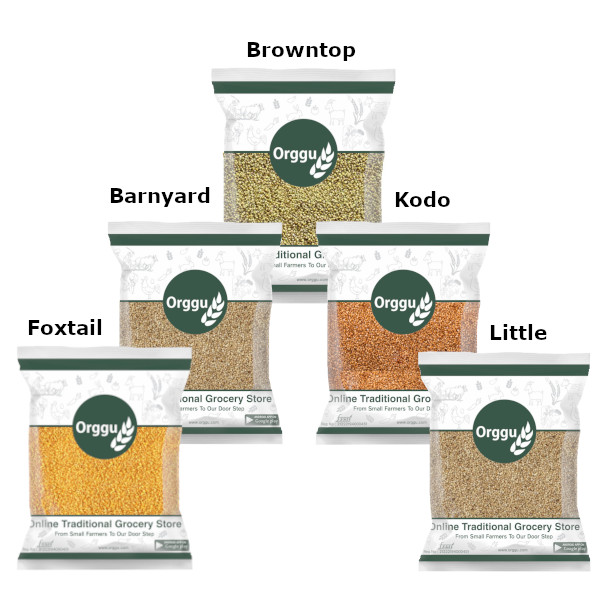
Positive Millets Combo

The 5 Siridhanya Millets Combo: Everything You Need to Know
The Positive Millets Combo includes all five Siridhanya (Positive) millets identified by Dr. Khadar Vali — Foxtail, Kodo, Little, Barnyard, and Browntop millet. These five millets are classified as "positive grains" because of their high fibre content, low glycaemic index, and alkaline nature, which together support the body's natural healing mechanisms. This combo gives you 1 kg of each millet (5 kg total), letting you rotate grains throughout the week for maximum nutritional variety.
Why Rotate All 5 Millets Instead of Eating Just One?
Each Siridhanya millet has a distinct nutritional profile. Foxtail millet is richest in iron and helps blood formation. Kodo millet has the highest antioxidant content. Little millet is high in fat (good fats) and excellent for weight management. Barnyard millet has the lowest glycaemic index (~41) among all millets, making it best suited for diabetics. Browntop millet is highest in fibre and supports digestive health. By rotating them — eating a different millet each day — you ensure your body receives a broad spectrum of micronutrients, fibre types, and antioxidants that no single grain can provide.
How to Start a Millet Diet
Week 1–2: Replace one meal per day (preferably lunch) with a millet-based dish. Cook the millet as rice and pair it with your regular sambar, rasam, or dal. Week 3–4: Increase to two millet meals per day. After one month: You can consume millets for all three meals if desired. Many people report improved digestion, better energy levels, and reduced sugar cravings within the first two weeks of switching to millets.
Suggested Weekly Rotation
Monday: Foxtail millet rice
Tuesday: Kodo millet upma or rice
Wednesday: Little millet pongal
Thursday: Barnyard millet khichdi
Friday: Browntop millet dosa
Saturday–Sunday: Mix any two millets or use millet flour for roti. This rotation ensures dietary variety and prevents taste fatigue.
Why Unpolished Matters
All five millets in this combo are unpolished — meaning the nutrient-rich bran layer is intact. Polished millets lose up to 60% of their fibre, which is the very component that gives millets their low GI advantage. Orggu sources these millets directly from small farmers who grow them using traditional rain-fed methods without pesticides or chemical fertilisers.